Mastering Psychological Frameworks and Applications
Cognitive Biases and Decision-Making
The Two Systems in the Wild
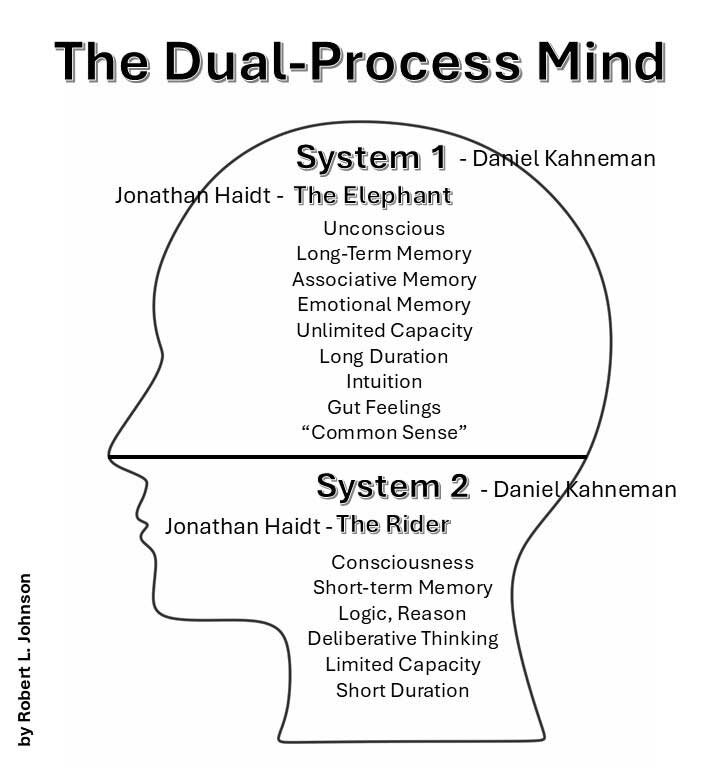
Your brain runs on two operating systems. System 1 is fast, intuitive, and always on. It's the gut feeling that tells you a dark alley is dangerous. System 2 is slow, analytical, and lazy. It's the focused mental effort you use to solve a math problem or parallel park.
This is the core of , and it creates a fundamental trade-off in decision-making: speed versus accuracy. System 1 is incredibly efficient, handling thousands of daily micro-decisions without draining your mental energy. But this efficiency comes at the cost of precision. It relies on mental shortcuts, or heuristics, that can lead to predictable errors.
System 2 can catch these errors, but it requires conscious effort and attention. The problem is, our mental bandwidth is limited. When we're tired, stressed, or juggling too much information, we experience high cognitive load. This mental fatigue makes it harder to engage System 2, leaving System 1 in charge. As a result, we become far more susceptible to cognitive biases, making flawed decisions that feel perfectly logical at the moment.
Why Losses Feel So Painful
One of the most powerful biases hardwired into our System 1 is loss aversion. Psychologically, the pain of losing something is about twice as powerful as the pleasure of gaining the exact same thing.
Imagine your investment portfolio goes up by $1,000. You feel good. Now imagine it drops by $1,000. You likely feel terrible. The emotional sting of the loss is far more intense than the satisfaction of the equivalent gain. This asymmetry explains a lot of irrational financial behavior, like holding onto a losing stock for too long, hoping it will recover, rather than selling and reinvesting in a better opportunity. We're so desperate to avoid the pain of realizing a loss that we make a bad situation worse.
This insight is the cornerstone of , which describes how people make decisions under uncertainty. It flips classical economics on its head, showing that we don't make choices based on absolute outcomes, but on the potential for gains or losses relative to our current situation.
The graph shows it all. The curve for losses is significantly steeper than for gains. This simple visual captures a profound truth about human psychology that drives decisions in finance, law, and everyday life.
Setting the Stage
Another powerful shortcut is the anchoring and adjustment heuristic. Our minds grab onto the first piece of information we receive—the anchor—and have a hard time straying far from it, even if that anchor is completely arbitrary.
Think about a salary negotiation. If the employer's first offer is $50,000, that number anchors the entire conversation. You might negotiate it up to $55,000 and feel like you've won. But what if the role's market value was actually $70,000? If the initial anchor had been $65,000, you might have ended up closer to that higher number. Your adjustment from the initial anchor is almost always insufficient.
This bias is exploited everywhere, from charity donation forms that suggest amounts like \$50, \$100, \$250 to retail stores listing an inflated "original price" next to a sale price to make the discount seem more significant.
Whoever speaks first in a negotiation sets the anchor. If you have done your research, use this to your advantage.
It's All in How You Frame It
The way information is presented, or framed, can drastically change our decisions, even when the underlying facts are identical. This is the framing effect at work. Our brains react differently to choices framed in terms of gains versus those framed in terms of losses.
Consider a classic medical scenario. Doctors are presented with two treatment options for a deadly disease affecting 600 people.
- Positive Frame: Treatment A will save 200 lives.
- Negative Frame: Treatment B means 400 people will die.
Most people choose Treatment A because "saving 200 lives" sounds like a guaranteed positive outcome. They become risk-averse. The option framed as a loss (Treatment B) feels much worse, even though the statistical outcome is identical. The frame, not the data, drives the decision.
This same principle applies to finance. An investment framed as having a "70% chance of success" is much more appealing than one with a "30% chance of failure." The framing primes our System 1 to either embrace a perceived gain or avoid a perceived loss, often bypassing a more rational System 2 analysis.
According to Dual Process Theory, what is the primary trade-off our brain makes between System 1 and System 2 thinking?
When a person is experiencing high cognitive load (for example, they are tired, stressed, or multitasking), which of the following is most likely to occur?
Understanding these biases isn't about eliminating them—that's nearly impossible. It's about recognizing the situations where they are most likely to take hold. By knowing your mind's tendencies, you can create processes and checklists to engage your slower, more analytical thinking when the stakes are high.