Mastering Pronouns in English
Introduction to Pronouns
What Are Pronouns?
Think of pronouns as stand-ins for nouns. Instead of repeating a person's name or an object's name over and over, you can swap in a pronoun. This simple substitution makes sentences flow better and sound more natural.
They are essential shortcuts in our language. Without them, our speech and writing would be incredibly repetitive and clunky.
Nouns name people, places, and things. Pronouns replace those names.
For example, instead of saying:
Maria loves to read. Maria goes to the library every week. The books are Maria's favorite thing.
You can use pronouns to clean it up:
Maria loves to read. She goes to the library every week. Books are her favorite thing.
See how much smoother that sounds? The words she and her are pronouns that stand in for Maria. They point back to the original noun, so we always know who or what is being discussed.
Why Pronouns Matter
The main job of a pronoun is to avoid repetition. By replacing nouns, pronouns help us connect ideas without sounding like a broken record. This makes communication clearer and more concise.
Pronouns also add variety to our sentences, making our writing more engaging. They are a fundamental part of grammar that you use every day, probably without even thinking about it.
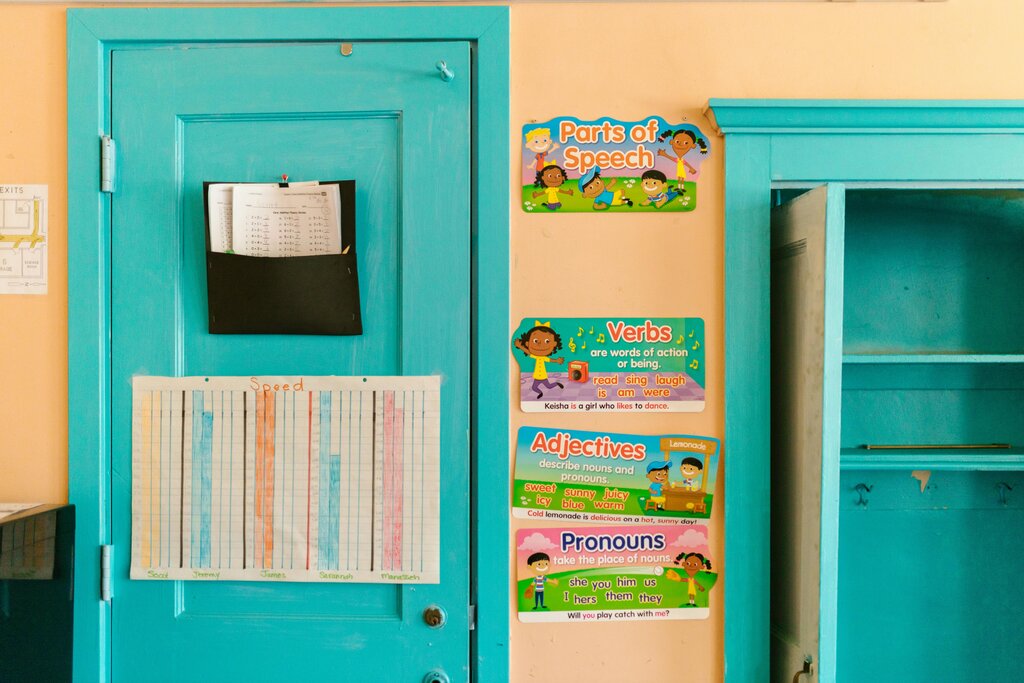
Using the right pronoun is crucial for clarity. If you use the wrong one, your reader or listener can get confused about who or what you're referring to. Mastering them is a key step toward becoming a more effective communicator.
A Quick Tour of Pronoun Types
Pronouns come in several different flavors, each with a specific job. In the upcoming lessons, we'll dive deep into each category, but for now, here’s a brief overview of what's to come.
| Pronoun Type | Purpose | Examples |
|---|---|---|
| Personal | Refers to a specific person or thing. | I, you, he, she, it, we, they |
| Possessive | Shows ownership or belonging. | my, your, his, her, its, our, their |
| Demonstrative | Points to specific people or things. | this, that, these, those |
| Interrogative | Used to ask questions. | who, what, which, whose |
| Reflexive | Refers back to the subject of the sentence. | myself, yourself, himself, itself |
Don't worry about memorizing all of these right now. The goal is just to see that pronouns are a diverse group of words that play many different roles in our language. We'll explore each of these types one by one.
Now, let's check your understanding of the basics.
What is the primary function of a pronoun?
In the sentence, "Anna passed her exam, and she was very happy about it," which word is the pronoun that replaces 'Anna'?
Understanding what pronouns are and why they're important is the first step. Next, we'll start exploring the different types in more detail.