Mastering Prompt Engineering
Introduction to Large Language Models
What Are Large Language Models?
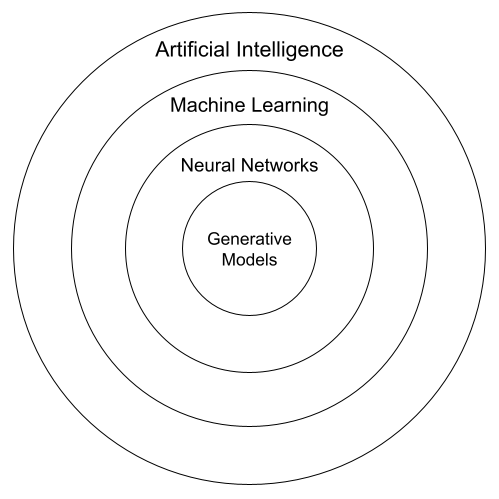
A Large Language Model, or LLM, is a type of artificial intelligence designed to understand and generate human-like text. Think of it as a super-powered autocomplete. It doesn't just guess the next word; it understands context, grammar, and even stylistic nuances to predict entire sentences and paragraphs.
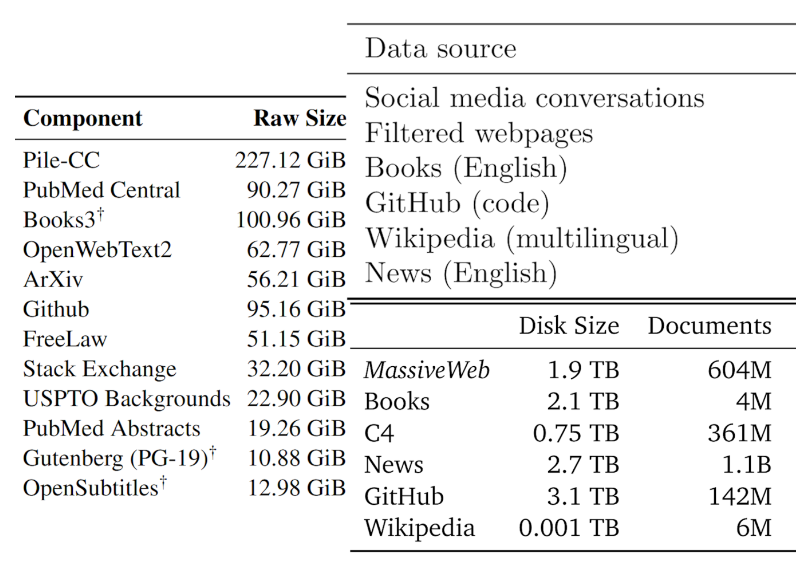
The "large" in their name is no exaggeration. These models are trained on enormous amounts of text data—essentially a significant portion of the internet, books, and other sources. They contain billions or even trillions of parameters, which are like the internal knobs and dials the model uses to make its predictions.
At their core, LLMs are pattern-recognition machines. By analyzing vast quantities of text, they learn the statistical relationships between words and phrases.
This ability to process and generate language has made LLMs a foundational technology in modern AI. They've changed how we interact with information, create content, and even write code. Understanding them is the first step to harnessing their power.
How an LLM Learns
Training an LLM is like teaching someone a language by having them read a colossal library. The model is fed text data, and its primary task is simple: predict the next word in a sequence. For instance, if it sees the phrase "The cat sat on the…", it learns to predict "mat" with high probability.
It does this over and over, billions of times, adjusting its internal parameters with each prediction to get better. This process relies on a special architecture called a Transformer, which is particularly good at handling sequential data like text. A key feature of the Transformer is its ability to weigh the importance of different words in the input text, a concept known as "attention." This allows the model to keep track of context over long passages, understanding that a word at the beginning of a paragraph could be relevant to a word at the end.
Parameter
noun
A variable within a model that is learned from the training data. In an LLM, parameters are the weights and biases of the neural network that determine the model's output.
The sheer scale of the training data and the number of parameters are what enable LLMs to develop a sophisticated grasp of language, allowing them to perform a wide range of tasks without being explicitly programmed for them.
What Can LLMs Do?
Once trained, an LLM's general language understanding can be applied to many different natural language processing (NLP) tasks. This versatility is what makes them so powerful. Instead of building a separate AI model for each specific task, a single LLM can often handle several.
Large language models (LLMs) are AI systems that understand and create human language, doing tasks like summarizing articles, answering questions, writing code, and more.
Some of the most common applications include:
| Application | Description |
|---|---|
| Text Generation | Creating original text, from emails and articles to stories and poems. |
| Summarization | Condensing long documents into brief, coherent summaries. |
| Translation | Translating text from one language to another. |
| Question Answering | Providing direct answers to questions based on a given context or its internal knowledge. |
| Code Generation | Writing code snippets in various programming languages based on natural language descriptions. |
| Sentiment Analysis | Determining the emotional tone of a piece of text (e.g., positive, negative, neutral). |
These capabilities form the building blocks for more complex applications, like chatbots, content creation tools, and research assistants.
What is the primary function of a Large Language Model (LLM)?
The "large" in Large Language Model refers to the enormous amount of training data and the model's vast number of parameters.