Mastering Prompt Engineering for LLMs
Introduction to LLMs
What Are Large Language Models?
A Large Language Model, or LLM, is an advanced AI designed to understand, generate, and interact with human language. Think of it as a highly sophisticated pattern-matching system. After being trained on a massive amount of text data from the internet, books, and other sources, it learns the relationships between words, sentences, and ideas.
Large Language Model
noun
A type of artificial intelligence model trained on vast quantities of text data to generate human-like text and understand natural language.
The "large" in LLM is key. These models contain billions, or even trillions, of parameters. A parameter is like a tiny knob that the model adjusts during training. With so many parameters, an LLM can capture incredibly subtle nuances of language, from grammar and style to reasoning and factual knowledge. This scale is what separates them from earlier, smaller language models that might have struggled with complex conversations or creative writing.

From Rules to Reasoning
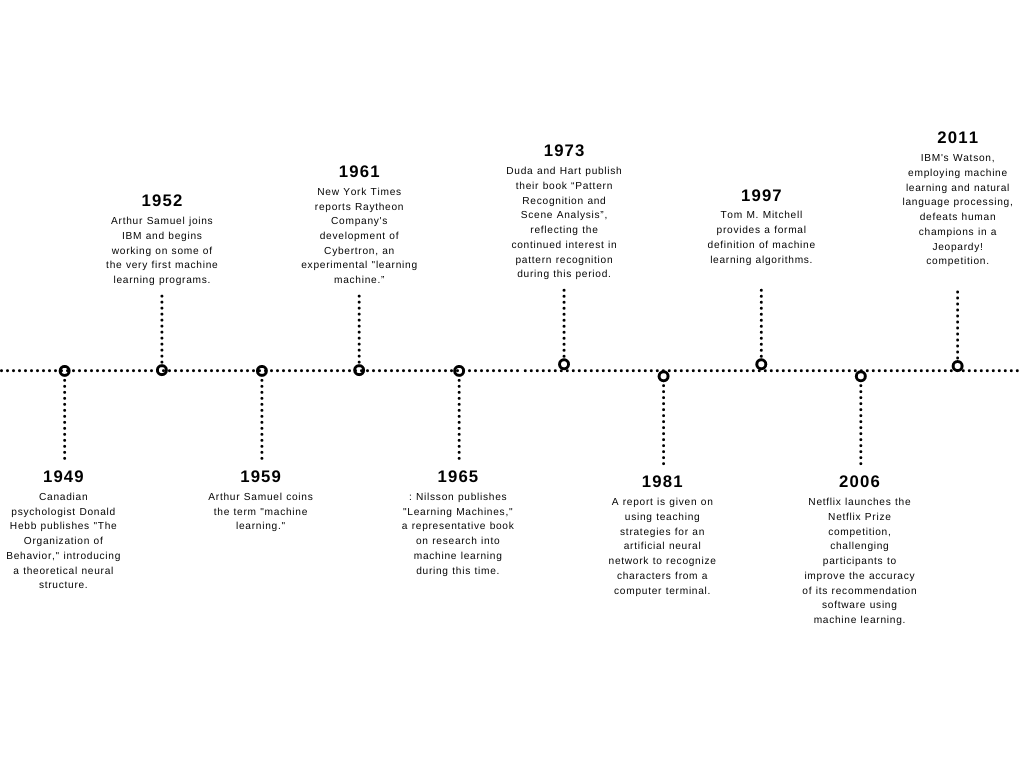
The journey to today's LLMs began decades ago. Early attempts at natural language processing (NLP) relied on hard-coded rules. A linguist would have to manually write grammar rules for a computer to follow. This approach was brittle and couldn't handle the endless exceptions and ambiguities of human language.
Later, statistical methods emerged, where models learned probabilities of word sequences from text. This was a big step up, but they still lacked a deeper understanding of context. The real revolution came with deep learning and, specifically, the invention of the Transformer architecture in 2017. This new architecture allowed models to process language in a much more sophisticated way, paving the road for the powerful LLMs we see today.
The Engine Inside an LLM
Modern LLMs are built on the Transformer architecture. Its secret sauce is a mechanism called "self-attention." This allows the model to weigh the importance of different words in an input sentence when processing it. For example, in the sentence "The cat sat on the mat and it was fluffy," self-attention helps the model understand that "it" refers to the "cat," not the "mat."
Training an LLM is a two-step process. First is pre-training, where the model is fed a massive, diverse dataset of text. Its only job is to predict the next word in a sequence. By doing this billions of times, it builds a robust internal representation of language.
The core task during pre-training is simple: given a piece of text, predict the very next word.
After pre-training, the model can be fine-tuned on a smaller, more specific dataset to perform particular tasks, like translation, summarization, or answering questions about a specific domain. This refines its general knowledge for a specialized purpose.
LLMs are now used in countless applications, from writing assistants and search engines to code generators and customer service chatbots. They can draft emails, explain complex topics, translate languages, and even help scientists with research.
Guiding the Model
An LLM's output is highly dependent on its input. The instruction you give it, known as a prompt, is the primary way you guide its behavior. This is where prompt engineering comes in.
Prompt engineering is an essential technique for enhancing the abilities of large language models (LLMs) by providing explicit and specific instructions.
Prompt engineering is the art and science of crafting effective inputs to get the desired output from an LLM. A well-crafted prompt can be the difference between a generic, unhelpful response and a precise, insightful one. It involves understanding how the model "thinks" and providing it with the right context, constraints, and instructions.
By learning to communicate clearly with these models, you can unlock their full potential to help with a wide range of creative and analytical tasks.
Ready to check your understanding?
What does the "large" in Large Language Model primarily refer to?
The process of adapting a general-purpose LLM to a specialized task using a smaller, focused dataset is known as...