Mastering Prompt Engineering for AI
Introduction to Prompt Engineering
What Is Prompt Engineering?
Talking to an advanced AI is like having a conversation with a brilliant expert who knows almost everything, but has no personal context about you or what you need. To get a useful response, you can't just ask a vague question. You need to provide clear instructions, context, and guidance. The instructions you give an AI are called prompts.
At its core, prompt engineering is the art and science of designing and refining inputs (prompts) to guide generative AI models toward producing desired, accurate, and relevant outputs.
Think of it this way: an AI model is like a highly skilled but very literal-minded assistant. If you say, "Write about dogs," it might generate a generic, encyclopedic article. But if you say, "Write a short, playful poem about a golden retriever puppy seeing snow for the first time, from the puppy's perspective," you'll get something much more specific and creative.
That's prompt engineering in a nutshell. It’s the skill of crafting your request to steer the AI toward the exact result you want. It involves choosing the right words, providing context, setting a tone, and even giving examples of what you're looking for.
Why It Matters
A well-crafted prompt can be the difference between a useless, generic answer and a breakthrough insight. As AI becomes more integrated into our daily work and creative processes, the ability to communicate effectively with these models is becoming a crucial skill.
Good prompting saves time by reducing the need for endless revisions. It improves accuracy by giving the AI the necessary constraints and information. And it unlocks new creative possibilities by pushing the model beyond its default responses.
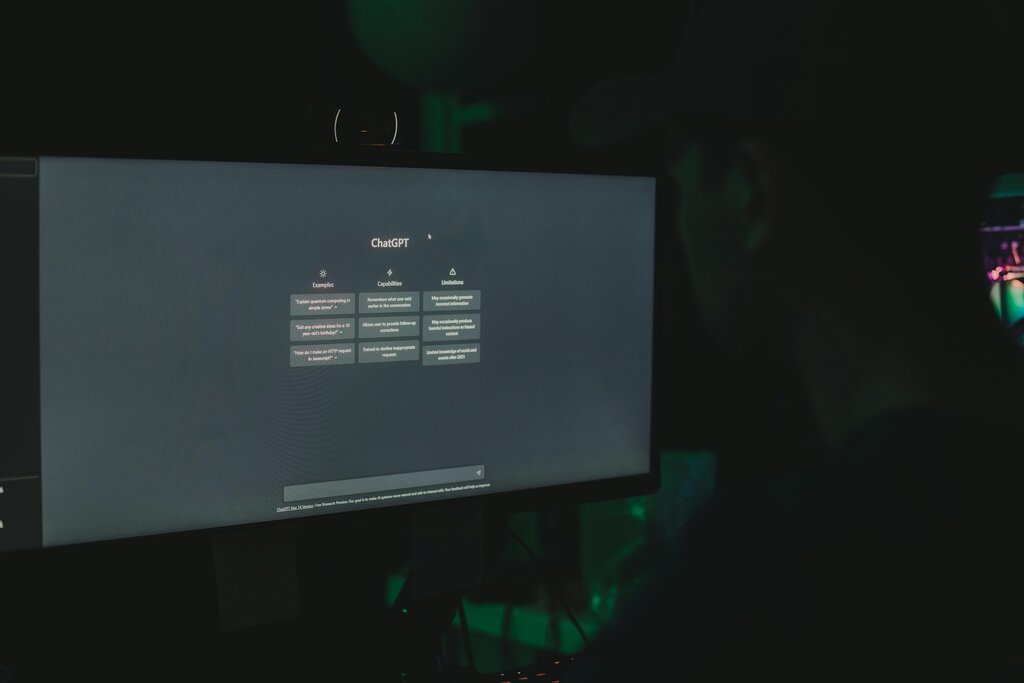
Consider a marketing professional trying to create ad copy. A simple prompt like "Write an ad for our new sneakers" will likely produce a bland result. A better prompt would be:
"You are an expert copywriter for a trendy streetwear brand. Write three short, punchy Instagram captions for our new 'Aero-Max' sneaker. The target audience is Gen Z. The tone should be energetic, confident, and slightly rebellious. Highlight the shoe's lightweight design and futuristic look. Include a call-to-action and relevant hashtags."
This level of detail guides the AI to a much more useful and targeted outcome.
A Brief History
Prompt engineering as a distinct field is relatively new, emerging alongside the rise of powerful large language models (LLMs) like GPT-3 in the early 2020s. Before this, interacting with AI was often more about coding and complex datasets. Programmers would fine-tune models on specific data for specific tasks.
With the advent of massive, general-purpose LLMs, the method of interaction shifted. Instead of retraining the model, users could guide its behavior simply by changing the input text, or prompt. Researchers and users quickly discovered that the way you ask a question dramatically changes the quality of the answer.
What started as simple trial-and-error has evolved into a more systematic discipline. Early on, people found that adding phrases like "Let's think step by step" could coax models into showing their reasoning, leading to more accurate answers for complex problems. This discovery, and others like it, showed that there were repeatable techniques for improving AI performance through prompting alone.
Today, prompt engineering is a critical skill for anyone using generative AI, from developers building complex applications to writers, artists, and analysts looking to get the most out of these powerful tools.
What is the primary goal of prompt engineering?
Why is a vague prompt like "Write about dogs" less effective than a specific one?
Now that you understand the what, why, and how of prompt engineering's origins, you're ready to start learning the techniques that turn simple requests into powerful results.