Mastering Prompt Engineering for AI Models
Introduction to Prompt Engineering
What Is Prompt Engineering?
Working with a large language model (LLM) is like talking to a brilliant assistant who knows almost everything but has zero context about what you actually want. Prompt engineering is the skill of giving this assistant clear, effective instructions. It's the art and science of crafting inputs, or prompts, to guide an AI toward the specific output you need.
Prompt engineering is the practice of crafting inputs—called prompts—to get the best possible results from large language models.
Think of it like commissioning a painting. If you just tell an artist, "Paint me a picture of a house," you might get anything from a tiny cottage to a grand mansion. But if you say, "Paint a two-story blue house with a red door, a stone chimney, and a large oak tree in the front yard, in the style of Van Gogh," you're much more likely to get the painting you imagined. A better prompt leads to a better result. The same is true for AI.
Prompting vs. Programming
Prompting might feel a bit like coding, but it's fundamentally different. Traditional programming uses strict, formal languages like Python or Java. A single misplaced comma can break the entire program. It requires you to give the computer exact, step-by-step commands to execute a task.
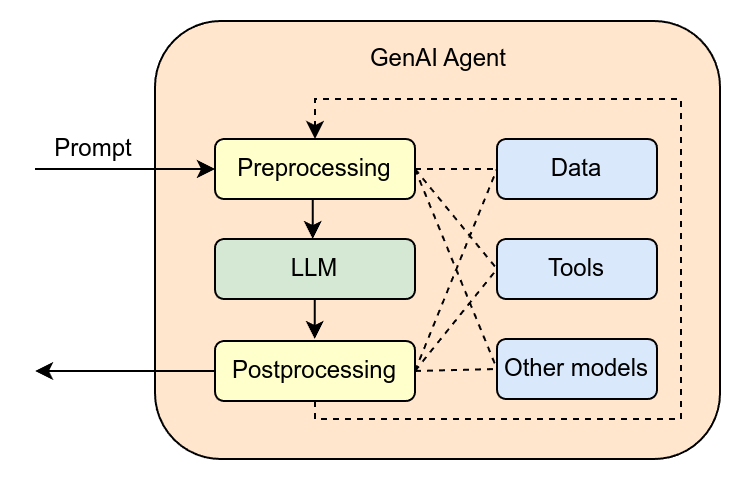
Prompt engineering, on the other hand, uses natural human language. It’s less about writing rigid commands and more about communicating intent. You don't need to know a special syntax. Instead, you need to be clear, provide context, and understand how to frame your request to steer the model's vast knowledge in the right direction. It's a conversation, not a command.
| Feature | Traditional Programming | Prompt Engineering |
|---|---|---|
| Language | Formal (Python, C++) | Natural (English, etc.) |
| Logic | Explicit, step-by-step | Implicit, guided by context |
| Flexibility | Rigid and structured | Creative and conversational |
| Goal | Execute a precise function | Generate a desired output |
The Power of a Good Prompt
The quality of a prompt directly determines the quality of the AI's response. A vague prompt will almost always yield a generic, unhelpful answer. A well-crafted prompt can produce surprisingly accurate and creative results.
Let's see this in action. Suppose you want an email to your team about a new project management tool.
Vague Prompt: Write an email about a new tool.
This prompt is too simple. The AI has to guess the tool's name, its purpose, and the tone of the email. The result will likely be bland and unusable.
Better Prompt: Draft a friendly and enthusiastic email to my engineering team announcing our switch to a new project management tool called 'Asana'. Explain that it will help us track tasks and deadlines more efficiently. Mention that training will be held this Friday at 10 AM and include a link to sign up: [link].
This second prompt provides all the necessary ingredients: the audience (engineering team), the tone (friendly and enthusiastic), the specific tool (Asana), the key benefits, and a clear call to action. The difference in the AI's output will be night and day.
Types of Prompts
There are several ways to structure a prompt. The method you choose depends on the complexity of your task. Here are three common types.
Zero-shot Prompting
other
Asking the model to perform a task without giving it any prior examples of how to do it. This relies entirely on the model's pre-existing knowledge.
This is the most basic form of prompting. You state your request and trust the model to understand.
Example: Classify this movie review's sentiment: "The acting was incredible, but the plot was a bit slow."
Few-shot Prompting
other
Providing the model with a few examples (or 'shots') of the task you want it to perform. This helps the model understand the desired pattern and format for the output.
Few-shot prompting is incredibly useful when you need a specific structure or style. By showing the AI what you want, you guide it more effectively.
Translate the following English phrases to French:

English: Hello
French: Bonjour

English: How are you?
French: Comment ça va?

English: Good morning
French:
By providing two examples, you've taught the model the exact format you want, making it much more likely to give you the correct answer: Bonjour.
Chain-of-Thought Prompting
other
A technique that encourages the model to break down a complex problem into intermediate steps before reaching a final answer. This is usually done by adding a phrase like "Let's think step by step."
This approach is powerful for tasks that require reasoning, logic, or calculation. By forcing the model to show its work, you improve the chances of getting a correct final answer. The model can follow its own logic, spot errors, and arrive at a more reliable conclusion.
Prompt:
Q: A cafeteria had 23 apples. If they used 20 to make lunch and bought 6 more, how many apples do they have? Let's think step by step.AI Response:
- The cafeteria starts with 23 apples.
- They use 20 apples for lunch, so 23 - 20 = 3 apples are left.
- They buy 6 more apples, so 3 + 6 = 9 apples. The cafeteria now has 9 apples.
This step-by-step reasoning process makes the model's logic transparent and much more accurate. Now, let's review these concepts.
Ready to test your knowledge?
What is the primary goal of prompt engineering?
Imagine you want an AI to summarize a long article in exactly three bullet points using a professional tone. Which prompting technique would be most effective for this specific format requirement?
Understanding these basic principles is the first step toward mastering your interactions with AI.