Mastering Prompt Engineering
Introduction to Prompt Engineering
What Is Prompt Engineering?
Think about ordering a coffee. If you just say "Give me coffee," you might get a hot, black drip coffee. But what if you wanted a large iced oat milk latte with two pumps of vanilla? You need to be specific to get what you want.
Communicating with an AI model works the same way. The instructions you give it are called prompts, and the skill of crafting these instructions is called prompt engineering.
Prompt
noun
The input, typically text, given to an AI model to instruct it to perform a task or generate a response.
At its core, prompt engineering is about communication. It's the art and science of asking the right questions in the right way to guide an AI toward the best possible outcome. It’s less about knowing code and more about understanding how to be clear, specific, and creative with your words.
prompt engineering is the craft of formulating detailed inputs—or "prompts"—that guide an AI like ChatGPT to generate useful and accurate responses.
Why Does It Matter?
A powerful AI model is like a brilliant but very literal-minded assistant. It can do amazing things, but it won't read your mind. The quality of its output depends entirely on the quality of your input. This is often summarized as "garbage in, garbage out."
Well-crafted prompts lead to more accurate, relevant, and useful results. Poor prompts lead to vague, incorrect, or nonsensical answers. Learning how to write good prompts saves you time and frustration by reducing the need for endless trial and error.
Consider the difference in these requests:
| Vague Prompt | Specific Prompt |
|---|---|
| Write about dogs. | Write a 100-word blog post about the benefits of adopting a rescue dog, focusing on companionship and saving a life. Use a friendly and heartwarming tone. |
| Explain photosynthesis. | Explain photosynthesis to a 10-year-old. Use an analogy involving a kitchen or a chef to make it easy to understand. |
The specific prompts provide context, constraints, and a target audience. This clarity helps the AI zero in on exactly what you need, making it a much more powerful tool.
Common Applications
Prompt engineering isn't just a niche skill; it's used across a huge range of AI tasks. As you get better at it, you can unlock more of an AI's potential in different areas.
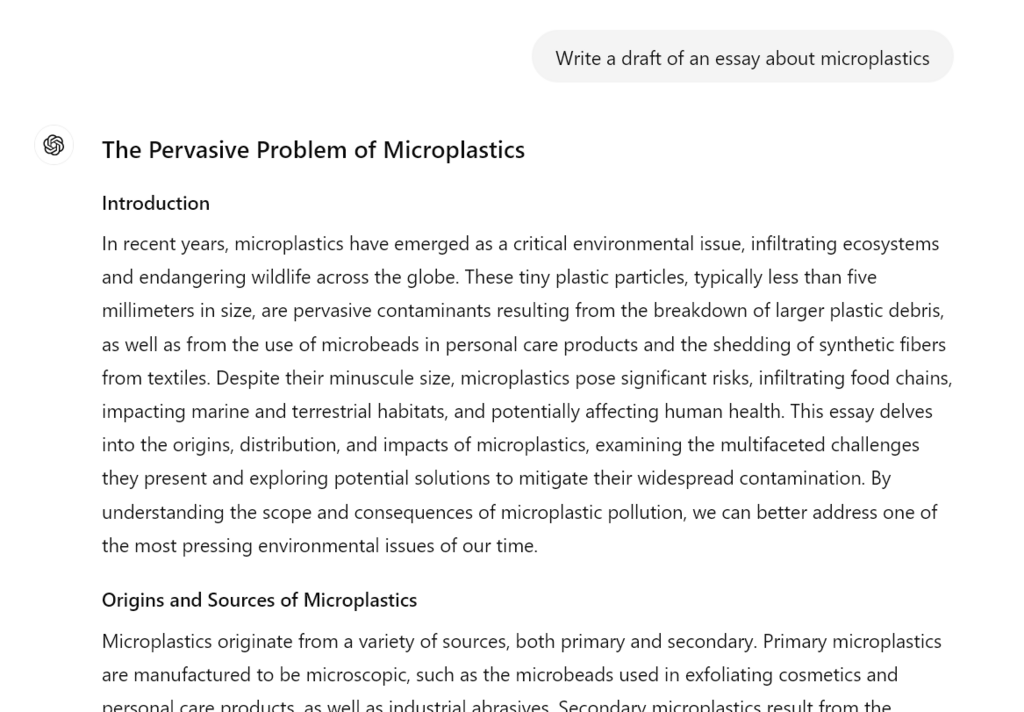
Text Generation: This is the most common use. You can prompt an AI to draft emails, write code, create marketing copy, brainstorm ideas, or even compose an essay. The better the prompt, the less editing you'll have to do.
Question Answering: Instead of just searching for keywords, you can ask an AI complex questions that require it to synthesize information. A good prompt can ask it to compare and contrast ideas or summarize a long document into key bullet points.
Image Creation: With text-to-image models, your prompt is a description of the image you want to see. Prompt engineering involves specifying the subject, style, lighting, and composition to turn a vision into a picture.
Problem Solving: You can use AI as a thinking partner. By providing a detailed prompt that lays out a problem and its constraints, you can ask the AI to suggest solutions, weigh pros and cons, or create a step-by-step plan.
Now, let's test your understanding of these core concepts.
What is the core idea behind prompt engineering?
The principle 'garbage in, garbage out' means that...
Mastering the basics of prompt engineering is the first step toward effectively collaborating with AI. It's a skill that empowers you to get the most out of these powerful tools.