Mastering Prompt Engineering
Introduction to Large Language Models
What Is a Large Language Model?
At its core, a Large Language Model (LLM) is a type of artificial intelligence designed to understand and generate human-like text. Think of it as an advanced pattern-recognition machine. It's been trained on a massive amount of text data—essentially, a significant portion of the internet, including books, articles, and websites.
This training doesn't give the model consciousness or understanding in the human sense. Instead, it makes it incredibly good at one fundamental task: predicting the next word in a sequence.
This simple capability, when scaled up with billions of parameters and vast datasets, allows LLMs to perform remarkable feats. They can write emails, summarize long documents, translate languages, and even write computer code. It all stems from that core ability to guess which word should come next, based on the patterns it learned during training.
A large language model (LLM) is an AI model trained on massive amounts of text data that can understand and generate human-like text, recognize patterns in language, and perform a wide variety of language tasks without task-specific training.
How They Work
The secret behind modern LLMs is a specific neural network design called the Transformer architecture, introduced in 2017. Before the Transformer, language models struggled to keep track of context in long sentences. They might forget the beginning of a paragraph by the time they reached the end.
The Transformer solved this with a mechanism called "attention." It allows the model to weigh the importance of different words in the input text when generating a response. This means it can handle long-range dependencies, like connecting a pronoun back to a noun that appeared several sentences earlier.
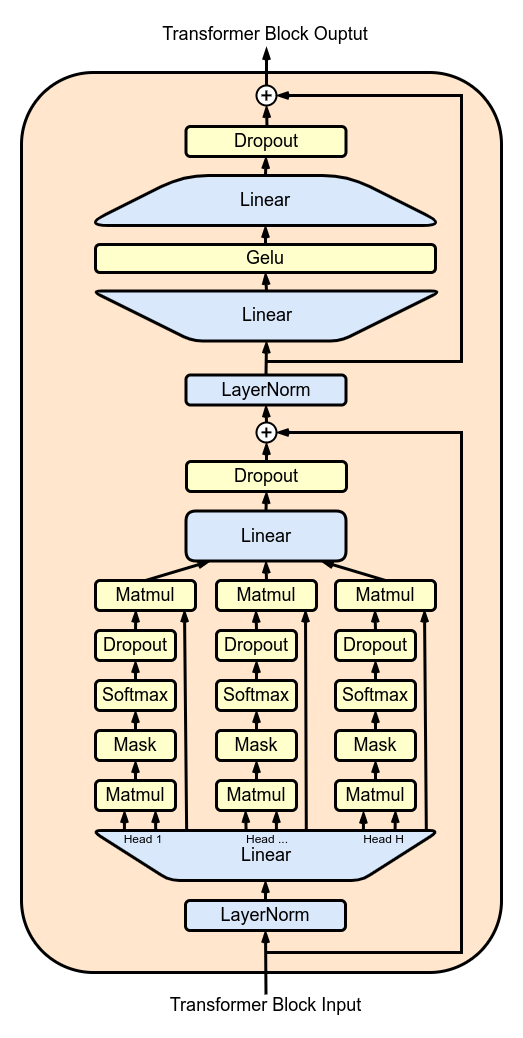
Training an LLM is a two-step process:
-
Pre-training: The model is trained on a huge, general dataset of text from the internet and digital books. In this phase, its only goal is to learn to predict the next word. This is where it gains its broad knowledge of language, grammar, and facts about the world.
-
Fine-tuning: After pre-training, the model is further trained on a smaller, more specialized dataset. This step helps align the model's responses to be more helpful, harmless, and follow instructions. It often involves techniques like Reinforcement Learning from Human Feedback (RLHF), where humans rate the model's outputs to teach it what a "good" answer looks like.
Applications and Limits
LLMs have a wide range of applications that are expanding every day. They power chatbots and virtual assistants, help developers write code faster, and create marketing copy. They're used in education for personalized tutoring, in healthcare for summarizing patient notes, and in entertainment for generating scripts or game dialogue.
| Use Case | Description |
|---|---|
| Content Creation | Writing articles, emails, social media posts, and ad copy. |
| Summarization | Condensing long documents or articles into key points. |
| Translation | Translating text between different languages. |
| Code Generation | Writing and debugging code snippets in various programming languages. |
| Customer Support | Powering chatbots to answer common customer questions. |
Despite their impressive abilities, LLMs have significant limitations. Because they are just predicting text based on patterns, they don't truly understand concepts. This can lead to several problems.
One major issue is "hallucination," where the model generates plausible but incorrect or completely fabricated information. It might invent facts, cite non-existent sources, or make logical errors.
LLMs can also reflect the biases present in their training data. If the data contains stereotypes or prejudiced language, the model may reproduce them in its outputs. This raises important ethical concerns about fairness and the potential for these systems to perpetuate harm.
Finally, their knowledge is frozen at the time of their last training. They aren't aware of events that have happened since, unless they are specifically updated or given access to live information.
Ready to check your understanding? Let's try a few questions.
What is the fundamental task that a Large Language Model (LLM) is trained to perform during its initial pre-training phase?
What key innovation in the Transformer architecture allows LLMs to effectively handle long-range dependencies in text, such as connecting a pronoun to a noun mentioned several sentences earlier?
Understanding these core concepts is the first step. By knowing what LLMs are, how they work, and where they fall short, you can use them more effectively and responsibly.