Mastering Prompt Engineering
Introduction to Large Language Models
What Are Large Language Models?
A Large Language Model, or LLM, is a type of artificial intelligence designed to understand and generate human-like text. Think of it as a highly advanced autocomplete. It predicts the next word in a sentence based on the words that came before it, but on a massive scale. By repeating this process, it can write paragraphs, answer questions, and even create computer code.
The "large" in its name refers to two things: the enormous amount of text data it's trained on and the huge number of parameters it contains. These models learn from a significant portion of the internet, books, and other text sources. This vast training data allows them to grasp grammar, facts, reasoning abilities, and different styles of writing.
Parameter
noun
In the context of AI, a parameter is a variable that the model uses to make predictions. The model adjusts these parameters during training to improve its performance. An LLM can have billions or even trillions of them.
This scale is what separates LLMs from older AI. Instead of being programmed with specific grammatical rules, they learn the patterns of language organically from the data. This allows for a much more flexible and nuanced understanding of communication.
How LLMs Are Built
Most modern LLMs are built on an architecture called a Transformer. Introduced in 2017, the Transformer was a breakthrough in how AI handles sequential data like text.
Its key innovation is the "attention mechanism." This allows the model to weigh the importance of different words when processing a sentence. Imagine you read the sentence, "The cat, which was hiding under the table, quickly darted away." Your brain understands that "darted" relates to "cat," not "table," even though they are far apart. The attention mechanism gives the LLM a similar ability to focus on the most relevant parts of the input to understand context.
This architecture allows the model to keep track of context over long passages of text, which is essential for tasks like writing coherent essays or having a multi-turn conversation.
Learning From the World's Text
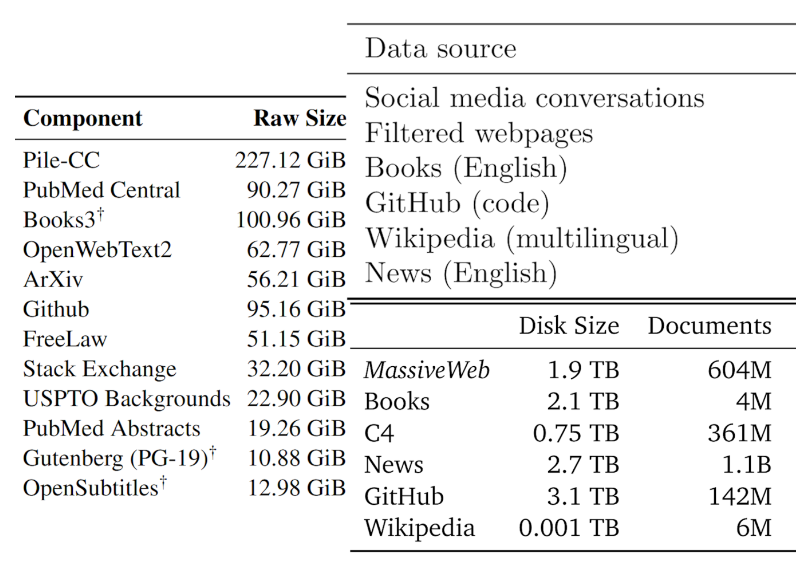
Training an LLM is a resource-intensive process. It starts with a phase called pre-training. During this stage, the model is fed a massive dataset of text and its only goal is to predict the next word in a sequence. It's like a fill-in-the-blank game on a planetary scale. For example, given the sentence "The sky is ____," the model learns to predict "blue."
Through billions of such examples, the model adjusts its internal parameters to get better at these predictions. In doing so, it implicitly learns grammar, facts, and even reasoning skills. This unsupervised learning approach means it doesn't need humans to label every piece of data.
After pre-training, many models go through a fine-tuning phase. This is where humans get involved to align the model with desired behaviors, like being helpful and harmless. Techniques like Reinforcement Learning from Human Feedback (RLHF) are used. In RLHF, humans rank different responses from the model, teaching it to generate answers that are more useful and appropriate for human interaction.
Real-World Applications
LLMs are not just research projects; they are already integrated into many tools we use daily. Their ability to process and generate language makes them incredibly versatile.
| Application | Description |
|---|---|
| Content Creation | Writing emails, drafting articles, generating marketing copy, or creating social media posts. |
| Information Synthesis | Summarizing long documents, research papers, or news articles to extract key points. |
| Chatbots & Assistants | Powering conversational agents for customer service or personal productivity. |
| Code Generation | Writing code snippets, debugging existing code, and explaining what a piece of code does. |
| Language Translation | Translating text between languages with more nuance and contextual accuracy than older tools. |
From helping scientists analyze research to enabling developers to build apps faster, LLMs are becoming a general-purpose technology. Understanding their basic principles is the first step to using them effectively.
What is the primary function of a Large Language Model (LLM)?
The "large" in Large Language Model refers to the model's physical size and the amount of electricity it consumes.