Mastering Project Management Fundamentals
Introduction to Project Management
What is Project Management?
At its heart, project management is the process of guiding a team to achieve a specific goal within a set timeframe. Think of planning a big event, like a surprise party. You have a goal (the party), a deadline (the date), and a budget. You need to coordinate tasks, like sending invitations, ordering a cake, and decorating. That coordination is project management in a nutshell.
Project management is the art and science of turning ideas into reality.
Without it, teams can drift without clear direction, deadlines get missed, and costs spiral. It provides structure and a clear path from start to finish. Every industry uses it, from building skyscrapers to developing new software or launching a marketing campaign. It’s the framework that keeps complex work organized and on track.
Project
noun
A temporary endeavor undertaken to create a unique product, service, or result. It has a defined beginning and end.
The Core Principles
Effective project management isn't about memorizing complex charts. It’s about sticking to a few foundational ideas that guide every decision. These principles are the bedrock of any successful project.
1. Clear Objectives: Every project must have a well-defined goal. What does success look like? If you don't know exactly where you're going, you’ll never get there. This means setting specific, measurable, and realistic targets from the beginning.
2. Stakeholder Engagement: A stakeholder is anyone with an interest in your project. This includes your team, your boss, your customers, and even other departments. Keeping them informed and involved is crucial. Their support can make a project, and their opposition can break it.
3. Defined Roles: Confusion about who does what leads to chaos. A good project manager ensures everyone on the team has a clear understanding of their responsibilities. This creates accountability and prevents important tasks from falling through the cracks.
4. Adaptability: No project goes exactly as planned. Things change. A customer might alter a request, a team member might get sick, or a technical issue might pop up. Being able to adapt and adjust the plan without derailing the entire project is a vital skill.
The Project Manager
So, who steers this ship? The project manager is the central point of contact and the person ultimately responsible for a project's success. They aren't always the expert in every technical detail, but they are the expert in the project's process.
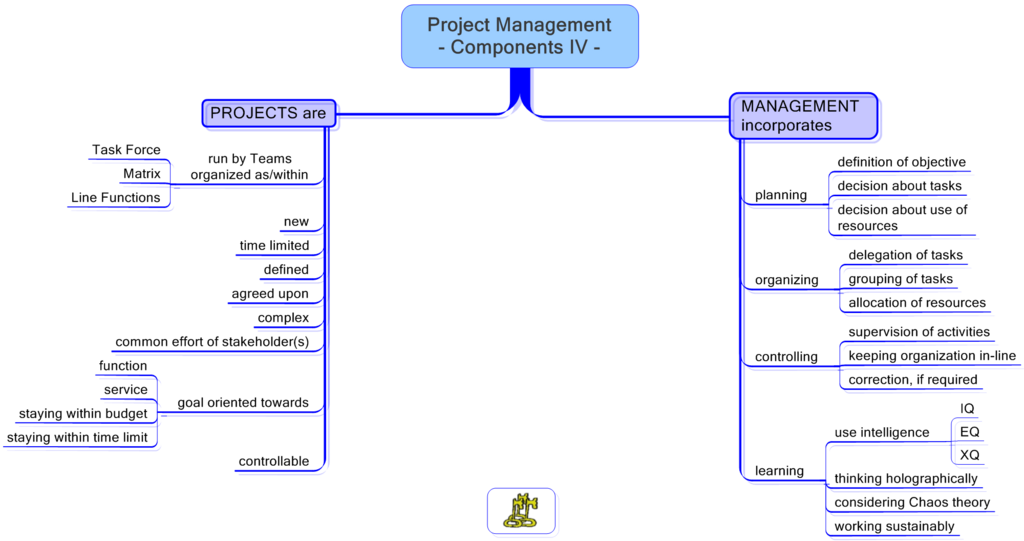
Their job is a balancing act. They manage the project's scope (what needs to be done), schedule (when it needs to be done), and budget (how much it can cost). These three elements are often called the "triple constraint" because a change in one almost always affects the others. For example, if you want to finish a project sooner (schedule), you might need to hire more people (budget) or reduce the number of features (scope).
A project manager's main responsibilities are planning the work, communicating with the team and stakeholders, managing risks, and ensuring the project meets its goals on time and within budget.
Great project managers are excellent communicators. They translate the needs of stakeholders to the team and report the team's progress back to stakeholders. They are problem-solvers, motivators, and planners, all rolled into one.
Ready to check your understanding of these foundational ideas?
What is the primary purpose of project management?
The "triple constraint" of project management refers to the balance between which three elements?
Understanding these core concepts is the first step. With a clear goal, an engaged team, and a solid plan, you have the foundation for turning any idea into a successful reality.