Mastering Programming Fundamentals
Introduction to Programming
What is Programming?
Programming is the art of giving instructions to a computer. Think of it like writing a detailed recipe for a baker who follows instructions perfectly but has no creativity. You, the programmer, are the chef. The computer is the baker. Your program is the recipe. Every step must be precise, from preheating the oven to the exact measurement of flour.
We write these recipes, or programs, to solve problems. This could be anything from calculating a tip at a restaurant, to running a social media website, or even guiding a spacecraft to another planet. At its core, programming tells a computer how to take input, process it, and produce an output.
Speaking the Computer's Language
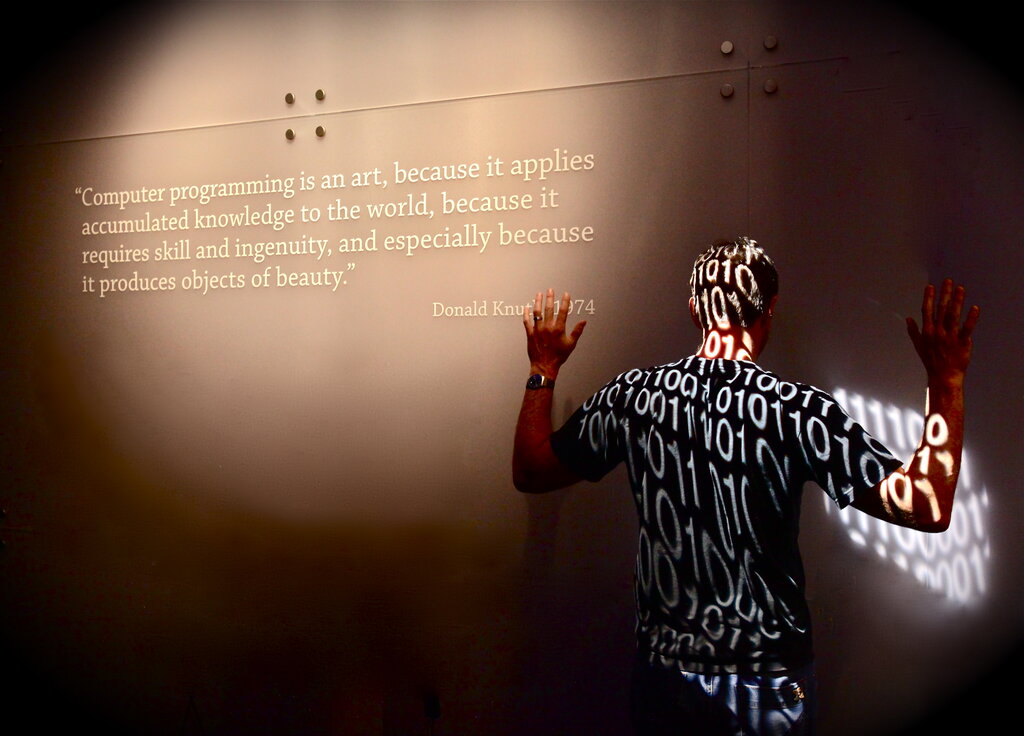
Computers don't understand human languages like English or Spanish. They operate on a much more basic level, using a language called machine code, which is just a series of ones and zeros. Writing directly in machine code is incredibly tedious and difficult for people.
This is where programming languages come in. They act as a bridge, allowing us to write instructions in a way that is much closer to human language. A special program, called a compiler or an interpreter, then translates our code into the ones and zeros the computer can execute.
There are hundreds of programming languages, each with its own syntax and strengths. Python is known for being easy to learn, JavaScript is the language of web browsers, and C++ is used for high performance applications like video games. Choosing a language is like choosing the right tool for a job.
The Basic Building Blocks
No matter which language you use, a few core concepts are universal. The first is the variable. A variable is simply a named container for a piece of information that your program needs to remember.
Variable
noun
A storage location in a computer's memory, given a symbolic name, which contains some known or unknown quantity of information referred to as a value.
When you create a variable, you also need to tell the computer what type of data it will hold. This is its data type. Is it a whole number? Text? A true or false value? Knowing the type helps the computer work with the data correctly.
| Data Type | Description | Example |
|---|---|---|
| Integer | Whole numbers | 42, -100 |
| Float | Numbers with a decimal point | 3.14, -0.01 |
| String | Text, wrapped in quotes | "Hello, World!" |
| Boolean | Represents true or false | true, false |
# This is how you might create variables

# An integer for age
user_age = 25

# A float for price
price = 19.99

# A string for a name
user_name = "Alex"

# A boolean to check if they are a student
is_student = true
Making Decisions and Repeating Actions
Once you have data stored in variables, you need to be able to do things with it. Control structures allow you to direct the flow of your program, making decisions and repeating actions.
Conditionals are the decision makers. They use if, else if, and else statements to run certain pieces of code only when a specific condition is met. It's like telling the computer: if this is true, do this; otherwise, do that.
temperature = 15

if temperature > 25:
  print("It's a hot day!")
else:
  print("It's not so hot.")

# Output: It's not so hot.
Loops are for repetition. When you need to perform the same action multiple times, a loop saves you from writing the same line of code over and over. A for loop repeats a task a specific number of times, while a while loop repeats as long as a certain condition is true.
# This 'for' loop will run 5 times
for i from 1 to 5:
  print("This is loop number", i)

# Output:
# This is loop number 1
# This is loop number 2
# This is loop number 3
# This is loop number 4
# This is loop number 5
These concepts—variables, data types, and control structures—are the fundamental building blocks of every program you will ever write or encounter.
In the analogy of programming as baking, what does the computer represent?
What is the primary purpose of a programming language?
With these basics, you have a solid foundation for starting your programming journey. Understanding how to store data and control the flow of a program is the first major step toward building powerful and useful applications.