Mastering Professional Pop Vocal Tracking
Advanced Signal Optimization
Beyond Clean Gain
You already know how to set a basic level. The microphone is plugged in, the gain is up, and the signal isn't clipping in your Digital Audio Workstation (DAW). That's gain staging 101. Now, we move beyond just getting a clean signal and start crafting a professional pop vocal track before it even hits the mix bus. This is about using your gear not just for volume, but for tone and character.
The first step is optimizing the relationship between your signal, the noise inherent in any electronic system, and the absolute ceiling of your digital converter. This space is defined by two critical concepts: the noise floor and headroom.
Your goal is to push the vocal signal as far away from the as possible without getting dangerously close to the clipping point. This maximizes your signal-to-noise ratio. For modern pop vocals, this often means aiming for peaks around -10 dBFS in your DAW during tracking. This leaves plenty of headroom for later processing, ensuring you never risk digital distortion, which is harsh and unusable.
The Color of Gain
In the world of high-end audio, a preamplifier does more than just make a signal louder. It imparts a sonic character. Driving the input of an analog preamp adds harmonic saturation—subtle, musically pleasing distortions that add warmth, richness, and presence to a vocal. This is the 'sweet spot' engineers talk about. It’s where the preamp is working hard enough to add color, but not so hard that it creates unwanted distortion.
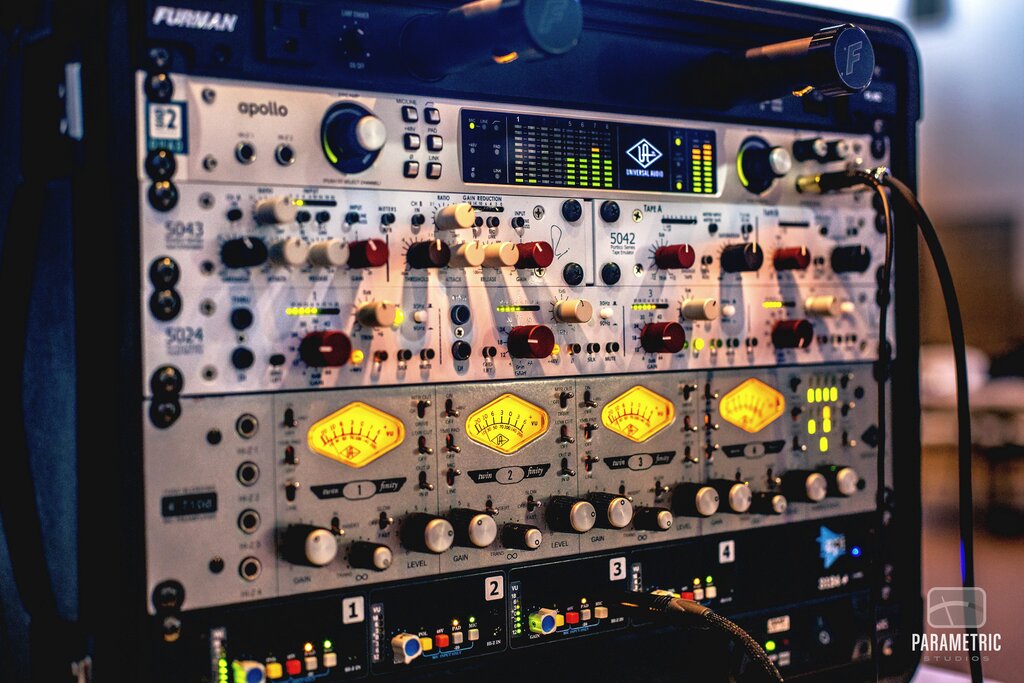
Finding this sweet spot involves a balancing act between the preamp's gain knob and the output trim (if it has one). You might push the input gain higher to get more of that analog character, then use the output trim to lower the overall level being sent to your audio interface. This ensures the signal hitting your digital converter isn't too hot, preventing clipping while retaining the desired analog tone.
The key is to use your ears. Turn the preamp gain up until you hear the vocal start to get richer and more forward. If it sounds fuzzy or distorted, you've gone too far. Back it off until it cleans up, then use the output knob to set your final level into the DAW.
Taming Dynamics on the Way In
Pop vocals are incredibly dynamic. A singer can go from a breathy whisper to a full-throated belt in a single phrase. While you don't want to squash the life out of the performance during tracking, a little bit of compression on the way in can make the vocal sit more consistently and require less work during the mix.
Serial compression is a powerful technique here. The idea is to use two compressors in a row, each doing a little bit of work. For example, the first compressor could be a fast-acting FET-style compressor (like a Urei 1176) set to just catch the quickest, loudest peaks. It might only be applying 1-2 dB of gain reduction on those peaks.
The second compressor could be a slower, smoother optical compressor (like a Teletronix LA-2A) that applies another 1-2 dB of overall level-smoothing. The result is a vocal that sounds controlled and polished, but not lifeless. The dynamic range is managed without sounding obviously compressed.
Adjust makeup gain so that your signal is equally loud when the compressor is switched on and when it’s in “bypass.”
Calibrating your outboard gear to your DAW is essential. A common standard is to set your interface so that a +4 dBu signal from your analog gear registers as -18 dBFS in your DAW. This gives you a reference point and ensures you're working in the optimal range for both your analog and digital equipment.
| Technique | Goal | Common Tools |
|---|---|---|
| Preamp Saturation | Add warmth and character | Neve 1073, API 512c, Tube Preamps |
| Peak Compression | Catch the loudest, fastest transients | Urei 1176, Empirical Labs Distressor |
| Leveling Compression | Smooth overall performance | Teletronix LA-2A, Tube-Tech CL 1B |
By focusing on the signal chain before the record button is pressed, you can capture a vocal that already has the polish and weight of a finished record. This front-end work makes the mixing process easier, faster, and ultimately more creative.