Mastering Professional Coat Tailoring
Anatomical Measurements and Balance
Beyond the Tape Measure
Cutting a well-structured coat is less about following a simple pattern and more about architectural drafting for the human form. Unlike a shirt or a dress that drapes, a coat is built. The key to this construction is 'balance'—the precise relationship between the garment's front and back lengths, which dictates how it hangs on the body.
A common point of confusion is the waistline. Your natural waist is the narrowest part of your torso, but a coat's finished waist level is often set slightly lower. This adjustment grounds the garment, providing a better anchor point for the heavy wool and internal structure, ensuring the skirt of the coat falls cleanly.
Charting the Upper Body
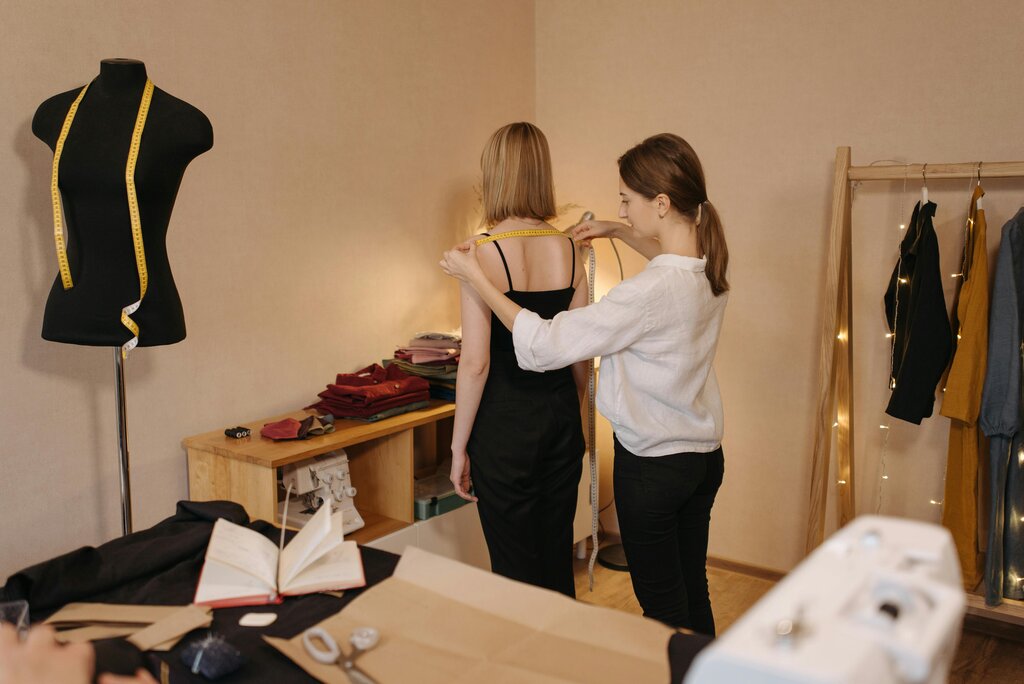
The foundation of a coat's fit is the upper torso. Here, we move beyond simple circumference and focus on depth and contour. The most critical measurement is the —the vertical distance from the nape of the neck down to a level line that runs under the armpits. This determines the armhole's size and position, which is fundamental for comfort and movement. It is typically taken using a tailor's square to ensure a perfectly horizontal line from the underarm.
Next, we account for the back's curvature. The prominence of the shoulder blades varies greatly between individuals. To measure this, you place one end of the tape at the nape of the neck and measure down to the waist level, first with the tape held taut against the spine, and a second time allowing it to run over the most prominent part of the shoulder blade. The difference between these two numbers gives a precise indication of the extra length needed in the back panel to prevent pulling across the shoulders.
Finally, the 'over-shoulder' measure is taken. This runs from the front chest, at the level of the armhole base, up over the shoulder, and down to the same level on the back. This single measurement captures the thickness of the shoulder and prepares the pattern for any shoulder padding that will be added, which is essential for creating a strong shoulder line in an overcoat.
Achieving Perfect Balance
With these measurements, you can establish the coat's balance. On the draft, you will make 'balance marks' on the front and back pattern pieces at the scye depth level. The back length from the nape to the waist will almost always be longer than the front length from the neck to the waist. This isn't a mistake; it's by design. The extra length in the back allows the garment to hang straight down, clearing the shoulder blades and seat, preventing the hem from kicking up at the back or swinging forward.
A balanced coat hangs vertically from the shoulder, with the front edges parallel and the hem level to the floor, whether buttoned or unbuttoned.
The final element is the ease allowance. For an overcoat, this is more than just adding a few inches for comfort. Ease must be strategically applied. You might add a generous amount through the chest and back to accommodate a suit jacket underneath, but keep the shoulder measurement very precise to maintain a sharp silhouette. The goal is to provide room for layering and movement without turning the coat into a shapeless sack. The heavy wool fabric will hang from the shoulders, so getting this point right is what separates a bespoke garment from a ready-to-wear one.
Ready to test your knowledge of these foundational tailoring measurements?
What is the primary purpose of the 'scye depth' measurement in coat tailoring?
Why is the back panel of a coat (measured from nape to waist) intentionally cut longer than the front panel?
Understanding these specialized measurements is the first step toward drafting a coat that fits not just the body's dimensions, but its posture and movement.