Mastering Productivity
Understanding Productivity
What is Productivity?
Productivity isn't just about being busy or working long hours. It's about achieving meaningful results. Simply put, productivity is the measure of how well you use your resources—like time, energy, and skill—to accomplish what you set out to do.
At its core, true productivity is a combination of two key ideas: effectiveness and efficiency. Understanding the difference is the first step toward improving how you work and live.
Effectiveness vs Efficiency
Though often used interchangeably, effectiveness and efficiency are distinct concepts.
Effectiveness is about doing the right things. It means choosing the correct tasks that align with your goals. If your goal is to increase sales, an effective task would be calling potential customers. Writing a detailed report on office supply usage would be ineffective, no matter how well you write it.
Efficiency is about doing things the right way. It focuses on minimizing waste—whether that's time, effort, or materials. An efficient salesperson might use a script to make calls faster or use software to track leads, completing the task with the least possible effort.
You can be highly efficient at an unimportant task, but that doesn't make you productive. True productivity happens when you are both effective and efficient.
| Inefficient | Efficient | |
|---|---|---|
| Effective | You achieve your goals, but it takes too much time and energy. | (Ideal) You achieve your goals with minimal waste. |
| Ineffective | You waste time and energy on the wrong tasks. | You do the wrong tasks very well. |
Common Productivity Roadblocks
Even with the best intentions, several common challenges can get in the way of being productive. Recognizing them is the first step to overcoming them.
Lack of Clarity: If you don't have clear goals, it's impossible to know what tasks are effective. You might spend your day being busy with low-impact activities because you haven't defined what truly matters.
Distractions: Constant notifications, social media, and a noisy environment pull your focus away from your work. Each interruption breaks your concentration, making it harder to complete tasks efficiently.
Procrastination: The act of delaying or postponing tasks, often until the last minute. This can lead to rushed, low-quality work and increased stress.
Burnout: Pushing yourself too hard for too long can lead to physical and mental exhaustion. When you're burnt out, your motivation plummets, and even simple tasks can feel overwhelming.
An Overview of Strategies
While specific techniques will be covered later, most productivity strategies are built on a few core principles. These are the foundational ideas for getting more of the right things done.
Set Clear Goals: Define what you want to achieve. A clear destination makes it easier to map out the journey and identify the most effective actions.
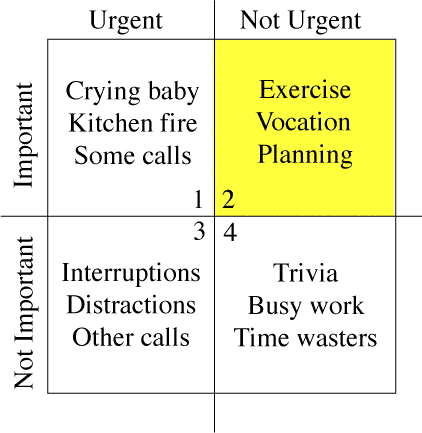
Prioritize Your Tasks: Not all tasks are created equal. Learning to distinguish between high-impact and low-impact activities ensures you're focusing your energy where it counts the most.
Manage Your Focus: Create an environment that allows for deep work. This might involve minimizing distractions, blocking out specific times for important tasks, and learning to say no to interruptions.
Pace Yourself: Productivity is a marathon, not a sprint. Taking regular breaks and managing your energy levels helps prevent burnout and maintains high performance over the long term.
Which of the following best defines the concept of 'effectiveness' in the context of productivity?
A software developer uses a new tool to write code 50% faster, but the code is for a feature that customers have not requested and that doesn't align with the company's strategy. This developer is being: