Mastering Product Management for Tech Growth
Product Management Fundamentals
What Is Product Management?
Product management is the art and science of guiding a product's journey from a simple idea to a successful reality in the market. A product manager, often called a PM, is at the heart of this process. Think of them as the captain of a ship, responsible for steering the product toward its destination.
Product management sits at the intersection of business, technology, and customer experience.
The PM's core job is to answer two critical questions: What should we build, and why? They don't necessarily design the user interface or write the code. Instead, they define the product's vision, set the strategy, and ensure every person on the team is working toward the same goal. They are the ultimate link between the customer's needs, the company's business goals, and the engineering team's capabilities.
Key responsibilities include:
- Setting the Vision: Defining what success looks like for the product.
- Understanding Users: Conducting research to grasp customer problems and needs.
- Prioritizing Work: Deciding which features to build next based on impact and effort.
- Aligning Teams: Ensuring that engineers, designers, marketers, and sales are all on the same page.
The Product Lifecycle
Products, like living things, go through a lifecycle. They are born, they grow, they mature, and eventually, they decline. A product manager's job changes depending on which stage the product is in. Understanding this cycle is key to making the right decisions at the right time.
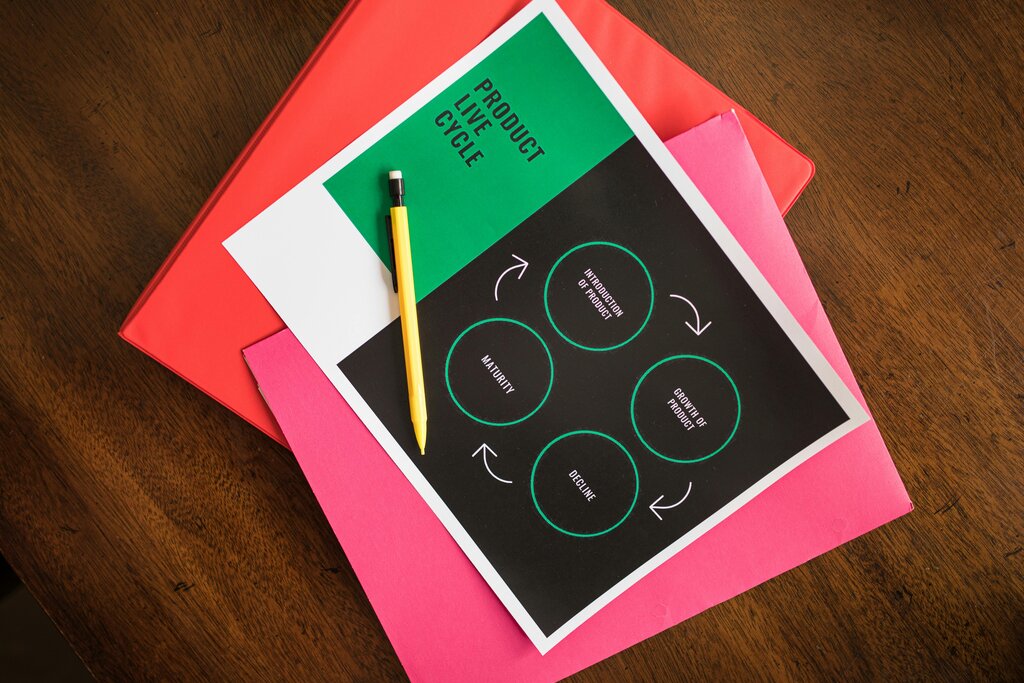
The typical stages are:
-
Introduction: This is the launch phase. The product is new, and the main goal is to find its first users and prove that the core idea solves a real problem. The PM focuses on getting feedback and making rapid improvements.
-
Growth: The product has found its footing and is gaining users quickly. The focus shifts to scaling, adding new features to attract a wider audience, and staying ahead of the competition.
-
Maturity: Growth slows down as the market becomes saturated. The product is now well-established. Here, the PM works on optimizing the existing experience, improving efficiency, and defending the product's market share.
-
Decline: The product becomes outdated or less relevant due to new technology or changing customer tastes. The PM must make tough decisions: should the product be retired, or can it be reinvented for a new purpose?
The Product Manager's Toolkit
To navigate these stages successfully, a product manager needs a diverse set of skills. It's less about being an expert in any one area and more about being a versatile leader who can connect the dots.
Generally, product management is a balancing act between technical know-how and people skills.
| Skill | Why It's Important |
|---|---|
| Strategic Thinking | To set a clear, long-term vision and connect it to the company's broader goals. |
| Communication | To align stakeholders, motivate the team, and clearly articulate the 'why'. |
| Empathy | To deeply understand the user's problems and build solutions they will love. |
| Data Analysis | To make informed decisions based on evidence, not just gut feelings. |
| Prioritization | To focus the team's limited resources on the work that delivers the most value. |
Focus on the Customer
If there's one principle that ties everything together, it's customer-centricity. Great products are not built in a vacuum. They are born from a deep understanding of the people who will use them. A product manager is the customer's biggest advocate inside the company.
The goal is to move from what the company thinks customers want to what customers actually need.
This involves talking to users, observing how they interact with prototypes, analyzing feedback, and using data to understand their behavior. By putting the customer at the center of every decision, product managers can guide their teams to build products that are not only useful but also successful.
Let's review the core concepts we've covered.
Ready to check your understanding?
What are the two most critical questions a Product Manager's core job is to answer?
A product is experiencing rapid user acquisition, and the team is focused on adding new features to attract a wider audience. Which stage of the product lifecycle is it in?
By mastering these fundamentals, you build the foundation for a successful career in product management, creating products that solve real problems for real people.