Mastering Product Management
Product Management Fundamentals
What Is Product Management?
Product management is the art and science of guiding a product from a simple idea to a successful reality in the hands of users. Think of a product manager as the captain of a ship. They don't row the oars or hoist the sails, but they hold the map, set the destination, and make sure everyone is working together to get there.
The core of product management is to identify a customer's problem and create a product that solves it in a way that works for the business.
Why is this role so important? Because building great products is hard. Without someone focused on the big picture — connecting user needs, business goals, and technical possibilities — teams can easily build features that nobody wants or solve problems that don't exist. Product managers ensure that what gets built is valuable, usable, and feasible.
Product management is the process of guiding a product from concept to market success.
The Product Manager's Role
So, what does a product manager actually do all day? Their primary job is to answer two critical questions: "What should we build?" and "Why?"
To answer these, they juggle several key responsibilities:
- Defining the Vision: They set the long-term direction for the product. Where is it going and what does success look like in one, three, or five years?
- Understanding Users: They are obsessed with the customer. They conduct interviews, analyze data, and run surveys to deeply understand the user's problems and needs.
- Prioritizing What's Next: There are always more ideas than time and resources. A PM's crucial task is to decide which features to build next. They create a product roadmap, which is a high-level plan that communicates what the team will work on over time.
- Communicating Clearly: They act as a communication hub, ensuring everyone from engineers to executives is aligned on the product's goals and progress.
Roadmap
noun
A strategic, high-level document that outlines the vision, direction, priorities, and progress of a product over time.
The role of a product manager is to bring together stakeholders, to align and focus the team, and to collaborate for the best possible outcome for the customer and the business.
The Product Lifecycle
Products, like people, go through different life stages. A product manager's job changes depending on which stage the product is in. Understanding this lifecycle helps them make the right decisions at the right time. The journey typically follows four main phases.
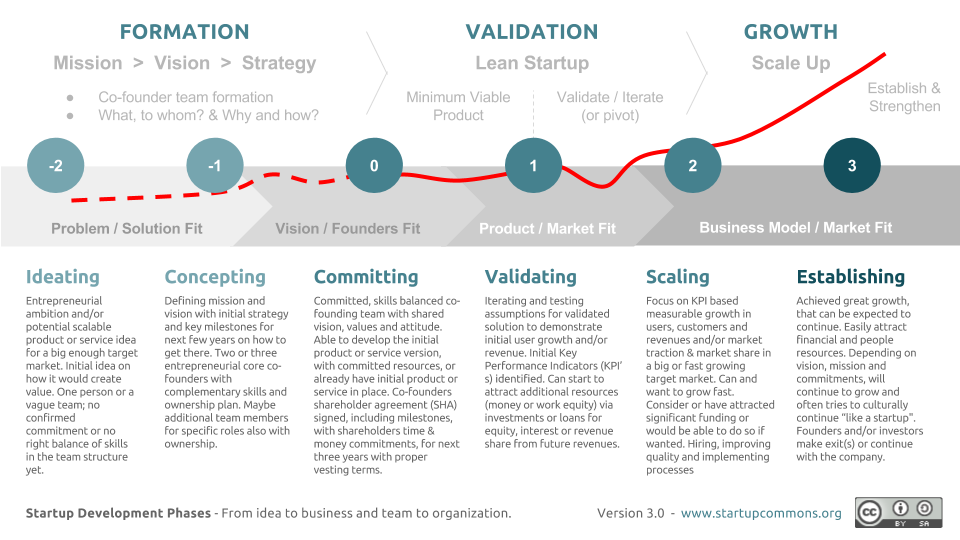
1. Ideation & Discovery This is where it all begins. The team identifies a promising problem to solve or an opportunity to explore. The PM's focus is on research and validation. Are we solving a real problem? Is there a market for this solution? This phase involves brainstorming, customer interviews, and market analysis.
2. Development & Testing Once an idea is validated, it's time to build. The product manager works closely with designers and engineers to turn the idea into a tangible product. They translate user needs into detailed requirements, create prototypes, and continuously test with users to get feedback. The goal isn't perfection, but a working product that solves the core problem.
3. Launch This is the big moment when the product is released to the public. The PM coordinates with marketing, sales, and support teams to ensure a smooth rollout. They define the launch strategy, craft messaging, and prepare the entire company to support the new product. After launch, they closely monitor its performance and gather user feedback.
4. Iteration & Growth Launching a product is just the beginning. Now the focus shifts to learning and improving. The product manager analyzes data on how people are using the product, gathers more feedback, and decides what to improve or build next. This creates a continuous cycle of building, measuring, and learning to grow the product and keep it relevant.
Essential Skills for Success
To navigate these responsibilities and the product lifecycle, a product manager needs a diverse set of skills. They don't need to be the top expert in any one area, but they need to be effective across several domains.
| Skill | Why It's Important |
|---|---|
| Communication | To align teams, pitch ideas to leaders, and explain complex concepts simply. |
| Empathy | To truly understand user problems and build solutions they will love. |
| Strategic Thinking | To see the big picture, define a compelling product vision, and prioritize effectively. |
| Analytical Skills | To interpret user data, measure success, and make evidence-based decisions. |
| Collaboration | To lead and influence a cross-functional team without direct authority. |
Great product management is about balancing these skills. It's about being strategic enough to set a vision but tactical enough to help the team execute on it. It’s a challenging but incredibly rewarding role that sits at the very heart of creating things people value.
Ready to test your understanding of these core concepts? Let's see what you've learned.
What are the two most critical questions a product manager is responsible for answering?
A product team is analyzing user engagement data, gathering feedback from recent customers, and planning the next set of improvements for a product that is already on the market. Which phase of the product lifecycle are they in?