Mastering Product Building with No-Code Automation
Introduction to No-Code Automation
Build Without Code
Imagine building a software application or automating a business process just by clicking, dragging, and dropping visual blocks. You're not writing lines of complex code. Instead, you're connecting pre-built components like LEGO bricks to create something new and functional. This is the core idea behind no-code automation.
No-Code Automation
noun
A method of developing applications and automating workflows using visual tools and pre-built components instead of traditional programming.
For decades, building software was the exclusive domain of developers. If you had an idea for an app, you needed to either learn to code or hire someone who could. No-code platforms change that. They empower entrepreneurs, designers, marketers, and anyone with a good idea to build and launch their own digital products.
The benefits are huge. Development time can shrink from months to days. Costs plummet because you don't need a large team of specialized engineers for every project. This speed allows for rapid prototyping, letting you build a basic version of your product, test it with real users, and gather feedback much faster than ever before.
No-code platforms have made it possible for students, entrepreneurs, freelancers, and creators to build and test real digital products—without writing a single line of code.
The No-Code Toolkit
A variety of powerful tools make no-code automation possible. Platforms like n8n specialize in connecting different applications to automate workflows. Think of them as digital switchboard operators. They let you create rules like, "When I get a new sale in my online store, automatically send a confirmation email, add the customer to my mailing list, and create a shipping task."
These tools use a visual interface where you can see your entire workflow laid out. You don't need to understand APIs or server configurations. You just connect the dots.
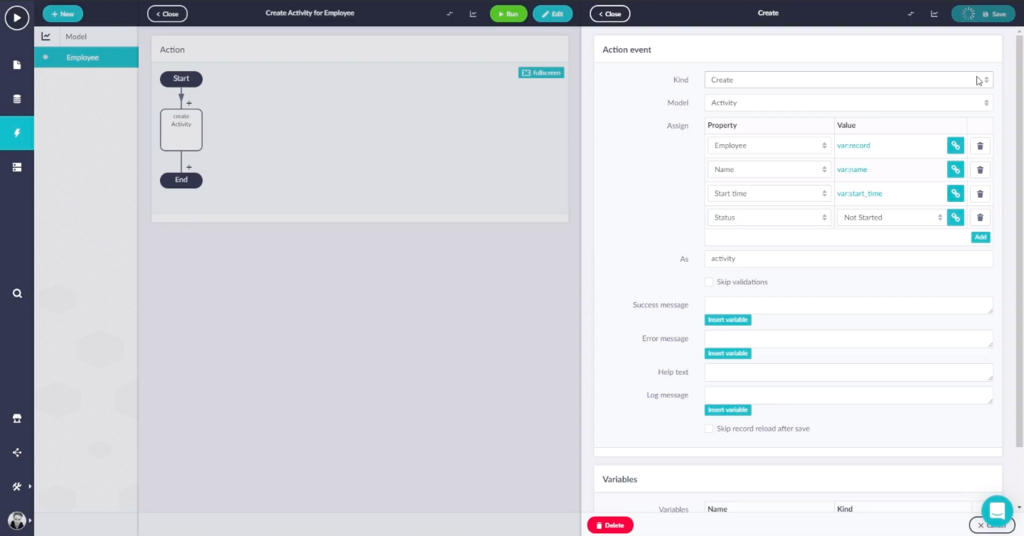
Workflows are typically built around two key concepts: triggers and actions.
- Triggers are the starting events. A new email arriving, a form being submitted, or a payment being processed are all examples of triggers.
- Actions are the tasks that are performed after a trigger occurs. Creating a calendar event, updating a spreadsheet, or sending a Slack message are all actions.
By combining a trigger with one or more actions, you can automate almost any repetitive digital task.
No-Code vs. Traditional Coding
No-code isn't a replacement for traditional programming. Instead, it's a different tool for a different job. Complex, highly customized applications with unique performance requirements will always need skilled developers. But for a huge range of applications, from internal business tools to customer-facing websites and mobile apps, no-code offers a faster and more accessible path.
It's particularly powerful for building a Minimum Viable Product (MVP). An MVP is the most basic version of a product that still solves a core problem for its users. With no-code tools, you can build and launch an MVP in a fraction of the time and cost, allowing you to validate your idea with real-world feedback before committing to a massive development project.
| Feature | No-Code Automation | Traditional Coding |
|---|---|---|
| Speed | Very fast (hours or days) | Slow (weeks or months) |
| Cost | Low initial cost | High development cost |
| Skill Required | Minimal, logic-based | High, requires programming expertise |
| Flexibility | Limited by platform features | Nearly limitless |
| Best For | Prototyping, MVPs, internal tools | Complex, scalable, custom applications |
By lowering the barrier to creation, no-code automation is democratizing technology. It gives more people the power to build, innovate, and solve problems without needing to write a single line of code. It's a fundamental shift in how we think about making things in the digital world.
Ready to check your understanding?
What are the two key concepts that form the basis of no-code workflows?
In a no-code workflow, the event that starts the automation, such as a new email arriving, is called a(n) ______.
This ability to quickly build and adapt is a game-changer for modern product development.