Mastering Process Methodologies
Introduction to Process Methodologies
What Are Process Methodologies?
At its heart, a business is a collection of processes. From fulfilling a customer order to hiring a new employee, these series of steps are how work gets done. A process methodology is simply a structured approach to analyzing and improving these workflows.
Instead of making random changes and hoping for the best, these frameworks provide a systematic way to identify problems, streamline steps, and boost performance. The goal is to make processes more efficient, consistent, and effective, which helps an organization run more smoothly and serve its customers better.
Think of it as the difference between a home cook who eyeballs ingredients and a professional chef who follows a precise recipe. Both might make a good meal, but the chef's process ensures quality and consistency every single time.
Common Frameworks
There are many different methodologies, each with its own focus. While they often overlap, understanding their core principles can help you see which approach fits a particular problem. Let's look at three of the most well-known frameworks: Lean, Six Sigma, and Business Process Re-engineering (BPR).
Lean
other
A methodology focused on maximizing customer value while minimizing waste. It's about creating more value for customers with fewer resources.
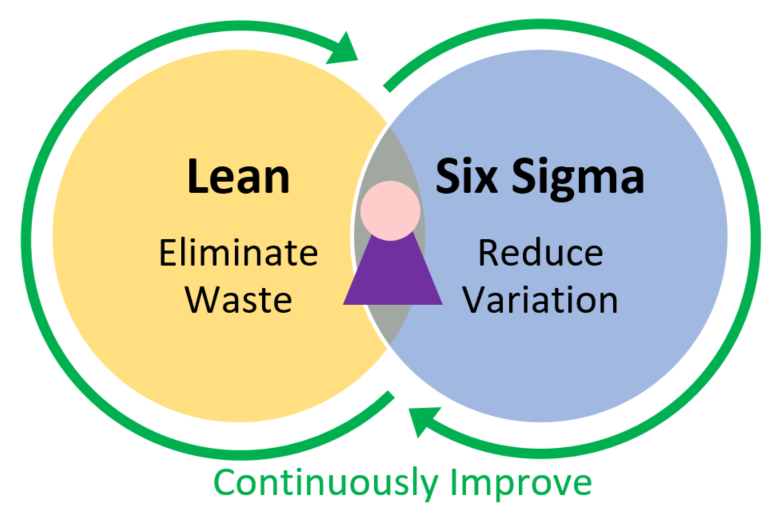
The core idea behind Lean is the relentless elimination of waste. In a business context, “waste” is anything that doesn’t add value for the customer. This could be wasted time waiting for approvals, excess inventory taking up space, or unnecessary steps in a workflow that just add complexity.
Lean thinking encourages teams to examine every step of a process and ask: Is this truly necessary to deliver what the customer wants? By trimming the fat, organizations can deliver products and services faster and more efficiently.
Six Sigma
other
A data-driven methodology aimed at eliminating defects and reducing variability in any process. The goal is to achieve near-perfect quality.
While Lean is about speed and efficiency, Six Sigma is all about quality and consistency. It uses statistical analysis to find and eliminate the root causes of errors. The name “Six Sigma” itself refers to a statistical level of quality—specifically, allowing no more than 3.4 defects per million opportunities.
Imagine a coffee shop that wants every latte to taste exactly the same. They would use Six Sigma to analyze their process—from grinding the beans to steaming the milk—to reduce any variation that could lead to an inconsistent cup. It’s a highly disciplined, data-driven approach to achieving predictable, high-quality results.
Starting From Scratch
Sometimes, a process is so broken or outdated that small improvements aren't enough. That's where Business Process Re-engineering (BPR) comes in. Unlike Lean and Six Sigma, which focus on continuous, incremental improvement, BPR advocates for a radical redesign of core business processes.
BPR doesn't ask, "How can we do this better?" It asks, "If we were starting from scratch, how would we do this?"
This approach involves rethinking a process from the ground up, often leveraging new technology to enable entirely new ways of working. For example, instead of improving the mail-based ordering system, a company using BPR might scrap it entirely and build a new e-commerce platform. It's a high-risk, high-reward strategy aimed at achieving dramatic improvements in performance, such as cost, quality, service, and speed.
The Payoff
Why do organizations invest time and resources into these methodologies? Because the benefits are significant. Implementing a structured process methodology can lead to:
| Benefit | Description |
|---|---|
| Increased Efficiency | By eliminating waste and streamlining steps, work gets done faster and with less effort. |
| Higher Quality | Reducing errors and variability leads to more reliable products and services. |
| Lower Costs | Less waste, fewer mistakes, and greater efficiency all contribute to a healthier bottom line. |
| Better Customer Satisfaction | Delivering higher quality products faster and more reliably makes customers happier. |
| Improved Agility | Well-defined processes make it easier for a company to adapt to market changes. |
Let's test your knowledge of these foundational concepts.
What is the primary focus of the Lean methodology?
A manufacturing company discovers that the color of its flagship product is slightly different from batch to batch. To solve this, they want to analyze their production process to make the outcome highly predictable and consistent. Which methodology is best suited for this goal?
Ultimately, these frameworks provide a roadmap for improvement, helping organizations move from chaotic, unpredictable workflows to smooth, reliable operations.