Mastering Prediction Markets
Introduction to Prediction Markets
What Are Prediction Markets?
At its heart, a prediction market is a place where people can bet on the outcome of future events. Think of it like a stock market, but instead of trading shares in a company, you trade shares in an outcome. Will a certain candidate win an election? Will a movie hit a specific box office target? Will a new product launch on time? These are the kinds of questions prediction markets tackle.
Prediction markets are powerful tools for forecasting future events by leveraging the collective knowledge of participants.
The core purpose is to gather and aggregate information scattered among many people. The idea is that a large group of informed individuals, each with their own piece of the puzzle, can collectively make a more accurate forecast than any single expert. This is often called the "wisdom of the crowd."
Each participant puts their money where their mouth is, buying shares in the outcomes they believe are most likely. This financial incentive encourages people to be thoughtful and honest in their predictions.
How They Work
The mechanics are straightforward. For any given event, the market creates shares for each possible outcome. Let's say the question is, "Will it rain in London tomorrow?" The market would offer two types of shares: "Yes" and "No."
If you believe it will rain, you buy "Yes" shares. If you think it will stay dry, you buy "No" shares. The price of these shares fluctuates based on supply and demand, just like in a stock market.
The price of a share isn't just a number; it represents the market's collective belief about the probability of that outcome occurring.
Share prices range from $0.01 to $0.99. If a "Yes" share for rain costs $0.30, it means the market collectively believes there's a 30% chance of rain. If new weather data comes out suggesting a storm is likely, more people will buy "Yes" shares, driving the price up to, say, $0.75, reflecting a 75% probability.
When the event happens, the market resolves. If it rains, each "Yes" share becomes worth $1.00, and each "No" share becomes worthless ($0.00). If it doesn't rain, the opposite happens. Your profit or loss is the difference between what you paid for your shares and their final value.
History and Applications
The concept isn't new. One of the earliest forms dates back to the 16th century, with people betting on who would become the next Pope. However, modern prediction markets largely began in the late 1980s with the Iowa Electronic Markets, which focused on political elections. They proved to be remarkably accurate, often outperforming traditional polls.
Today, prediction markets are used in many fields.
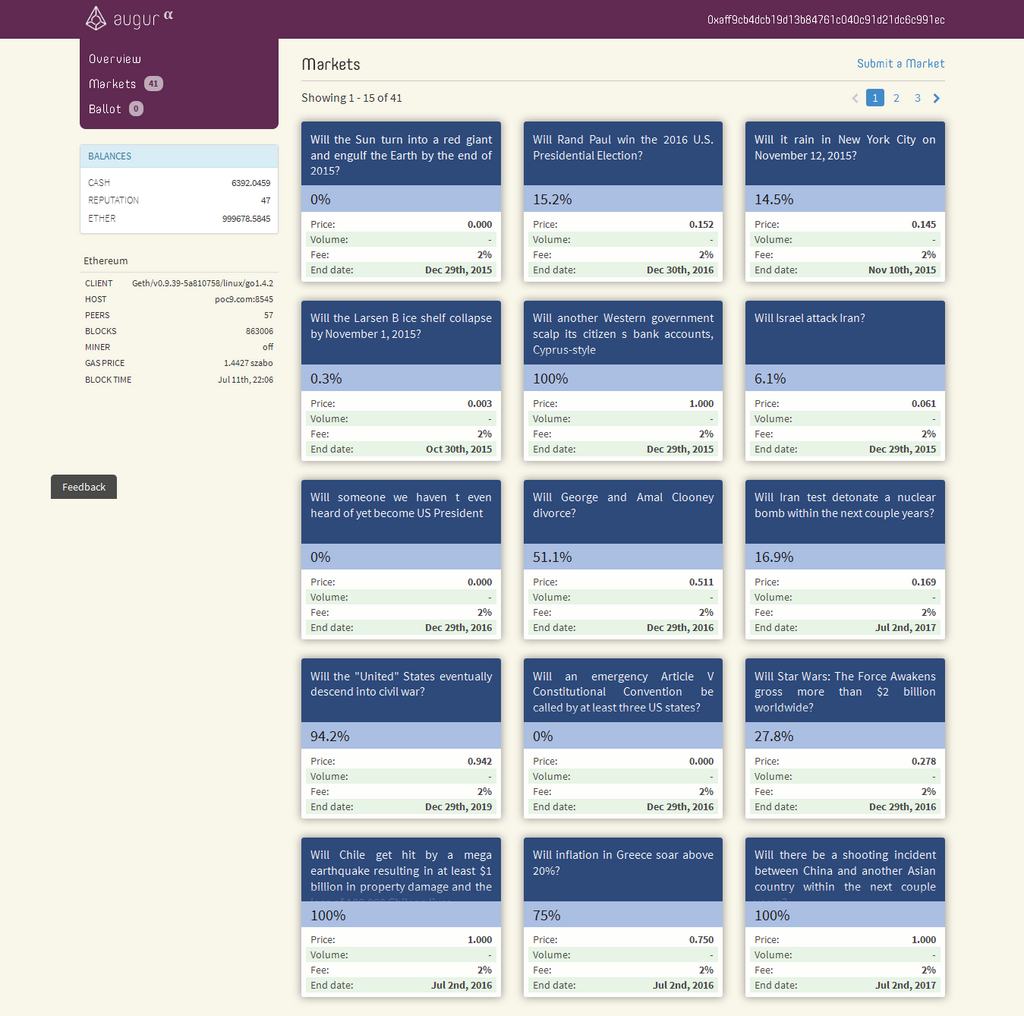
In politics, they forecast election results with impressive accuracy. In business, companies use internal prediction markets to predict project deadlines, sales figures, and new market trends. They've also found a home in sports betting and even entertainment, with markets on everything from Oscar winners to the series finale of a popular TV show.
By converting collective belief into a single, dynamic price, prediction markets offer a powerful and often surprisingly accurate glimpse into the future.
Ready to test your understanding?
What is the primary purpose of a prediction market?
In a prediction market, if a share for the outcome 'Project X will finish on time' is priced at $0.70, what does this price indicate?
Prediction markets provide a fascinating way to aggregate knowledge and forecast what's to come. They turn the abstract concept of probability into a tangible asset that can be traded.