Mastering Practical Software Development
Choosing Tech Stacks
Beyond Syntax
You know how to write a loop and define a variable. The next step is moving from writing code to building software. A crucial part of that is choosing your tools—the programming languages, frameworks, and libraries that form your technology stack. This decision isn't about personal preference; it's about making strategic trade-offs based on the goals of your project.
The right stack can make development smooth and the final product fast and reliable. The wrong one can lead to performance bottlenecks, security vulnerabilities, and a frustrating development process. Let's explore the key factors that guide this choice.
How Your Code Runs
One of the first big decisions revolves around how your code gets turned into instructions a computer can actually execute. This is the difference between compiled and interpreted languages.
Compiled languages like C++, Go, and Rust are translated into machine code all at once, before you run the program. This process, called compilation, creates an executable file optimized for the specific computer architecture. The major advantage is speed. Because the translation work is done upfront, the program runs very fast.
Interpreted languages like Python and JavaScript are translated on the fly, line by line, as the program is running. An interpreter reads the source code and executes it directly. This makes for a faster development cycle—you can write code and run it immediately without a separate compilation step. The trade-off is performance; the constant translation process adds overhead, making interpreted languages generally slower than compiled ones.
Think of it this way: a compiled language is like a fully translated book, ready to be read from start to finish. An interpreted language is like reading a book with a live translator who translates each sentence for you just before you read it.
Some modern languages use a hybrid approach. For example, Java is compiled into an intermediate form called bytecode, which is then interpreted by a Java Virtual Machine (JVM). The JVM can perform to translate frequently used bytecode into native machine code at runtime, gaining many of the performance benefits of a compiled language.
Managing Memory
Every program needs to use computer memory to store data. How a language manages this memory has a huge impact on both performance and safety.
In languages like C and C++, the programmer is responsible for manual memory management. You must explicitly ask the operating system for memory when you need it and release it when you're done. This gives you maximum control and can lead to highly performant code. However, it's also a major source of bugs, like memory leaks (forgetting to release memory) or dangling pointers (trying to use memory that has already been released).
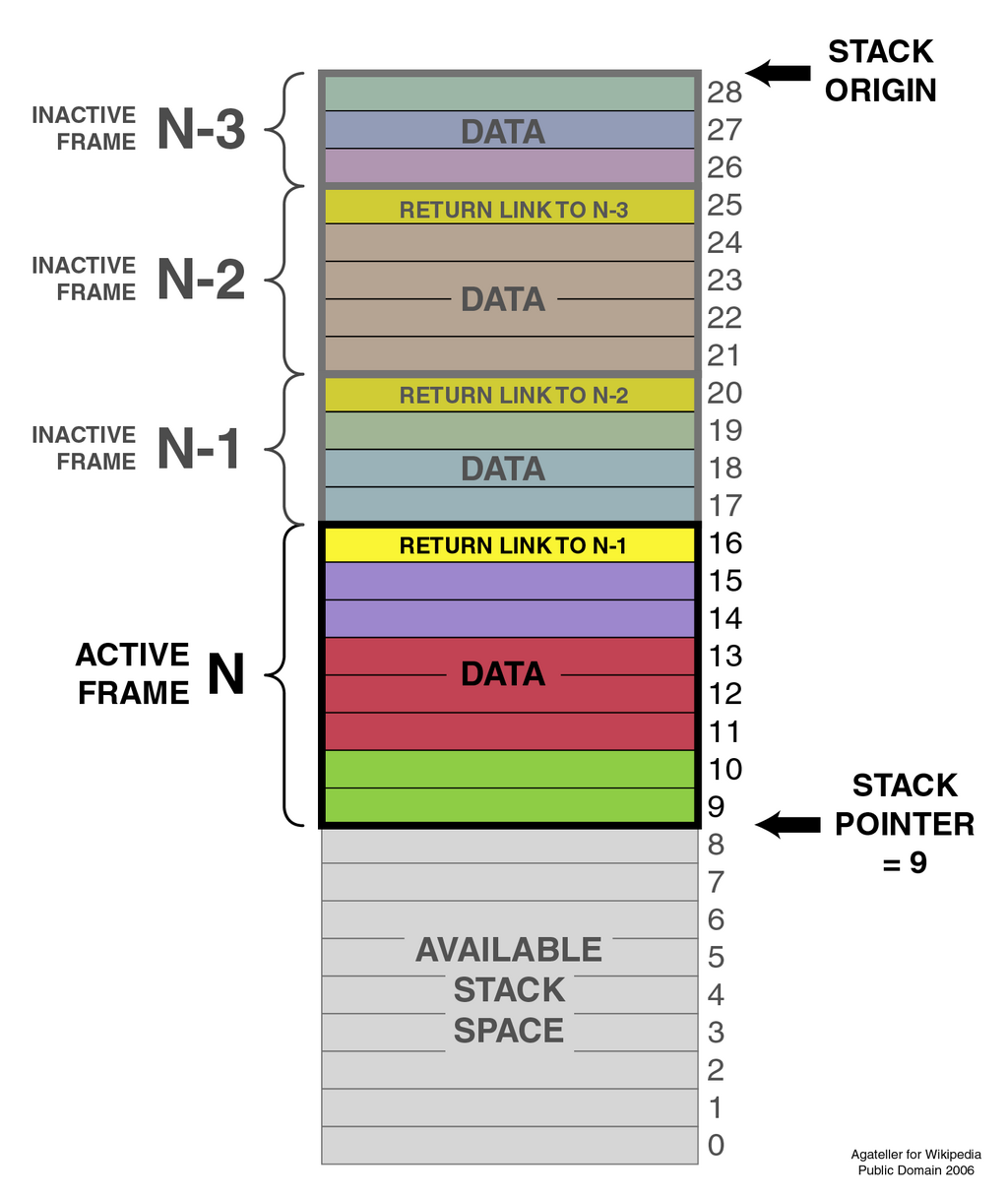
Most modern languages, including Java, C#, Python, and Go, use automatic memory management via a process called (GC). A runtime system, the garbage collector, periodically identifies memory that is no longer in use and automatically frees it. This prevents most memory-related bugs and makes development much easier. The downside is a slight performance cost. The GC has to run periodically, which can cause brief pauses in the application, making it unsuitable for some real-time systems.
Rust offers a third path with its unique a set of rules checked by the compiler. This system enforces memory safety at compile time without needing a garbage collector at runtime. It guarantees that memory is managed correctly, preventing common bugs like null pointer dereferences and data races in concurrent code. This allows Rust to achieve performance comparable to C++ while providing the memory safety of a garbage-collected language.
The Power of the Ecosystem
A programming language is more than just its syntax. Its ecosystem—the collection of available libraries, frameworks, tools, and community support—is just as important. A language with a rich ecosystem can save you thousands of hours of work.
When evaluating a stack, consider:
- Libraries and Frameworks: Does the language have mature, well-maintained libraries for the tasks you need? For web development, Python has Django and Flask, while JavaScript has React and Node.js. Starting with a powerful framework is a massive head start.
- Community Support: How easy is it to find answers when you get stuck? A large, active community on sites like Stack Overflow means you're more likely to find solutions to common problems.
- Tooling: How good are the development tools? A good package manager (like
npmfor JavaScript orcargofor Rust), debugger, and build tools can dramatically improve productivity. - Longevity and Backing: Is the language actively maintained and likely to be around for a while? Languages backed by major corporations, like Go (Google), C# (Microsoft), or Swift (Apple), often have strong, long-term support.
Here’s how these factors influence real-world decisions.
| Project Goal | Key Concern | Good Stack Choices | Rationale |
|---|---|---|---|
| High-performance game engine | Raw speed, memory control | C++, Rust | Compiled languages with manual/ownership memory models offer the best performance. |
| Rapid web app prototype | Development speed | Python (Django), Ruby (Rails) | Interpreted languages with rich web frameworks allow for extremely fast development. |
| Embedded system or OS | Low-level hardware access | C, Rust | Need direct memory access and no garbage collection overhead. |
| Cross-platform mobile app | Code reuse, native feel | JavaScript (React Native), Dart (Flutter) | Frameworks that compile to native components let you write once and deploy to both iOS and Android. |
| Large-scale backend service | Concurrency, scalability | Go, Java, C# | Designed for concurrency with strong typing and robust ecosystems for building reliable systems. |
Choosing a tech stack is an exercise in balancing constraints. There's rarely a single "best" answer. A deep understanding of these trade-offs—between performance and development speed, safety and control—is what separates a junior developer from a seasoned engineer.
What is the primary advantage of a compiled language like C++ compared to an interpreted language like Python?
A developer is building a high-frequency trading system where even tiny, unpredictable pauses are unacceptable. Which memory management model would be the LEAST suitable for this project?