Mastering Practical Scrum and Agile Flow
Optimizing Sprint Events
Beyond the Basics of Sprint Planning
Sprint Planning sets the course for the entire Sprint. When it becomes a lengthy, unfocused discussion, the team starts the Sprint with confusion, not clarity. The goal isn't just to fill the Sprint Backlog; it's to craft a shared understanding of the work and a viable plan to achieve the Sprint Goal.
For large or multiple teams, trying to plan everything in one large group discussion is inefficient. A better approach is to break it down. The Product Owner can set the stage by presenting the highest priority items and the proposed Sprint Goal. Then, teams can split into smaller groups to discuss specific items, identify dependencies, and sketch out a rough plan. This parallel processing makes better use of time and empowers team members to engage deeply with the work they'll be doing.
Protecting the time-box is critical. A facilitator, often the Scrum Master, must keep the conversation moving. If a discussion about a single backlog item spirals, park it. Note the issue, and assign a smaller group to resolve it offline while the rest of the team continues planning. The key is to balance detailed planning with momentum. The plan doesn't need to be perfect, just complete enough to start.
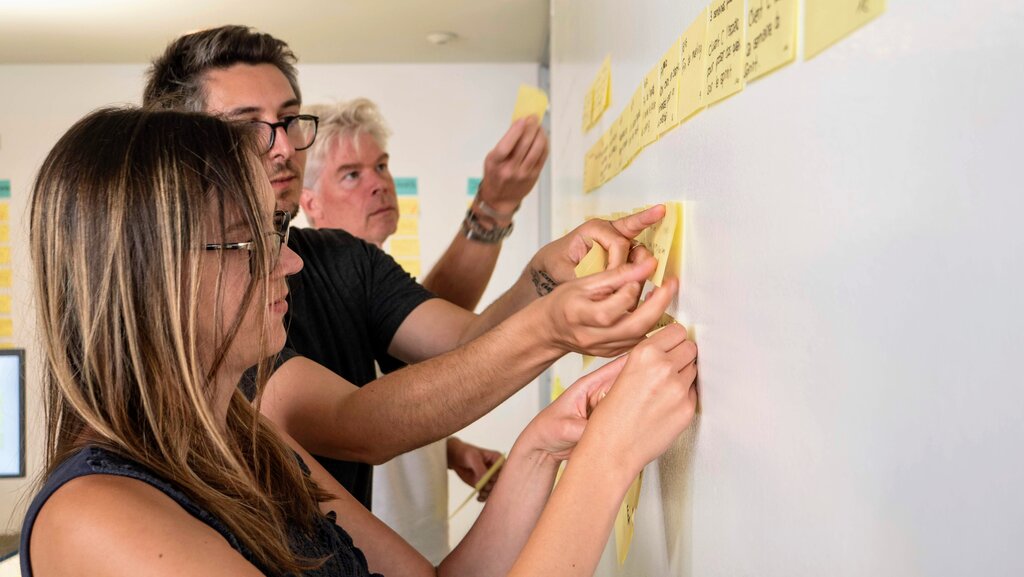
A common trade-off is between a rigid agenda and a flexible, objective-driven session. An agenda ensures all topics are covered, but it can stifle organic conversation. An objective-driven approach focuses only on achieving the Sprint Goal and a workable plan. This allows for more flexibility but requires a skilled facilitator to prevent the session from derailing. A good compromise is a lightweight agenda with clear objectives for each part.
The Daily Scrum as a Planning Event
The most common pitfall for the Daily Scrum is devolving into a series of status reports for the Scrum Master. This misses the entire point. The Daily Scrum is a 15-minute planning event for the Developers, by the Developers. The focus should always be on progress toward the Sprint Goal.
To shift the focus, stop going around the room person by person. Instead, try “walking the board.” Start with the work items closest to being done. For each item, ask: “What can we do today to move this forward?” This centers the conversation on the flow of work, not individual activity. It naturally highlights blockers and dependencies, prompting the team to swarm on problems.
The Scrum Master’s role here is to be an observer and coach. If the conversation drifts into problem-solving, gently guide the team to agree to sync up immediately after the Daily Scrum. The event is for identifying issues and making a plan for the next 24 hours, not for solving the issues on the spot.
The purpose of the Daily Scrum is to inspect progress toward the Sprint Goal and adapt the Sprint Backlog as necessary, adjusting the upcoming planned work.
Powerful Reviews and Retrospectives
The Sprint Review is more than a demo. It's a working session to gather feedback from stakeholders that can inform the next Sprint. Instead of a one-way presentation, structure it as an interactive workshop. Let stakeholders use the increment if possible. Frame the session with questions like, “Based on what you see, what should we tackle next?” This turns passive observers into active collaborators.
Retrospectives, on the other hand, can easily become stale if you use the same “What went well, what didn't” format every time. To generate deeper insights, introduce new formats. Advanced techniques like Liberating Structures are designed to include and engage everyone. For example, using “1-2-4-All,” you can have individuals reflect silently on a prompt (1 min), then discuss in pairs (2 min), then in foursomes (4 min), and finally share key ideas with the whole group. This process ensures that quieter voices are heard and prevents a few dominant personalities from controlling the conversation.
Maintaining this collaborative energy in remote or hybrid settings requires deliberate effort. Use digital whiteboarding tools (like Miro or Mural) to replicate the in-person experience of using sticky notes. Rely heavily on breakout rooms to facilitate smaller group discussions, which are often more productive than trying to manage a large group in a single video call. A facilitator should also check in frequently, using polls or simple hand signals to gauge engagement and understanding. For hybrid meetings, ensure remote participants have a dedicated advocate in the room who can voice their questions and prevent them from being overlooked.
Ready to test your knowledge on making these events more effective?
What is the primary goal of Sprint Planning beyond simply selecting items from the Product Backlog?
During a Daily Scrum, the team discusses a work item that is nearly finished. What is the most effective question to ask to keep the focus on progress?
By moving beyond scripted formats and focusing on the underlying goals, you can transform routine Scrum events into powerful opportunities for alignment, adaptation, and continuous improvement.