Mastering Power Functions from Scratch
Power Function Basics
What is a Power Function?
At its core, a power function is a simple but powerful mathematical relationship. It follows a specific formula where one number is multiplied by itself a certain number of times.
Think of the area of a square. If a side has length , the area is , or . Here, is the base and 2 is the constant exponent. If you change the side length, the base changes, but the exponent '2' always stays the same.
Likewise, the volume of a cube with side length is , or . The base, , can be any length you choose, but the is always 3. These are both classic power functions.
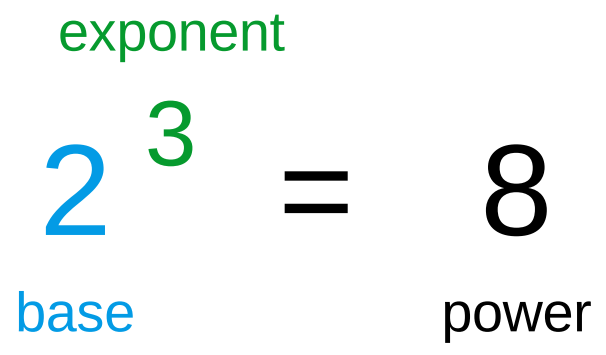
Power vs. Exponential
It's easy to mix up power functions with another type, called exponential functions. They look similar, but the key difference is where the variable is located.
| Function Type | General Form | Key Feature |
|---|---|---|
| Power Function | The base is the variable. | |
| Exponential Function | The exponent is the variable. |
In a power function like , the base changes, but the power it's raised to is fixed. In an exponential function like , the base (2) is fixed, but the exponent is the part that changes. This small difference leads to dramatically different behaviors.
Calculating Powers in Code
Computers can calculate power functions easily. In C++, the standard way to do this is with the pow() function, which is part of a collection of math tools called the cmath library. You need to tell the compiler you want to use this library by including it at the top of your file.
#include <iostream>
#include <cmath> // Include the cmath library for math functions

int main() {
    // Calculate 5 to the power of 2 (5^2)
    double base = 5.0;
    double exponent = 2.0;
    double result = std::pow(base, exponent);

    // The pow() function takes the base first, then the exponent.
    std::cout << base << " raised to the power of " << exponent << " is " << result << std::endl; // Prints 25

    // Calculate 2 to the power of 3 (2^3)
    double result2 = std::pow(2.0, 3.0);
    std::cout << "2 raised to the power of 3 is " << result2 << std::endl; // Prints 8

    return 0;
}
The pow() function is straightforward: you provide the base as the first argument and the exponent as the second. It handles the repeated multiplication for you and returns the answer.
Which of the following represents the general form of a power function, where 'x' is the variable and 'a' is a constant?
What is the primary difference between a power function (like ) and an exponential function (like )?
That's the basic idea of a power function. It's a fundamental building block you'll see again and again in math, science, and programming.