Mastering Pocket Billiards
Introduction to Pool
From Lawns to Lounges
Pool's story begins outdoors. It evolved from lawn games popular in 15th-century Northern Europe, similar to croquet. Players used a stick called a mace to shove balls around a grassy court. Eventually, the game moved indoors, onto a wooden table with a green cloth to mimic grass. The edges were simple rails to keep the balls from falling off. These early versions were a favorite of kings and commoners alike.
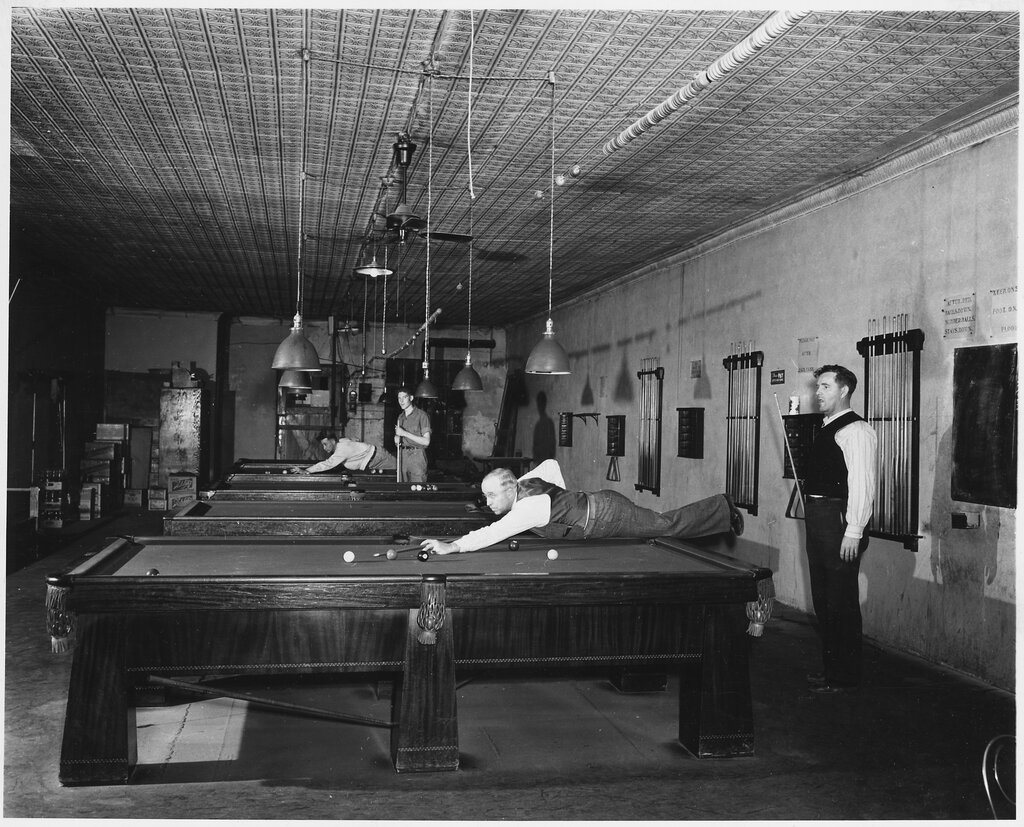
Over time, the equipment improved. The mace was replaced by the cue, a tapered stick that allowed for more precise strikes. Tables were built with slate beds for a perfectly flat surface, and rubber cushions were added for predictable bounces. The game, once a pastime for French nobility, found a new home in American saloons and pool halls, where it became the game we recognize today.
From humble beginnings in European lawn games and American saloons to the polished global sport it is today, pool’s evolution showcases its enduring appeal and adaptability.
The Tools of the Trade
Every game of pool uses three basic pieces of equipment: the table, the balls, and the cue stick. While they seem simple, each is designed with precision.
The table is the centerpiece. Its playing surface is a heavy slab of slate, which ensures it remains perfectly flat. This slate is covered with a tightly woven cloth, often called felt, which allows balls to roll smoothly. The rubber bumpers along the rails are called cushions, and their job is to make the balls rebound in a predictable way. The six holes are the pockets.
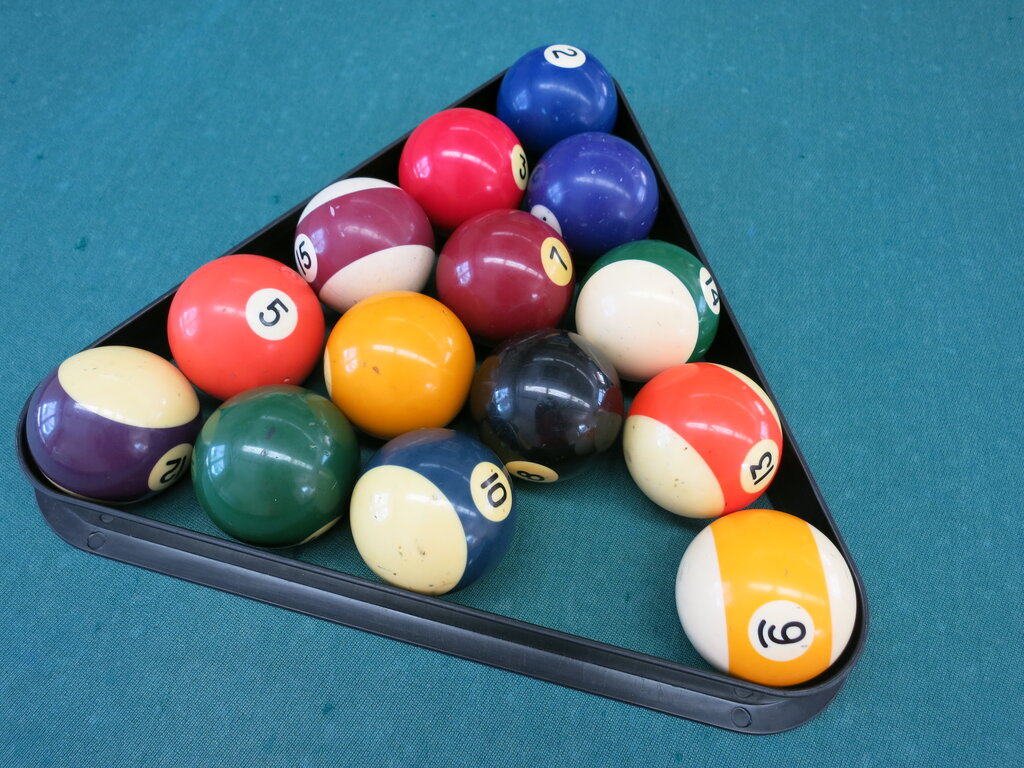
The balls are the next crucial element. A standard set has 16 balls. One is the all-white cue ball, which is the only ball you ever strike directly with the cue stick. The other 15 are object balls, numbered 1 through 15. Balls 1 through 7 are solid colors, and 9 through 15 are striped. The 8-ball is solid black.
Cue Stick
noun
A tapered stick, typically about 58 inches long, used to strike the cue ball in billiards games.
Finally, there’s the cue stick. This is your tool for playing the game. It's a carefully balanced stick that tapers from a wide butt end to a narrow tip, which is usually covered with a small piece of leather. The tip is roughened with chalk to create friction, allowing you to grip the cue ball for a moment upon impact and control its spin and direction.
The Goal of the Game
While there are many different games you can play on a pool table, the fundamental objective is almost always the same: use the cue stick to strike the cue ball, which in turn strikes an object ball, sending it into a pocket. This is called pocketing a ball, or sinking a shot.
The core rule is simple: you can only hit the cue ball with your stick. The cue ball then does all the work of hitting the other balls.
The specific rules determine which balls you must pocket and in what order. For example, in the popular game of 8-ball, one player tries to pocket the solid balls while the other player targets the stripes. After a player has pocketed all their assigned balls, they must then pocket the 8-ball to win the game. The key to success is controlling the cue ball, making it go where you want it to after it hits an object ball.
From which type of game did modern pool evolve?
What is the primary reason for using a heavy slab of slate for the playing surface of a pool table?
That's the basic rundown of how pool works. With an understanding of the history, equipment, and objective, you're ready to approach the table.