Mastering PID Tuning for FPV Drones
Introduction to PID Control
The Brain of Your Drone
When you push the sticks on your controller, you're not directly telling the drone's motors how fast to spin. You're giving a command, like "roll right at this speed." The drone's flight controller then has to figure out exactly how to execute that command. It's a constant balancing act. Wind, air pressure, and tiny imperfections in the motors all try to knock the drone off course.
The flight controller is the brain of the drone, responsible for stabilizing and controlling its flight.
To stay stable and follow your commands, the flight controller uses a feedback system. It constantly compares your desired movement (the setpoint) with what the drone is actually doing (the process variable), which it measures using sensors like a gyroscope. The difference between these two is the error. The goal is to make this error zero.
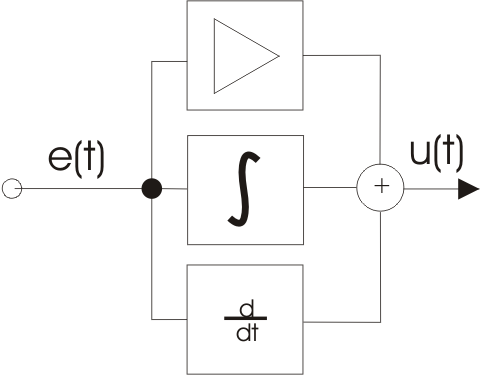
This is where the PID controller comes in. It's an algorithm that takes the error signal and calculates the necessary adjustments to the motor speeds to correct it. PID stands for Proportional, Integral, and Derivative—three distinct parts that work together to achieve smooth, responsive flight.
The Three Components
Each part of the PID controller has a specific job. Think of them as three experts advising the flight controller on how to respond to an error.
Proportional
adjective
Reacts to the present error. The larger the error, the stronger the correction.
The Proportional (P) component looks at the current error and applies a corrective force proportional to its size. If your drone is tilted 10 degrees off from where you want it, P will push back twice as hard as if it were only 5 degrees off. It's the most straightforward part of the controller, providing the primary response to any deviation. However, relying on P alone often results in overshooting the target and oscillating around it.
P is all about the now. It asks: "How far off am I right now?"
Integral
adjective
Accumulates past errors over time. It corrects for small, persistent offsets.
The Integral (I) component looks at the history of the error. It sums up the error over time. If a small, constant error persists (like a steady drift caused by wind), the accumulated sum will grow, prompting the I component to apply an increasing corrective force until the error is eliminated. This is crucial for holding a precise angle and resisting constant forces. Too much I, however, can lead to slow oscillations and a sluggish feel.
I is concerned with the past. It asks: "Have I been off for a while?"
Derivative
adjective
Anticipates future error based on its current rate of change. It acts as a damper.
The Derivative (D) component predicts the future. It looks at how quickly the error is changing. If the error is shrinking rapidly and the drone is rushing towards its target, D will apply a counteracting force to slow it down, preventing it from overshooting. This acts as a damper, reducing the oscillations caused by the P component. It helps the drone feel locked-in and sharp. A high D value can amplify vibrations from the motors, leading to a noisy and hot system.
D looks to the future. It asks: "How fast am I approaching my target?"
Stability vs. Responsiveness
The magic of a PID controller is in balancing these three components. You adjust their influence with settings called "gains" (P-gain, I-gain, D-gain). Changing these gains trades off stability for responsiveness.
A high P-gain makes the drone react aggressively to stick inputs and disturbances. This feels very responsive, but if it's too high, the drone will wildly overshoot and oscillate. A low P-gain makes the drone feel soft and sluggish, struggling to hold its position.
The I-gain ensures the drone holds its commanded angle perfectly over time, fighting off forces like wind. But too much I-gain can make corrections slow and cause the drone to drift or
The I-gain ensures the drone holds its commanded angle perfectly over time, fighting off forces like wind. But too much I-gain can make corrections slow and cause the drone to drift or "bounce back" after a quick maneuver.
The D-gain acts like a brake, smoothing out the aggressive actions of the P-gain. It's key to preventing overshoots and making the drone feel crisp and connected. However, since it reacts to the rate of change of the error, it's very sensitive to high-frequency noise from motor vibrations, which can cause motors to get hot if the D-gain is too high.
| Component | High Gain Effect | Low Gain Effect |
|---|---|---|
| P (Proportional) | Fast, responsive, but can oscillate | Slow, mushy, poor hold |
| I (Integral) | Strong hold, resists drift, but can oscillate slowly | Weak hold, drifts in wind |
| D (Derivative) | Dampens P, sharp stops, but can cause hot motors | Overshoots, bounces back after flips |
Finding the right balance, or "tune," is what allows a drone to fly with both precision and grace. A well-tuned PID loop enables the drone to instantly translate your commands into motion while simultaneously rejecting external disturbances to remain perfectly stable.
Let's check your understanding of these core concepts.
What is the primary role of the Proportional (P) component in a drone's PID controller?
You perform a quick roll, but the drone overshoots the target angle and oscillates back and forth before settling. This behavior suggests which gain is likely too high?
Mastering the relationship between P, I, and D is the first step toward achieving the perfect flight characteristics for your drone.