Mastering Physical AI and Embodied Intelligence
Edge Intelligence Architecture
From Cloud to Device
A neural network trained in the cloud often lives on powerful servers with vast memory and near-limitless electricity. This is where models learn from massive datasets. But for AI to interact with the physical world through a robot, a sensor, or a drone, that intelligence needs to leave the data center and run on a small, local piece of hardware. This is called edge computing.
The challenge is immense. The complex, multi-gigabyte models from the cloud won't simply fit on a device with limited memory, a small battery, and a fraction of the processing power. To bridge this gap, we can't just copy the model over; we have to fundamentally re-engineer it to be smaller, faster, and more efficient without losing its core capabilities. This process of shrinking a model for physical deployment is known as model compression.
Specialized Hardware for AI
General-purpose CPUs, like the one in your laptop, aren't great at the specific type of math that neural networks rely on. AI workloads involve performing millions of simple calculations in parallel. To handle this, specialized hardware accelerators have become essential.
- Graphics Processing Units (GPUs) were originally designed to render video games, a task that requires running the same operation on thousands of pixels at once. This parallel structure turned out to be perfect for training and running neural networks.
- Tensor Processing Units (TPUs) are custom-built chips from Google, designed from the ground up for one thing: accelerating the matrix multiplications at the heart of neural networks. They are incredibly efficient for AI tasks.
- Neural Processing Units (NPUs) are a broader category of processors designed to accelerate AI inference. They are common in smartphones and other edge devices, optimized for running models with very low power consumption.
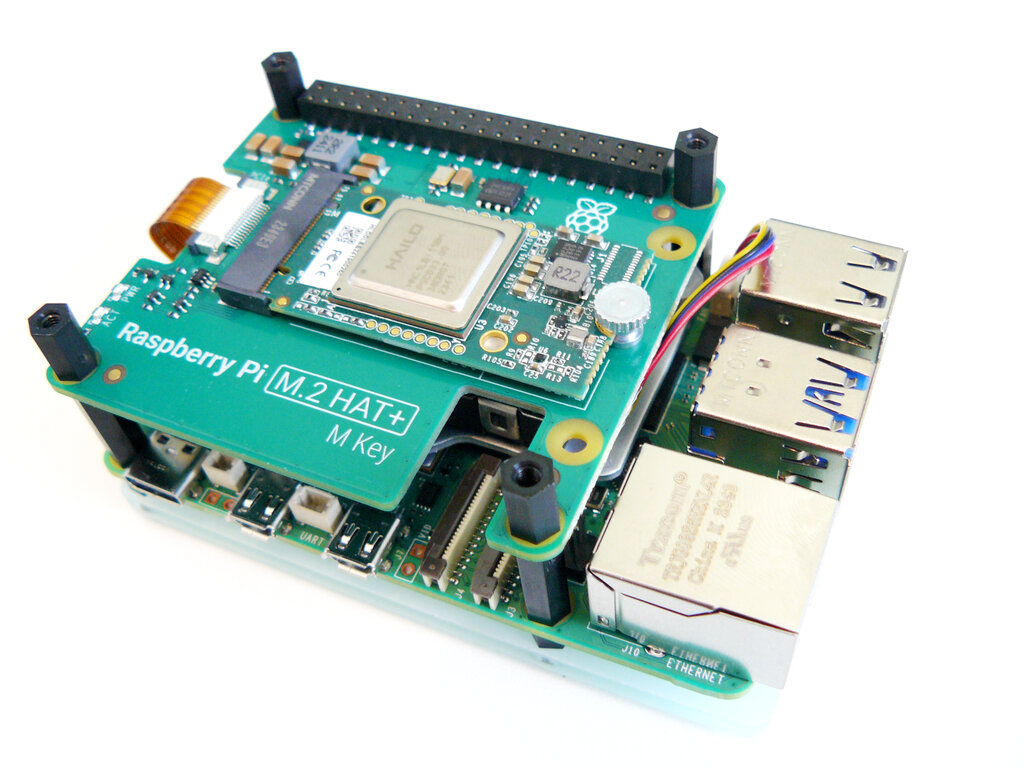
These specialized chips, like NVIDIA's Jetson modules or Google's Edge TPUs, provide the necessary muscle for on-device AI. But even with an accelerator, the original, bulky model is often still too large. That's where software optimization techniques come into play, reshaping the model to fit the hardware's constraints.
Shrinking the Model
Model compression isn't a single technique but a collection of strategies. The goal is to reduce a model's size and computational needs while preserving as much of its accuracy as possible. Three common methods are quantization, pruning, and knowledge distillation.
First, there's , which focuses on reducing the numerical precision of the model's weights. Neural networks are typically trained using 32-bit floating-point numbers (like 3.14159265), which offer high precision but take up a lot of memory. Quantization converts these numbers to lower-precision formats, like 8-bit integers (e.g., a number from 0 to 255). This drastically reduces the model's size and makes calculations faster on compatible hardware, often with only a small drop in accuracy.
Next is . A trained neural network has millions or even billions of connections, or weights. It turns out that many of these weights have values very close to zero and contribute very little to the final output. Pruning is the process of identifying and removing these insignificant connections. It's like weeding a garden to help the important plants thrive. By snipping away the useless parts of the network, the model becomes smaller and requires fewer calculations to produce a result.
Finally, uses a "teacher-student" approach. A large, highly accurate but slow "teacher" model is used to train a much smaller, faster "student" model. The student model isn't trained on the raw data itself, but rather on the outputs of the teacher model. It learns to mimic the teacher's predictions, capturing its learned patterns in a much more compact form. The student model won't be quite as accurate as the teacher, but it will be vastly more efficient and suitable for an edge device.
| Technique | What It Does | Primary Benefit |
|---|---|---|
| Quantization | Reduces the precision of numbers (e.g., 32-bit to 8-bit). | Reduces memory size and speeds up computation. |
| Pruning | Removes unnecessary connections (weights) from the network. | Reduces model size and number of calculations. |
| Knowledge Distillation | A small model learns from a large model's outputs. | Creates a compact model that retains expert knowledge. |
Why Speed Matters
For physical AI systems, latency—the delay between input and response—is critical. A self-driving car needs to identify a pedestrian and apply the brakes in milliseconds, not seconds. A factory robot needs to detect a defect on an assembly line and react before the part moves on. Cloud-based AI is often too slow for these tasks, as sending data to a server, waiting for it to be processed, and receiving the result back takes too much time.
This is why edge intelligence is so important. By running a compressed, optimized model on a local hardware accelerator, the system can perform real-time inference. All the techniques—specialized hardware, quantization, pruning, and distillation—work together to minimize latency. They ensure the AI can perceive, think, and act in sync with the real world, bridging the final gap between digital intelligence and physical action.
What is the primary reason for using edge computing for AI applications in devices like drones or robots?
Which model compression technique is analogous to 'weeding a garden' by removing insignificant connections within a neural network?