Mastering Phrases and Clauses
Structural Foundations
The Architecture of a Sentence
You already know that sentences are made of words, just like a house is made of bricks. But groups of those words form larger, more meaningful components. Think of them as the rooms of the house. The two most important types of components are phrases and clauses. Understanding the difference between them is the key to mastering sentence structure.
The entire distinction boils down to one simple test: does the group of words have both a subject and a verb working together? If it does, it's a clause. If it doesn't, it's a phrase.
The Subject-Predicate Heartbeat
A clause is a group of words containing a subject and a predicate. The subject is the noun or pronoun that performs the action or is the focus of the sentence. The is the verb and all the words that modify or complete the verb's meaning. This subject-predicate pair forms a complete unit of action.
For example:
- Birds fly.
- The student wrote an essay.
- She is tired.
In each case, you have a subject (Birds, the student, She) and a predicate (fly, wrote an essay, is tired). The clause expresses a complete idea, a mini-sentence that can sometimes stand on its own. This relationship is the core of a clause.
Phrases as Functional Units
A phrase, on the other hand, is a group of words that acts as a single part of speech but lacks its own subject-verb pair. It's a functional unit, a team of words doing one job together.
Consider the phrase on the kitchen table. It tells us where something is, so it acts like an adverb. But there's no subject performing an action within that group of words. The table isn't doing anything. It's just a phrase.
Every phrase is built around a central word, or a , which determines the phrase's type. A noun phrase has a noun as its head, a verb phrase has a verb, and a prepositional phrase has a preposition.
| Phrase Type | Example | Functional Head | Functioning as... |
|---|---|---|---|
| Noun Phrase | The little brown dog | dog (noun) | a single noun |
| Verb Phrase | was sleeping soundly | was (verb) | a single verb |
| Prepositional Phrase | behind the curtain | behind (preposition) | an adjective or adverb |
Notice that none of these phrases can be a sentence on their own. They feel incomplete. They are building blocks, not the finished structure. A sentence fragment is often just a phrase or a dependent clause incorrectly punctuated as a full sentence.
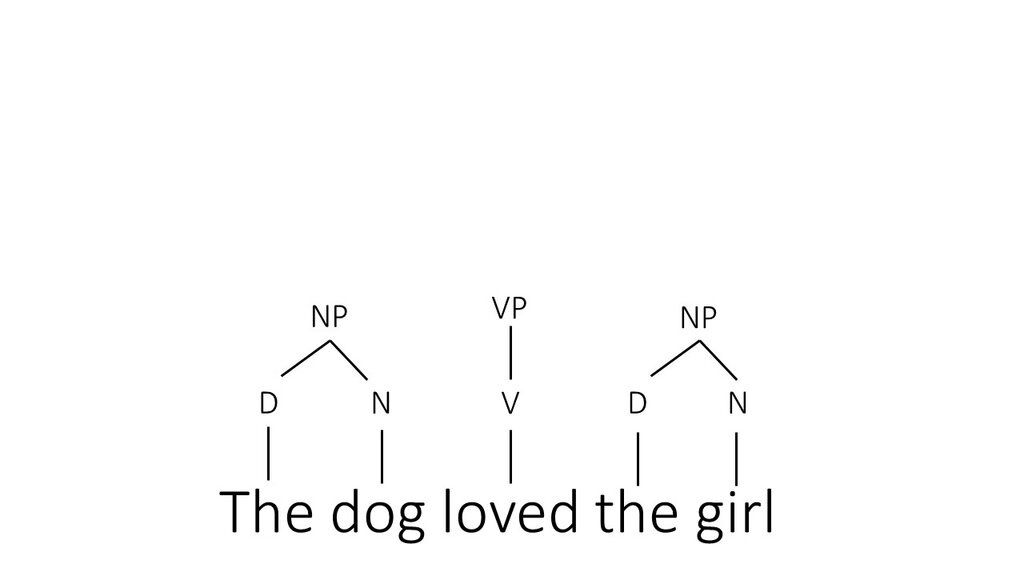
So, how can you tell the difference at a glance? Ask yourself: Does this group of words have both a subject doing something and the verb for that action?
- After the movie -> No subject-verb pair. It's a phrase.
- After the movie ended -> Subject: the movie. Verb: ended. It's a clause.
- Running through the park -> This is a verb phrase acting as a single unit. There's no subject performing the action. It's a phrase.
- He was running through the park -> Subject: He. Verb: was running. It's a clause.
This distinction is the first step toward building more sophisticated sentences and diagnosing common grammatical errors.
What is the key difference between a phrase and a clause?
Identify the following group of words: "Under the old stone bridge"