Mastering Phrasal Verbs
Introduction to Phrasal Verbs
Verbs in Disguise
In English, we often combine simple verbs with small words like up, out, in, or on to create new meanings. Think about the verb give. You know what it means. But what about give up? That means to quit, which is completely different.
This is a phrasal verb. It’s a phrase that acts like a single verb, but its meaning can be surprising and often has little to do with the original words.
phrasal verb
noun
A verb combined with one or more small words (a particle), creating a single phrase with a new meaning.
The basic structure is a main verb followed by a particle. The particle is usually a preposition (like on, in, at) or an adverb (like up, down, away).
Verb + Particle = New Meaning
Let's look at another one: run into. If you say, "I will run into the house," it means you are literally running inside. But if you say, "I might run into my friend at the store," it means you might see them unexpectedly. The context tells you which meaning is intended.
Phrasal verbs are everywhere in everyday English. You hear them in conversations, movies, and songs. Learning them is a key step to sounding more natural.
Guessing Isn't Enough
The trickiest part about phrasal verbs is that their meanings are often idiomatic. An idiom is a phrase where the meaning can’t be understood from the individual words. You can't just combine the definition of the verb and the particle to figure it out.
For example, to put off something means to postpone it. It has nothing to do with putting something or being off. You just have to learn the phrase as a single chunk of vocabulary.
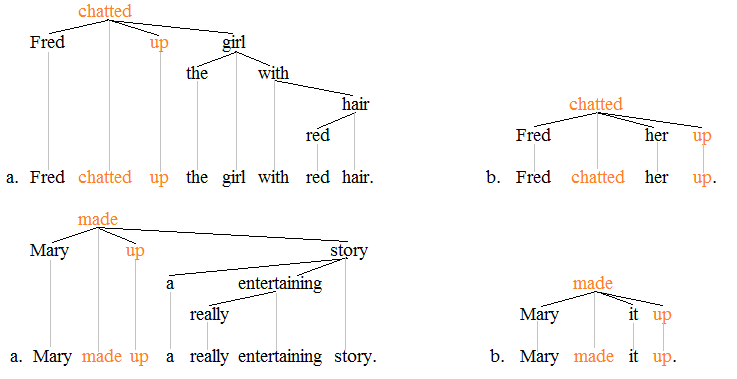
Consider these examples:
- break down: to stop working (My car broke down.)
- take off: to leave the ground (The plane will take off soon.) OR to become successful quickly (Her career really took off.)
- look after: to take care of (Can you look after my cat?)
In each case, the meaning of the phrasal verb is a unique concept you learn as a whole.
Phrases, as opposed to individual words, provide context and help you understand the structure and flow of the language.
As you keep learning English, you'll start to notice these verb-particle combinations everywhere. Don't try to memorize long lists. Instead, pay attention to how they are used in sentences you read or hear. That's the best way to get comfortable with them.
What is the basic structure of a phrasal verb?
In the sentence, 'My car might break down on this long trip,' what does the phrasal verb 'break down' mean?