Mastering Photography Fundamentals
Introduction to Photography
Capturing Light
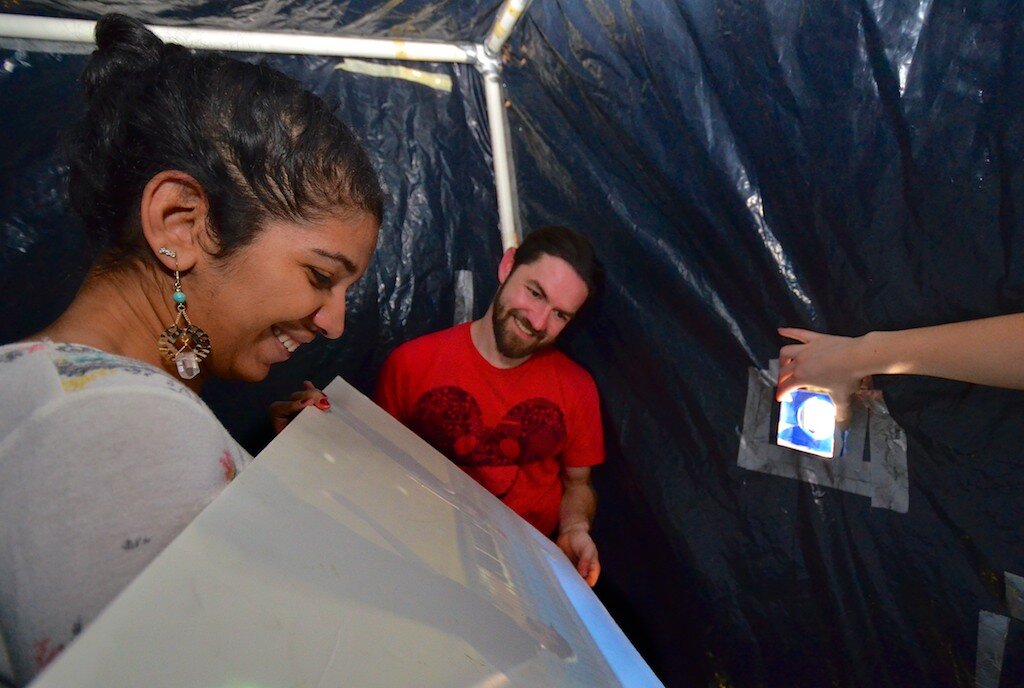
At its heart, photography is simply the art of capturing light. The first device to do this was the camera obscura, a dark room with a small hole that projected an upside-down image of the outside world onto a wall. For centuries, it was a fascinating novelty, but the image was temporary. Artists used it to trace scenes, but they couldn't preserve the light itself.
That changed in the 1820s when Joseph Nicéphore Niépce, a French inventor, found a way to make the image stick. He used a pewter plate coated in a light-sensitive material, creating the world's first permanent photograph. It was a blurry view from his window, but it was a revolution. This set the stage for film photography, which used chemical processes to record images, and eventually, the digital cameras we use today.
Choosing Your Camera
Today, you have many ways to capture a photo. While the core principle is the same, different cameras offer unique advantages. Understanding the main types can help you find the right tool for the job.
There are four common camera types: DSLR, Mirrorless, Point-and-Shoot, and Smartphone.
A DSLR (Digital Single-Lens Reflex) camera uses a mirror to reflect light from the lens up into an optical viewfinder. When you press the shutter button, the mirror flips up, and the light hits the sensor instead. They are known for their interchangeable lenses and excellent image quality.
A Mirrorless camera, as the name suggests, does away with the mirror. Light passes directly from the lens to the sensor, and the image is displayed on an electronic viewfinder or the back screen. This makes them smaller and lighter than DSLRs while offering similar quality and the ability to change lenses.
A Point-and-Shoot camera is the simplest of the dedicated cameras. It has a built-in, non-interchangeable lens and is designed for ease of use. They are compact and great for casual snapshots.
Finally, the Smartphone camera has become the most popular camera in the world. Its quality has improved dramatically, and its main advantage is that it's always with you. Computational photography uses software to enhance images in ways traditional cameras can't.
| Feature | DSLR | Mirrorless | Point-and-Shoot | Smartphone |
|---|---|---|---|---|
| Size | Large & Heavy | Compact | Very Compact | Pocket-sized |
| Lenses | Interchangeable | Interchangeable | Fixed | Fixed |
| Viewfinder | Optical | Electronic | Usually Screen Only | Screen Only |
| Best For | Professionals | Enthusiasts & Travel | Simplicity | Convenience |
Inside the Camera
Regardless of the type, every camera works by controlling how light enters a dark box to create an image. Four core components make this happen.
- Lens: This is the eye of the camera. It's a series of glass elements that gathers light from a scene and focuses it onto the sensor.
- Sensor: Think of this as the digital equivalent of film. It's a grid of millions of tiny light-sensitive sites (pixels) that record the light the lens focuses on it, turning that light into a digital image.
- Viewfinder: This is what you look through to compose your photo. In a DSLR, it's an optical system using mirrors. In a mirrorless or smartphone camera, it's a small electronic screen showing you what the sensor sees.
- Shutter: The shutter is a curtain that sits in front of the sensor. When you take a picture, it opens for a specific amount of time to let light hit the sensor, and then closes. The length of time it stays open is called the shutter speed, a concept we'll explore later.
Understanding these basic building blocks is the first step on your journey. Now that you know how a camera works, you're ready to learn how to control it.