Mastering Phonics Fundamentals
Introduction to Phonics
What is Phonics?
Think of written language as a code. Each letter and combination of letters on a page is a symbol that represents a sound. Phonics is simply the method of cracking that code.
It’s the system that connects the letters you see (graphemes) with the sounds you hear (phonemes). Once you understand these connections, you can piece together the sounds to read words you've never even seen before.
Phonics
noun
A method of teaching reading by correlating sounds with letters or groups of letters in an alphabetic writing system.
Instead of memorizing thousands of individual words as unique shapes, phonics gives you a toolkit. With just a few dozen letter-sound relationships, you unlock the ability to read a vast number of words. It turns reading from a memory game into a logical process of decoding.
Phonics is a reading method centered on the relationship between sounds (phonemes) and the letters (graphemes) that represent them in written language.
Why Phonics Matters
Learning to read without phonics is like trying to build a house without a foundation. It’s possible to memorize the shape of a few simple words like cat or sun, but this strategy quickly falls apart with more complex words like structure or photosynthesis.
Phonics provides the solid ground readers need. It equips them with a reliable strategy to tackle unfamiliar words. This builds confidence and independence, turning reading from a chore into a skill that can be mastered. When a child can sound out a word on their own, they gain a powerful sense of accomplishment.
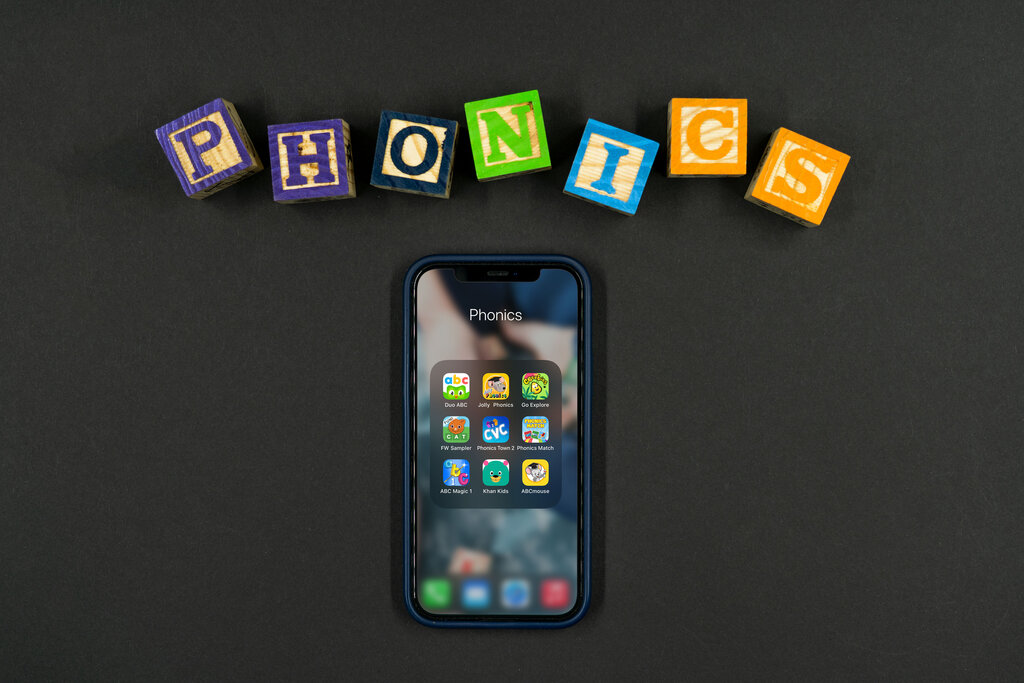
This skill isn't just for reading; it's also crucial for spelling. When you understand how sounds are represented by letters, you can reverse the process. To spell a word, you break it down into its component sounds and then write down the letters that correspond to those sounds. It connects reading and writing into one cohesive skill.
Letters and Sounds
The core of phonics is the relationship between a letter and its sound. In English, there are 26 letters, but they represent about 44 unique sounds. Some letters make more than one sound, and sometimes, multiple letters team up to make a single sound.
For example, the letter 'c' makes a /k/ sound in cat but a /s/ sound in cent. The two letters 'sh' work together to make a single sound, /ʃ/, as in ship.
The goal is to learn these connections automatically. When you see the letter 'b', your brain should instantly think of the /b/ sound. When you see 'ph', you should think of the /f/ sound.
Mastering these letter-sound relationships is the first major step toward becoming a fluent reader and writer. It’s the key that unlocks the written word.
Let's check your understanding of these fundamental concepts.
Phonics is best described as the method of:
In the context of phonics, a grapheme is a ______ and a phoneme is a ______.
With this foundation, you're ready to start exploring the specific relationships between letters and the sounds they make.