Mastering Persuasive Arguments with Toulmin
Introduction to Argumentation
What Is an Argument?
When we hear the word "argument," we often think of a heated disagreement. But in the world of persuasion and critical thinking, an argument isn't about yelling. It's a structured way to present a point of view and support it with reasons.
Argument
noun
A series of statements, called premises, intended to determine the degree of truth of another statement, the conclusion.
The main goal of an argument is to persuade an audience to accept a particular idea or take a specific action. It’s a tool for exploring ideas, making decisions, and even discovering what’s true. A good argument leads your audience through your reasoning, step by step, until they arrive at the same conclusion you have.
Argumentation isn't about winning a fight. It's about guiding your listener to a logical and well-supported conclusion.
The Building Blocks of Persuasion
Every persuasive argument, whether it’s a complex legal case or a simple suggestion to a friend, is built from three core components:
- Claim: This is the main point you are trying to make. It’s the conclusion you want your audience to accept.
- Evidence: This is the information you use to support your claim. Evidence can be facts, statistics, expert opinions, or personal experiences.
- Reasoning: This is the logical connection between your evidence and your claim. It explains why the evidence proves your point. Reasoning is the bridge that links your support to your conclusion.
Imagine you say, "We should take an umbrella today." That's your claim. Your friend asks why. You reply, "The weather forecast shows a 90% chance of rain." That's your evidence. The unspoken reasoning is that an umbrella keeps you dry, and a high chance of rain means it's likely you'll need one.
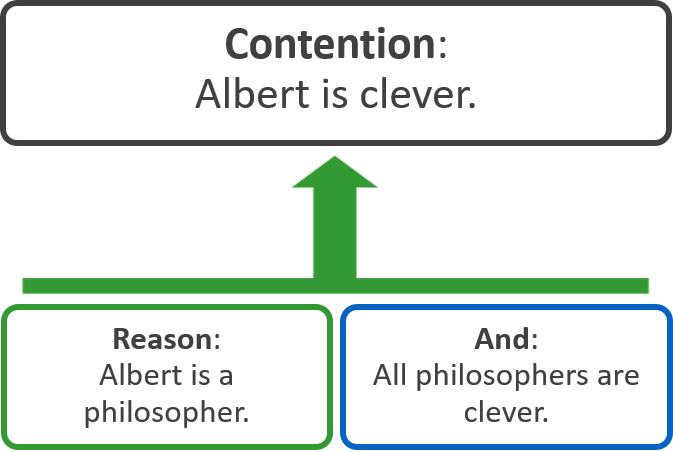
Without all three components, an argument falls apart. A claim with no evidence is just an opinion. Evidence with no reasoning is just a list of facts. It's the combination of a clear claim, solid evidence, and sound reasoning that makes an argument persuasive.
Avoiding Traps in Reasoning
Even with a claim and evidence, an argument can be weak if the reasoning is flawed. These flaws are called logical fallacies. They are common errors that undermine the logic of your argument, making it less persuasive and easier to dismiss. Learning to spot them in others' arguments—and avoid them in your own—is a crucial skill.
| Fallacy | Description | Example |
|---|---|---|
| Ad Hominem | Attacking the person making the argument instead of the argument itself. | "You can't trust Dr. Smith's research on climate change; she's a notorious vegan." |
| Straw Man | Misrepresenting someone's argument to make it easier to attack. | A: "We should invest more in public transit." B: "So you want to take everyone's cars away? That's ridiculous." |
| Slippery Slope | Arguing that a small first step will inevitably lead to a chain of negative events. | "If we allow the city to ban plastic bags, soon they'll be banning everything." |
These are just a few examples. Fallacies often sound convincing on the surface, which is why they are so common in advertising, politics, and everyday conversations. Being aware of them helps you build stronger arguments and critically evaluate the arguments you encounter.
Recognizing logical fallacies is crucial for improving debating skills and fostering more effective argumentation.
Time to test your understanding of these core concepts.
In the context of persuasion, what is the primary goal of an argument?
What are the three essential components that form a structured, persuasive argument?
Mastering these fundamentals is the first step toward constructing powerful, persuasive arguments.