Mastering Personal Productivity
Advanced Time Management
Beyond the To-Do List
You already know the basics of managing your time. But a simple to-do list can quickly become a long, daunting scroll of tasks with no clear starting point. Advanced time management isn't about working more hours; it's about applying powerful frameworks to decide what to work on, when to do it, and how to stay focused.
Let's explore five techniques that shift the focus from merely being busy to being effective.
Separate Urgent from Important
Not all tasks are created equal. Some scream for your attention right now, while others quietly contribute to your long-term goals. The Eisenhower Matrix is a decision-making tool that helps you distinguish between what's urgent and what's important.
It works by sorting tasks into four quadrants:
The goal is to spend most of your time in Quadrant 2 (Important, Not Urgent). These are the activities that drive progress: planning, learning new skills, and building relationships. By scheduling these tasks proactively, you prevent them from becoming Quadrant 1 crises.
Quadrant 3 tasks (Urgent, Not Important) are often distractions disguised as work. They demand your attention but don't move you toward your goals. Delegate them whenever possible. Quadrant 4 is for everything else that should be eliminated.
Focus in Bursts
Once you know what to work on, you need a strategy for how to work on it. The human brain isn't designed for eight straight hours of intense focus. The Pomodoro Technique accepts this reality and uses it to your advantage.
Work for 25 minutes, then take a 5-minute break. After four of these cycles, take a longer break of 15–30 minutes.
This method works because it's easier to commit to a short, focused sprint than a marathon session. The frequent breaks prevent burnout and help your brain reset, making your focused time more effective.
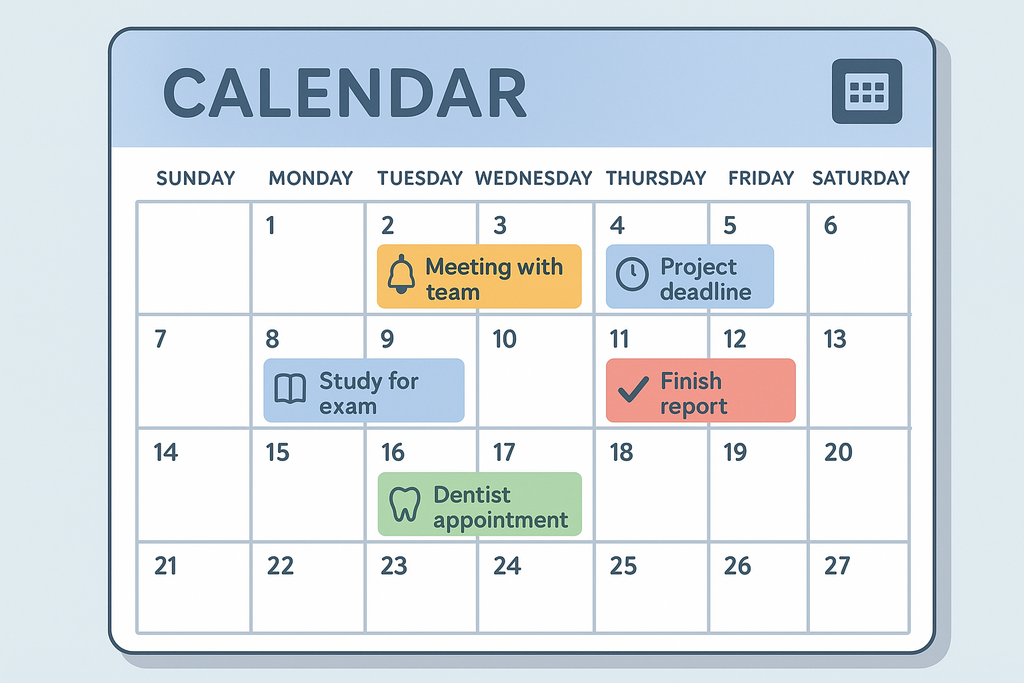
A related strategy is time blocking. Instead of working from a to-do list, you schedule specific blocks of time on your calendar for specific tasks. For example, you might block out 9:00 AM to 10:30 AM for "Draft project proposal." During that time, that's all you do. This creates a firm commitment and protects your deep work time from interruptions.
Identify What Matters Most
The final pieces of the puzzle help you handle the small stuff and identify the big wins. The Pareto Principle, or the 80/20 rule, suggests that roughly 80% of your results come from 20% of your efforts. Your job is to identify that critical 20%.
Look at your work. Which activities generate the most value? Which clients bring in the most revenue? Which tasks make the biggest impact on a project's success? Focus your energy on those high-impact areas. It’s a powerful reminder to prioritize based on results, not just effort.
On the other end of the spectrum is the 2-Minute Rule. Popularized by author David Allen, the rule is simple: if a task takes less than two minutes to complete, do it immediately.
This applies to things like responding to a quick email, filing a document, or making a phone call. Instead of letting these small tasks clutter your mind or your to-do list, you handle them instantly. It clears the deck and builds momentum, freeing up your mental energy for the 20% of work that truly matters.
Ready to test your knowledge?
According to the Eisenhower Matrix, which quadrant should you focus on to achieve long-term goals and prevent tasks from becoming crises?
What is the core idea behind the Pomodoro Technique?
By combining these frameworks, you create a comprehensive system for managing your time and attention. You can prioritize with the Eisenhower Matrix, focus with the Pomodoro Technique and time blocking, and find the right balance of effort with the 80/20 rule and the 2-Minute Rule.