Mastering Personal Finance
Understanding Income
What Is Income?
At its core, income is the money you receive on a regular basis. For most people, this comes from a job. This is called earned income because you're trading your time and skills for it.
Income
noun
Money received, especially on a regular basis, for work or through investments.
Earned income typically comes in two forms: wages and salaries. Wages are paid based on the number of hours you work. If you work more hours, you earn more money. Salaries are a fixed amount of money you get paid on a regular schedule, like every two weeks or once a month, regardless of the exact hours you work.
| Feature | Wages | Salary |
|---|---|---|
| Payment Basis | Per hour | Fixed amount per pay period |
| Overtime | Usually eligible for extra pay | Often not eligible |
| Pay Consistency | Can vary based on hours worked | Predictable and consistent |
| Common For | Part-time, retail, service jobs | Full-time, professional roles |
More Than a Paycheck
Income doesn't only come from a 9-to-5 job. Another important type is passive income. This is money earned from assets you own, rather than from your direct labor. Think of it as money that works for you.
Examples include:
- Rent from a property you own.
- Dividends from stocks.
- Interest from a savings account or bonds.
- Royalties from a book you wrote or a song you created.
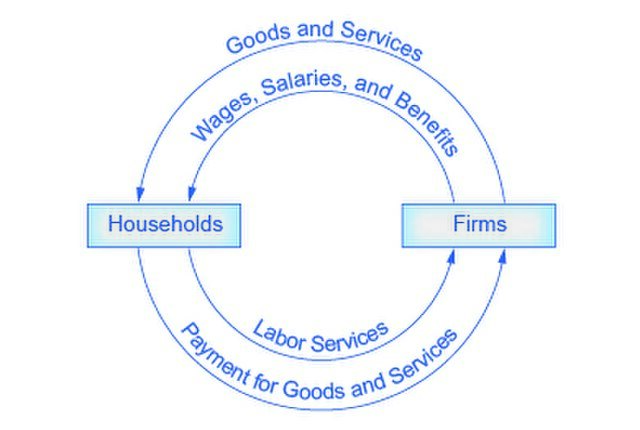
These different income streams are all part of a larger economic picture. In a simple economy, households provide labor to firms in exchange for income. Households then use that income to buy goods and services from those same firms. This creates a continuous loop.
Your Biggest Financial Asset
What is the single most important factor determining your income over your lifetime? It's not your first job or a lucky break. It's your human capital.
Human capital is the economic value of your skills, knowledge, and experience. It's the unique collection of abilities you bring to the table. You can think of it like a personal toolkit. The more tools you have, and the better you are at using them, the more valuable your work becomes.
Investing in your human capital—through education, training, or learning a new skill—is one of the most powerful ways to increase your earning potential.
Someone with specialized training, like a doctor or a software engineer, has a high level of human capital in their field. This allows them to command a higher salary than someone with more general skills. Building your human capital is a lifelong process of learning and growing.

From Gross to Net
When you get a job offer, you'll be told your salary or hourly wage. This number is your gross income—the total amount of money you earn before anything is taken out. However, the amount you actually receive in your bank account is your net income, often called take-home pay.
Gross Income − Deductions = Net Income
So, what are these deductions? They fall into two main categories: taxes and benefits.
Deduction
noun
An amount that is or may be subtracted from something, especially from taxable income or tax to be paid.
The most significant deductions are usually taxes. These are required payments to the government that fund public services like roads, schools, and defense. Common payroll taxes include:
- Federal Income Tax: Paid to the U.S. government.
- State and Local Income Tax: Paid to your state and/or city (not all states have this).
- FICA Taxes: This stands for the Federal Insurance Contributions Act. It's a U.S. federal payroll tax that funds Social Security and Medicare.
The other type of deduction is for benefits. These are often voluntary and can include payments for health insurance premiums, contributions to a retirement plan like a 401(k), or life insurance. These are part of your overall compensation but are subtracted from your gross pay.
Let's review the key terms we've covered.
Now, let's test your understanding of these fundamental income concepts.
A barista gets paid $15 for every hour they work at a coffee shop. What type of earned income is this?
Which of the following is an example of passive income?
Understanding where your income comes from and what happens to it before it reaches you is the first step toward managing your finances effectively.