Mastering Percents and Percentages
Understanding Percentages
Percent Means Per Hundred
The word "percent" comes from the Latin phrase per centum, which means "per hundred." That's all a percentage is: a special kind of fraction where the denominator is always 100.
percent
noun
A ratio or fraction in which the whole is always considered to be 100.
When you see a number followed by the percent sign (%), it's telling you "this many out of one hundred." So, 50% means 50 out of 100. 10% means 10 out of 100. And 100% means 100 out of 100, or the entire thing.
50% is just another way of writing the fraction .
The Same Idea, Three Forms
Percentages, fractions, and decimals are three different ways to talk about the same value. They're like saying "hello," "hola," and "bonjour"—different words for the same greeting.
Since a percent is always out of 100, we can easily write it as a fraction. And from there, we can write it as a decimal.
We start our unit on percentages by talking about converting between fractions, decimals, and percents.
Let's look at 25%.
As a fraction, 25% is simply 25 out of 100.
To turn that fraction into a decimal, we perform the division: . This gives us 0.25.
So, 25%, (which simplifies to ), and 0.25 all represent the exact same amount.
| Percent | Fraction (out of 100) | Decimal |
|---|---|---|
| 10% | 0.10 | |
| 50% | 0.50 | |
| 99% | 0.99 |
Percentages in the Wild
You see percentages everywhere because they provide a standard way to compare things. If one store offers a 20% discount and another offers a 25% discount, you instantly know which deal is better. The denominator is always 100, so you're always comparing apples to apples.
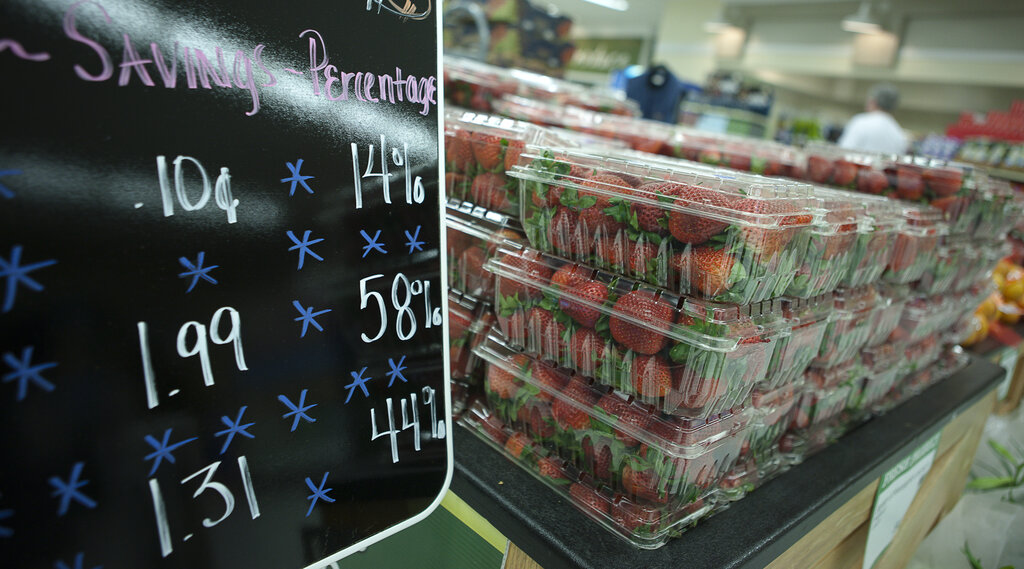
Here are a few common places you'll find them:
- Shopping: Sales and discounts are often shown as a "percent off" the original price.
- Finance: Interest rates on loans, credit cards, and savings accounts are given as percentages.
- Statistics: Polls, studies, and data reports use percentages to describe results, like "65% of voters approve."
- Weather: A meteorologist might say there's a "30% chance of rain."
- Nutrition: Food labels sometimes show the percent of your recommended daily intake for certain nutrients.
Ready to check your understanding?
The word "percent" comes from the Latin phrase per centum. What does per centum mean?
True or False: The values 50%, rac{1}{2}, and 0.5 all represent the same amount.
Knowing what percentages represent is the first step. Soon, we'll explore how to work with them to solve all sorts of problems.