Mastering People Skills
Foundations of Interpersonal Communication
The Communication Loop
Interpersonal communication is a two-way street. It’s a dynamic process that involves a few key players. First, you have the sender, the person with a thought or idea to share. They encode this idea into a message.
That message travels through a channel, which could be spoken words, a text message, or even a gesture. On the other end is the receiver, who decodes the message, interpreting its meaning.
But the loop isn't complete without feedback. The receiver responds, becoming a sender themselves. This feedback tells the original sender whether the message was understood as intended. This constant back-and-forth is the engine of all communication.
More Than Just Words
We often think of communication as the words we say, but that's only half the story. The messages we send are a mix of verbal and non-verbal cues.
Verbal communication is the use of words. It’s what you say and how you say it. Your tone of voice, volume, and the specific words you choose all shape the meaning.
Non-verbal communication is everything else. It includes your body language, facial expressions, eye contact, and gestures. A slumped posture can signal boredom, while a smile can show warmth and openness.
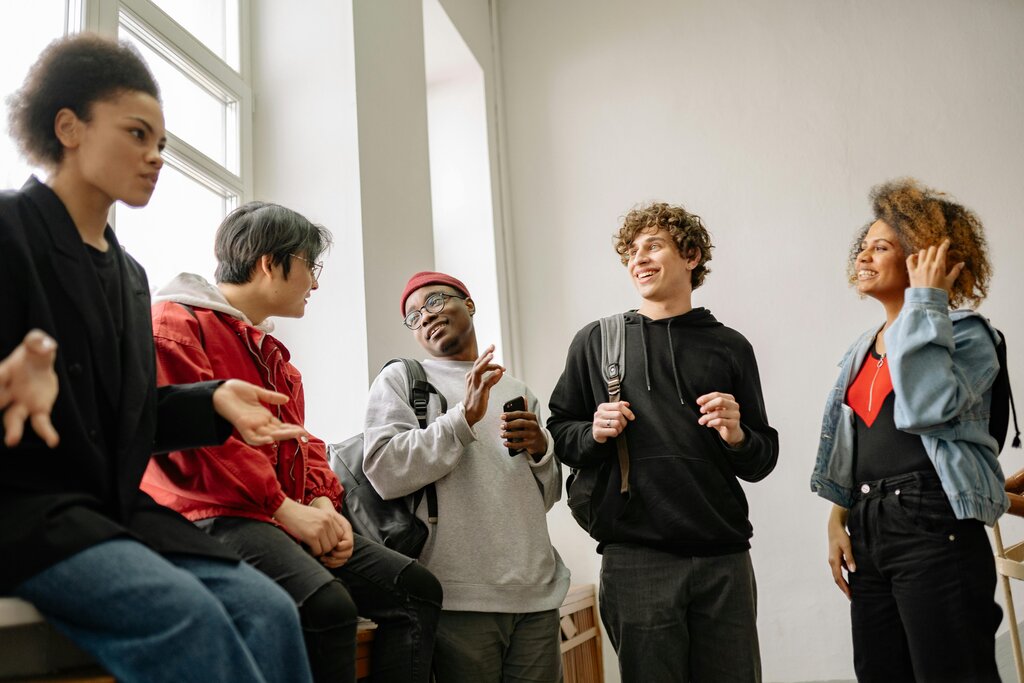
These two channels work together. Sometimes, they reinforce each other, like when you say "I'm so excited!" with a big smile. Other times, they can conflict. Imagine someone saying "I'm fine" with their arms crossed and a frown. Which message do you believe? Most people trust the non-verbal cues.
When your words and body language don't match, people almost always believe what they see, not what they hear.
When Signals Get Crossed
Even with the best intentions, communication can fail. These breakdowns are caused by communication barriers, which can distort the message as it travels from sender to receiver.
Common barriers include:
- Physical Noise: A loud room, a bad phone connection, or any other external distraction can make it hard to hear or concentrate.
- Psychological Noise: These are the internal distractions. If you're stressed, angry, or preoccupied, you'll have a harder time paying attention and accurately interpreting messages.
- Assumptions and Biases: We all see the world through our own filters. Jumping to conclusions or relying on stereotypes can cause us to misinterpret what someone is really saying.
- Jargon: Using technical terms or slang that the other person doesn't understand is a surefire way to create confusion. Always try to use clear, simple language.
The Art of Listening
The most overlooked skill in communication isn't talking; it's listening. Most of us don't truly listen. We wait for our turn to speak, thinking about what we'll say next instead of focusing on the person in front of us.
Active listening is the antidote. It's about making a conscious effort to hear not only the words another person is saying but, more importantly, the complete message being communicated.
Strengthen your interpersonal skills by practicing active listening, showing genuine interest, and giving thoughtful feedback.
How can you become an active listener? Try these techniques:
-
Pay Full Attention: Put your phone away. Make eye contact. Show the speaker you are engaged with your body language, like nodding or leaning in.
-
Paraphrase and Summarize: When the person pauses, repeat back what you heard in your own words. You could say, "So, if I'm understanding you correctly, you're feeling..." This confirms you're on the same page and gives them a chance to clarify.
-
Ask Open-Ended Questions: Instead of questions that get a simple "yes" or "no," ask questions that encourage the speaker to share more. Try starting with "How did you feel about that?" or "Can you tell me more about...?"
-
Listen Without Judging: Your goal is to understand, not to immediately agree or disagree. Avoid interrupting with your own opinions. Let the person finish their thought completely before you formulate your response. Active listening builds trust and makes people feel truly heard.
In the communication model, what is the term for the medium through which a message is sent, such as spoken words or a text message?
If a person says "I'm not upset" while frowning and crossing their arms, what is the receiver most likely to believe?