Mastering Palantir Envison
Introduction to Palantir Envison
Making Sense of Data Overload
Most large organizations have a data problem. It's not that they don't have enough of it, it's that they have too much, and it's all over the place. The sales team uses one system, finance uses another, and marketing has its own set of spreadsheets. It’s like trying to assemble a puzzle using pieces from ten different boxes. Nothing quite fits together.
This is where a platform like Palantir Envision comes in. At its core, Envision is a tool designed to help businesses integrate, analyze, and visualize their vast and scattered data. Instead of switching between countless applications and reports, teams can get a single, coherent view of what's happening across the entire organization. It acts as a bridge, connecting isolated islands of information into a unified continent.
How It Works
Envision accomplishes this through a few key functions. It starts by connecting to all the different places an organization stores data.
Think of it as giving the platform a set of keys to every data warehouse, database, and file storage system. It can unlock data from SQL databases, cloud services like AWS, or even simple CSV files.
Once connected, the data isn't immediately ready for use. Raw data is often messy, with duplicates, missing fields, or inconsistent formatting. Envision's next job is to transform this raw material into something clean and reliable. This process involves standardizing formats, correcting errors, and structuring the data so it can be easily analyzed. It's the digital equivalent of turning rough ingredients into prepped components ready for a chef.
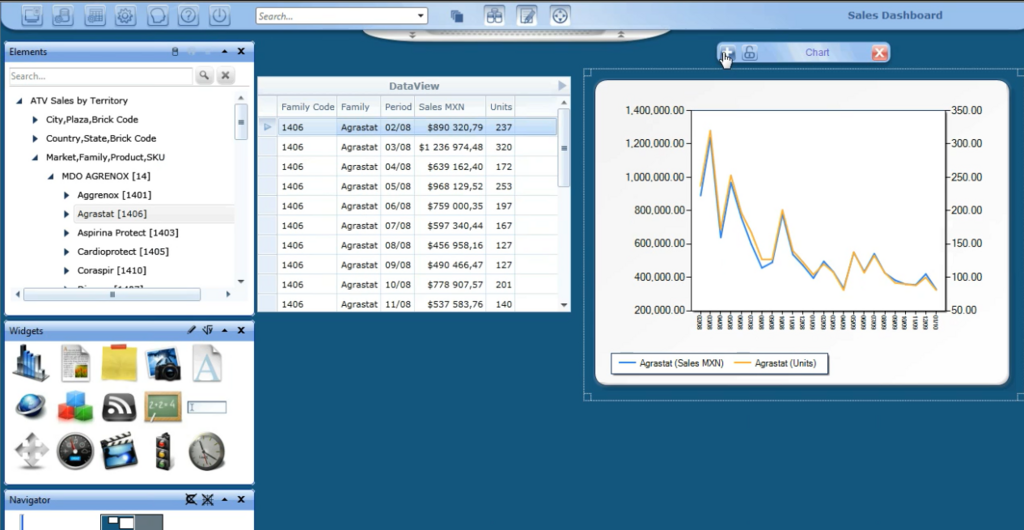
With clean, integrated data, the final step is visualization. Envision provides tools to build interactive dashboards, charts, and graphs. Instead of staring at rows and columns in a spreadsheet, users can see trends, patterns, and outliers at a glance. A sales manager could see a map of top-performing regions, while a supply chain analyst could watch inventory levels in real-time.
From Data to Decisions
The ultimate goal of all this work is to empower people to make better, faster decisions. When information is siloed, leaders often have to make calls based on incomplete or outdated pictures. One department's report might contradict another's, leading to confusion and inaction.
Palantir’s entire platform is built around the idea that data is the key to optimize any field, and the company specializes in bringing structure and organization to siloed datasets to glean better insights.
By creating a single, trustworthy view of enterprise data, Envision provides a shared foundation for decision-making. Everyone from the CEO to a frontline employee can work from the same set of facts. This alignment allows organizations to react more quickly to market changes, optimize their operations, and identify new opportunities before their competitors do.
What is the primary problem that a platform like Palantir Envision is designed to solve for large organizations?
According to the text, what is the crucial step Envision takes after connecting to an organization's various data sources?
Ultimately, Envision serves as a decision-making engine, fueled by an organization's own data.