Mastering Organic Nomenclature
Introduction to IUPAC Nomenclature
A Universal Language for Molecules
Imagine trying to find a friend in a new city, but everyone calls them by a different nickname. It would be chaos. Early in chemistry's history, a similar problem existed. Compounds were often named after where they came from. For example, the compound that gives ant bites their sting was called formic acid, from the Latin word for ant, formica.
This system didn't scale. As chemists discovered millions of new organic compounds, they needed a logical and consistent way to name them. A name had to be a unique identifier, a blueprint that described the molecule's exact structure.
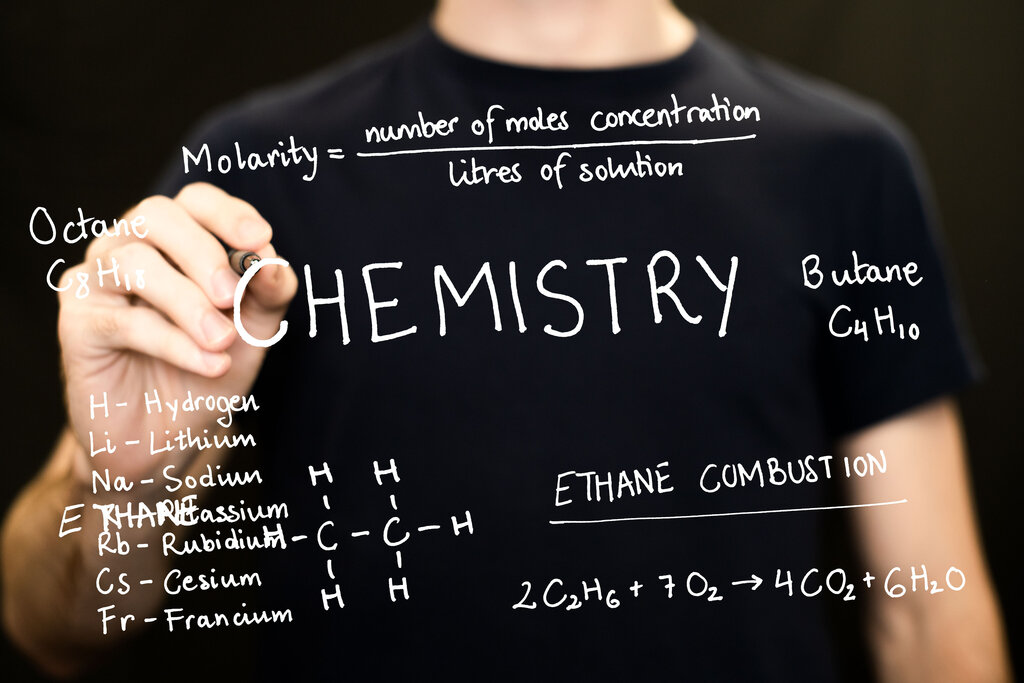
This is where the International Union of Pure and Applied Chemistry (IUPAC) comes in. In the early 20th century, this organization established a set of rules for naming chemical compounds, creating a universal language. When a chemist in Brazil reads an IUPAC name written by a chemist in Japan, they both picture the exact same molecule.
The universal adoption of an agreed nomenclature is a key tool for efficient communication in the chemical sciences, in industry and for regulations associated with import/export or health and safety.
The Anatomy of a Name
An IUPAC name isn't just a label; it's a set of instructions. Every name has a fundamental structure consisting of three parts, each answering a specific question about the molecule.
| Part | Question Answered | Example |
|---|---|---|
| Prefix | What groups are attached to the main chain, and where? | 2-methyl |
| Parent | How many carbon atoms are in the longest continuous chain? | prop (for 3 carbons) |
| Suffix | What is the main functional group or family of the compound? | ane (for an alkane) |
Let's put them together. The name 2-methylpropane tells us everything we need to know to draw the molecule.
- Suffix: The
-aneending tells us it's an alkane, a molecule with only single bonds between carbon atoms. - Parent: The
prop-part tells us the longest carbon chain has three carbons. - Prefix: The
2-methyl-part tells us there is a methyl group () attached to the second carbon of that three-carbon chain.
This systematic approach removes all ambiguity. Each unique organic compound has exactly one correct IUPAC name, and each name describes only one compound. This is the foundation that allows chemists everywhere to communicate precisely.
Now, let's test your understanding of these basic principles.
Why was the IUPAC system of nomenclature established for chemical compounds?
In the name 2-methylpropane, what information does the "prop-" part of the name provide?
By breaking down a molecule's name into these three parts, we can decipher its structure piece by piece. In the articles to come, we'll explore the specific rules for each part in more detail.