Mastering Options Trading Across Exchanges
Options Trading Basics
What Are Options?
An option is a contract that gives its owner the right, but not the obligation, to buy or sell an asset at a predetermined price on or before a specific date. Think of it like a coupon for a stock. You can pay a small fee for a coupon that lets you buy a TV for $500 within the next month. If the TV's price jumps to $700, your coupon is valuable. If the price drops to $400, you can just let the coupon expire and buy the TV at the lower market price. You're only out the small fee you paid for the coupon.
In trading, this "coupon" is the option, the TV is an underlying asset (like a stock), the $500 is the strike price, and the fee is called the premium. This setup gives you the ability to control a larger amount of stock for a fraction of the cost, offering flexibility and leverage.
Options are often the next level of security that new investors learn about following their initial entry into the finance world.
There are two fundamental types of options, each serving an opposite purpose.
Calls and Puts
Every option is either a call or a put. It's a simple distinction based on what you expect the underlying asset's price to do.
Call Options: You buy a call option when you believe the price of an asset will rise. A call gives you the right to buy the asset at the strike price. If the stock price soars past the strike price, you can exercise your option to buy it at a discount and potentially sell it for a profit.
Put Options: You buy a put option when you believe the price of an asset will fall. A put gives you the right to sell the asset at the strike price. If the stock price plummets below the strike price, your option becomes valuable because you can sell the stock for more than its current market value.
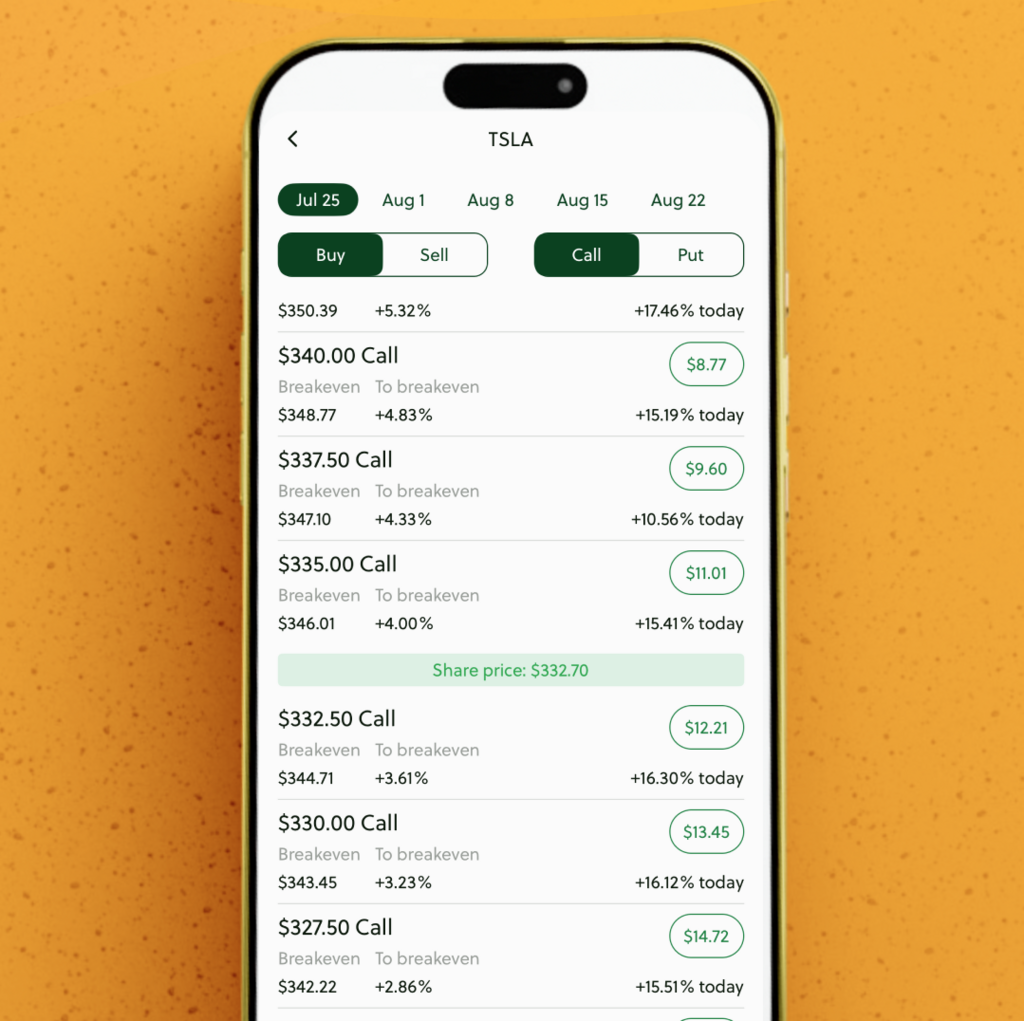
In any options trade, there is a buyer and a seller (also called a writer). The buyer pays the premium for the rights granted by the contract. The seller receives the premium in exchange for taking on the obligation to buy or sell the asset if the buyer decides to exercise their option. The seller's goal is for the option to expire worthless, allowing them to keep the premium as pure profit.
Anatomy of an Options Contract
Every options contract has a few key components that define its terms and value.
| Term | Description |
|---|---|
| Underlying Asset | The stock, ETF, or other security the option is based on. |
| Strike Price | The fixed price at which you can buy (call) or sell (put) the asset. |
| Expiration Date | The date when the contract becomes void. |
| Premium | The price of the options contract itself. |
The premium is the cost to the buyer and the income for the seller. It's determined by the market based on several factors, including the underlying asset's price, the strike price, and the time until expiration. It's important to know that one options contract almost always represents 100 shares of the underlying stock.
The Value of an Option
The premium you pay for an option isn't just one number; it's made of two distinct parts: intrinsic value and extrinsic value.
Intrinsic value is the amount of money you'd make if you exercised the option right now. For an option to have intrinsic value, it must be "in-the-money." A call is in-the-money if the stock price is above the strike price. A put is in-the-money if the stock price is below the strike price. If an option is not in-the-money, its intrinsic value is zero. It can never be negative.
For a call option on a stock trading at 💲55 with a 💲50 strike price, the intrinsic value is 💲5 per share (💲55 - 💲50).
Extrinsic Value
adjective
The portion of an option's premium that is not intrinsic value. It is essentially the value of the time remaining until expiration and other market factors like implied volatility.
Extrinsic value is also called "time value." An option with three months until expiration has more extrinsic value than one with only one week, because there's more time for the underlying stock to move in a favorable direction. This value decays over time, a process known as "theta decay," and it drops to zero at expiration. At that point, an option's value is purely intrinsic.
An options contract gives the buyer the...
An investor who believes the price of a stock is going to fall significantly would most likely buy a ____ option.