Mastering Operational Readiness Inspections
Institutional Readiness Frameworks
From Personal Prep to Unit Readiness
Personal preparedness focuses on individual and family safety—having a kit, a plan, and the skills to handle a local emergency. But for organizations with critical missions, readiness is a different beast entirely. It's not about individual survival; it's about the entire organization's ability to execute its core function under immense pressure, at a moment's notice.
In high-stakes fields like the military, aviation, or emergency services, readiness isn't a suggestion. It's a quantifiable, verifiable state of being. An entire organization must prove it can perform its job flawlessly, and this proof comes through rigorous, standardized evaluations.
Measuring Mission Capability
How does an organization prove it's ready? Through formal evaluations like an Operational Readiness Inspection (ORI). An ORI is a comprehensive test designed to validate a unit's ability to meet the demands of its wartime or contingency mission. It's not about checking boxes on a personal prep list; it's a full-scale simulation of the most challenging conditions imaginable.
The goal is to determine if a unit is truly mission-capable. This means having the right people, with the right training and the right equipment, all working together seamlessly. The evaluation is conducted by an external team, often from the Inspector General (IG), to ensure objectivity. The IG's role is not just to grade, but to provide a clear-eyed assessment of a unit's true strengths and weaknesses.
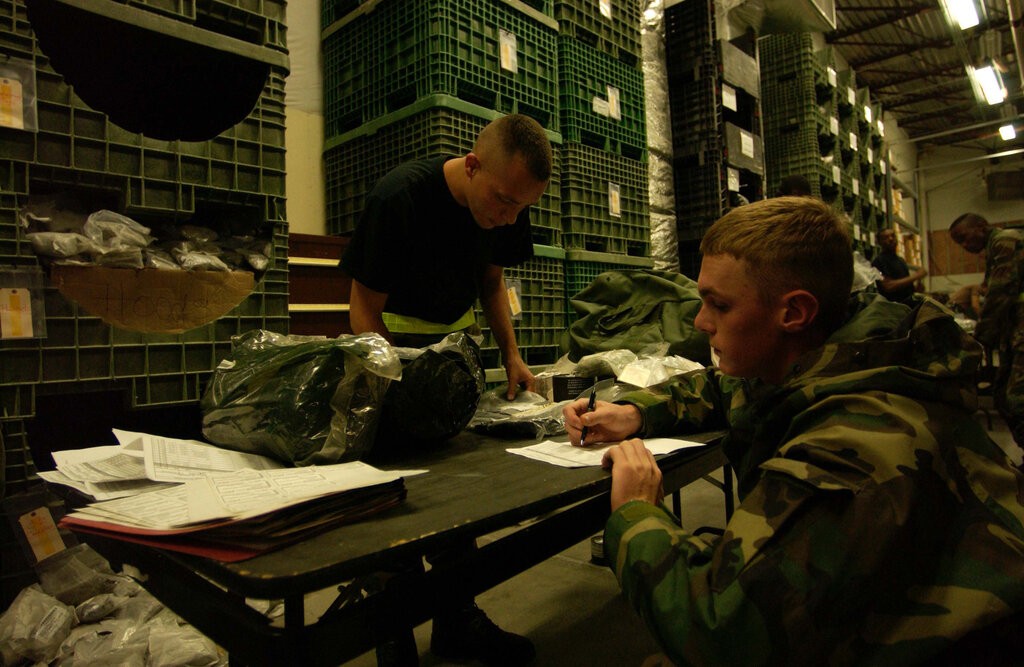
Inspectors evaluate performance across several key categories known as Major Graded Areas (MGAs). These areas cover the full spectrum of a unit's responsibilities.
- Initial Response: Measures the speed and effectiveness of the unit's reaction to an alert. How quickly can personnel and equipment be mobilized and deployed?
- Employment: Assesses the unit's ability to perform its primary mission tasks. For a fighter squadron, this means generating sorties. For a medical unit, it means triaging and treating patients.
- Mission Support: Evaluates the backbone functions that enable the mission, such as logistics, communications, and personnel management.
- Ability to Survive and Operate (ATSO): This tests the unit's capacity to function in a hostile environment, including responding to chemical, biological, or radiological attacks.
| Major Graded Area (MGA) | What It Assesses |
|---|---|
| Initial Response | Speed and efficiency of mobilization and deployment. |
| Employment | Proficiency in core, mission-specific tasks under pressure. |
| Mission Support | Effectiveness of logistics, maintenance, and administrative functions. |
| ATSO | Resilience and ability to operate in a contaminated or hostile environment. |
A System, Not Just a Test
The classic ORI model had a flaw: it encouraged units to "cram for the test." This created a cycle of intense preparation followed by a decline in readiness, leaving a gap between daily operations and inspection standards. To fix this, organizations shifted to a model of continuous assessment.
The modern Air Force Inspection System (AFIS) is a prime example of this evolution. AFIS is built on the principle that inspection readiness should be synonymous with mission readiness. It eliminates the distinction between "how we do things daily" and "how we do things for the IG."
This is achieved through a two-pronged approach:
-
Commander's Inspection Program (CCIP): This is an internal, commander-driven program of self-assessment. The unit continuously inspects itself, identifying and fixing problems long before external inspectors arrive. It builds a culture of critical self-evaluation and accountability.
-
Unit Effectiveness Inspection (UEI): This is the external validation component. Conducted every 24-30 months, the UEI is a photo-negative of the old ORI. Instead of watching a unit perform in a short, simulated scenario, the UEI assesses the effectiveness of the commander's own CCIP. It asks, "Does this unit have a reliable system for identifying and correcting its own deficiencies?" The focus is on validating the process, not just the performance on a given day.
The goal of a modern inspection system is to eliminate the gap between daily operations and inspection-day performance.
This institutional approach requires a level of rigor far beyond personal preparedness. It demands meticulously documented compliance with established standards, clear leadership effectiveness at all levels, and a deeply ingrained culture of continuous self-assessment. It's not enough to be ready; you have to prove it, every single day.
Now, let's test your understanding of these institutional readiness frameworks.
What is the primary purpose of an Operational Readiness Inspection (ORI)?
Which Major Graded Area (MGA) assesses a unit's ability to function in a hostile environment, such as during a chemical or biological attack?
By shifting from event-based inspections to a continuous system of self-assessment and validation, high-stakes organizations ensure they are always prepared to execute their mission.