Mastering On-Page SEO Essentials
Introduction to SEO
What is SEO?
Search Engine Optimization (SEO) is the practice of improving your website so it shows up more often in search engine results. When people search for topics you write about, you want your site to be one of the top results. That's the goal of SEO.
At its most basic, “SEO” means finding ways to increase your site’s appearance in Web visitors’ search results.
Think of the internet as a gigantic library. A search engine like Google is the librarian. When you ask the librarian a question, they don't just hand you a random book. They quickly sift through billions of options to find the most relevant, trustworthy, and helpful information for you.
SEO is how you signal to the librarian that your website is a fantastic resource for certain questions. The better your signals, the more likely the librarian is to recommend your site to others. This leads to more organic traffic, which is just a term for visitors who find your site through a search engine instead of a paid ad.

How Search Engines Work
To understand SEO, you first need a basic picture of how search engines operate. They have a three-step process to find and rank content.
- Crawling: Search engines use automated programs called crawlers or spiders to travel the web, discovering new and updated pages.
- Indexing: They analyze the content of these pages—text, images, videos—and store this information in a massive database called an index.
- Ranking: When someone performs a search, the engine scours its index for the most relevant results and orders them based on hundreds of factors.
When you publish a new page, it doesn't instantly appear in search results. First, a crawler has to find it. Then, the search engine must decide it's worthy of being added to its index. Finally, it has to determine where it should rank for different search queries. SEO helps optimize your site for every step of this process.
On-Page vs. Off-Page SEO
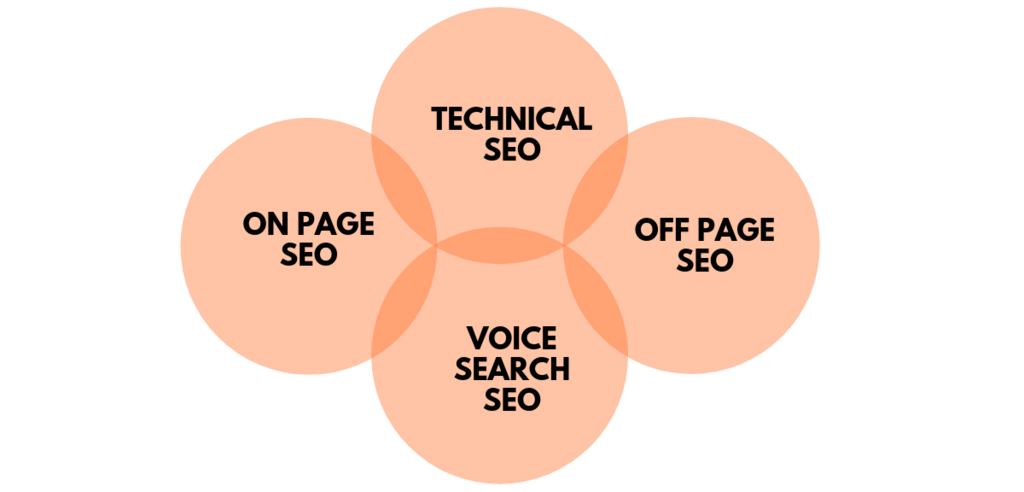
SEO activities are often broken down into two main categories: on-page and off-page. Both are essential for a successful strategy.
| Category | Description | Examples |
|---|---|---|
| On-Page SEO | Actions taken on your website to improve its ranking. | Writing helpful content, using relevant keywords, optimizing titles. |
| Off-Page SEO | Actions taken outside of your website to build its authority and reputation. | Getting links from other reputable sites, social media marketing. |
On-page SEO is all about the content and structure of your website. It involves making sure your pages are clear, helpful, and easy for both users and search engines to understand. This is where you have the most control.
Off-page SEO, on the other hand, is about building your site's credibility. When other well-respected websites link to your content, it acts as a vote of confidence, telling search engines that your site is a trustworthy source of information.
What Influences Rankings?
Search engine algorithms use hundreds of signals to rank pages. While the exact formula is a closely guarded secret, the most important factors are well-understood.
Relevance and Quality Does your content directly answer the searcher's question? High-quality, comprehensive content that matches the user's intent is the single most important ranking factor.
Authority Is your website a trusted source? Search engines measure authority largely through backlinks—links from other sites to yours. The more high-quality links you have, the more authoritative your site appears.
User Experience Is your site easy to use? This includes factors like how fast your pages load, whether your site is mobile-friendly, and if it's easy to navigate. A good user experience keeps visitors on your site longer, which is a positive signal to search engines.
These core principles form the foundation of effective SEO. By focusing on creating valuable content and a great user experience, you're aligning your goals with the goals of the search engines.