Mastering Observational Drawing and Form
Light Logic and Form
The Logic of Light
To draw realistically, you don't just need to see shapes. You need to understand how light works. Light isn't random; it follows predictable physical rules. When you learn this "light logic," you can move beyond flat outlines and create drawings with convincing volume, texture, and weight.
The key is to stop thinking about shading an object and start thinking about how light falls across its form. Every complex object you can imagine, from a human face to a crumpled piece of paper, can be broken down into simpler geometric primitives like spheres, cubes, and cylinders. Master how light behaves on these simple forms, and you'll have the tools to render anything.
One of the most important concepts we teach at our Etobicoke art studio is “light logic”—understanding how light consistently affects objects following predictable patterns.
Let's start by mapping the journey of light as it hits a simple sphere. This will form the basis of our shading system.
The Five Zones of Value
When light from a single source hits an object, it creates a predictable range of values from light to dark. Artists have broken this down into a five-zone system. This isn't a rigid formula, but a powerful mental model to help you analyse and draw what you see.
| Zone | Description |
|---|---|
| Highlight | The brightest spot. It's the direct, mirror-like reflection of the light source. |
| Center Light | The area receiving the full, direct light. This shows the object's true local colour. |
| Core Shadow | The darkest part of the shadow on the object. It begins right at the terminator. |
| Reflected Light | Faint light bouncing from nearby surfaces into the shadow side. |
| Cast Shadow | The shadow the object projects onto an adjacent surface. |
The boundary between the light and shadow sides has a specific name: the terminator line. On a curved surface like a sphere, this transition is soft and gradual. On an object with hard edges, like a cube, the terminator is a sharp, defined line where one plane ends and another begins.
Understanding this line is crucial. It’s where the form turns completely away from the light source. The darkest part of the shadow on the object, the core shadow, will always be located right next to the terminator.
Shadows Aren't Simple
A common mistake is to make shadows a single, flat, dark tone. In reality, shadows are full of subtle information. The two most important concepts to master are reflected light and cast shadows.
Reflected light is what keeps shadows from being black holes. Light from the main source hits the table, the walls, or other objects and bounces back, subtly illuminating the shadow side of your subject. It's a game-changer for creating realism. A key rule: reflected light is always darker than the lightest value on the lit side of the object. It's just a hint of light, not a secondary light source.
The cast shadow is the silhouette the object throws onto another surface. It tells the viewer where the object is in space. Cast shadows have two key properties: they are darkest and have the sharpest edges right next to the object. As the shadow extends further away, its edges become softer and the value gets lighter. The darkest point, where the object touches the surface and blocks all light, is sometimes called ambient occlusion in digital art and 3D rendering.
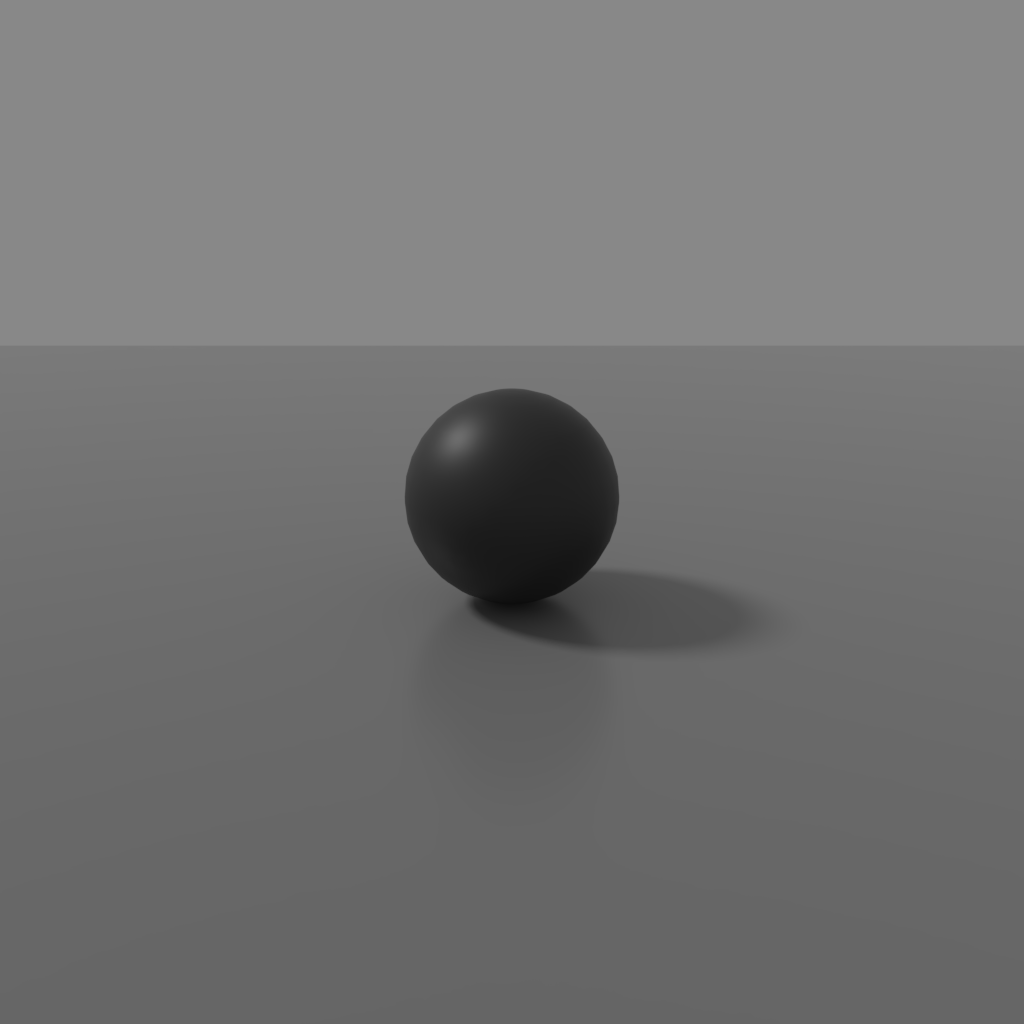
Projecting an accurate cast shadow requires thinking about the light source's position. Imagine straight lines traveling from the light source, skimming past the edges of your object, and hitting the ground. The shape created by these lines is your cast shadow.
For a point light source (like a bare lightbulb), the shadow will expand outwards. For a distant parallel light source (like the sun), the lines projecting the shadow will be parallel to each other. Practicing with basic shapes helps build an intuitive sense of how these shadows should look.
With these principles, you can start to analyse the world around you like an artist. Don't just see a coffee mug; see the highlight on its rim, the terminator line where the form curves away, the dark core shadow, and the faint reflected light from the tabletop bouncing underneath. This is the foundation of drawing with convincing form.
Ready to test your understanding of light logic? Let's see how well you can apply these concepts.
What is the name for the boundary line between the light and shadow sides of an object?
On a shaded sphere, where would you typically find the core shadow (the darkest part of the shadow on the object itself)?
By consistently applying these ideas, your sketches will gain a new level of realism and depth.