Mastering Oboe.com Prompts
Introduction to Large Language Models
What Is a Large Language Model?
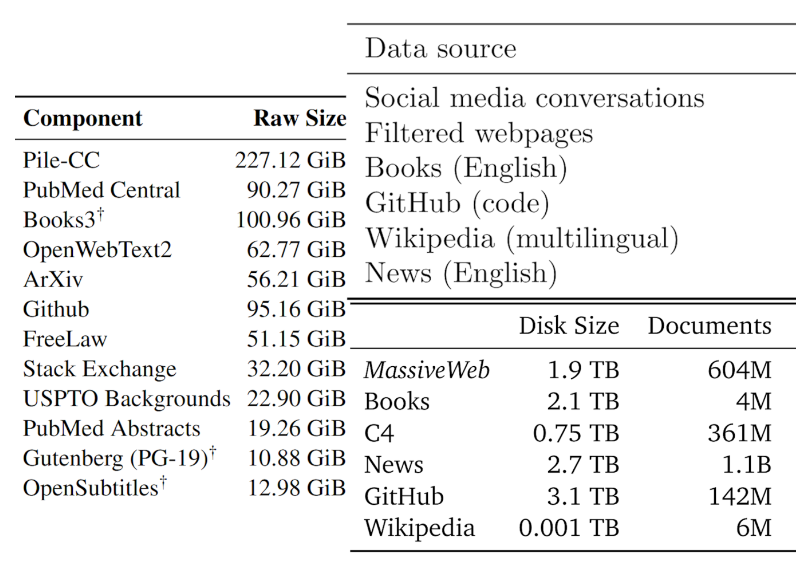
A Large Language Model, or LLM, is a type of artificial intelligence that's been trained on an enormous amount of text data. Think of it like a student who has read a significant portion of the internet, including books, articles, and websites. This extensive training allows it to understand and generate human-like text in a sophisticated way. LLMs are the technology behind tools like ChatGPT, Google Gemini, and Anthropic's Claude.
A Large Language Model (LLM) is a type of artificial intelligence program designed to understand, generate, and work with human language.
The "large" in LLM refers to two things: the massive size of the dataset it learns from and the huge number of parameters it contains. Parameters are like tiny adjustable knobs within the model's neural network. During training, these knobs are tuned over and over again until the model gets good at its main task: predicting the next word in a sequence. With billions of these parameters, LLMs can capture incredibly complex patterns in language.
How LLMs Work
Modern LLMs are built on an architecture called the Transformer, first introduced in a 2017 paper called "Attention Is All You Need." The key innovation of the Transformer is the attention mechanism. This allows the model to weigh the importance of different words in the input text when processing and generating a response. For example, in the sentence "The robot picked up the heavy metal ball because it was strong," the attention mechanism helps the model figure out that "it" refers to the "robot," not the "ball."
The training process usually happens in two stages. First is pre-training, where the model learns general language patterns from a vast, unlabeled dataset. This is the most computationally expensive part. Afterward, many models go through fine-tuning, where they are trained on a smaller, more specific dataset to become better at particular tasks, like following instructions or carrying on a conversation.
Capabilities and Limitations
LLMs are incredibly versatile. They can write emails, generate computer code, summarize long documents, translate languages, and answer complex questions. Their ability to understand context and nuance makes them powerful tools for creativity and productivity.
However, they have significant limitations. Because they are trained on data from the internet, they can inherit and amplify human biases related to race, gender, and other stereotypes. They also don't truly understand the world; they are pattern-matching machines. This can lead to a phenomenon known as hallucination.
Hallucination
noun
When an AI model generates text that is factually incorrect, nonsensical, or disconnected from the provided source material, but presents it as if it were factual.
An LLM might confidently state an incorrect fact, invent a historical event, or make up a source for a piece of information. They also have a knowledge cut-off date, meaning they are unaware of events that happened after their training was completed. Understanding these limitations is the first step toward using LLMs effectively and responsibly.
What is the primary task an LLM is trained to perform during its initial, most computationally expensive phase?
The key innovation of the Transformer architecture, which allows an LLM to weigh the importance of different words to understand context, is called the _______ mechanism.