Mastering Nonviolent Communication
Introduction to Nonviolent Communication
Speaking a Different Language
Most of us want to connect with others. We want to be understood, and we want to understand. Yet, our conversations often get stuck in cycles of misunderstanding, judgment, and conflict. What if there was a way to communicate that cut through the noise and got to the heart of what truly matters?
This is the goal of Nonviolent Communication, or NVC. It’s a framework for interacting with others that builds connection and helps everyone get their needs met. Developed by psychologist Marshall B. Rosenberg in the 1960s, NVC isn't about being passive or avoiding conflict. It’s about engaging more honestly and compassionately.
The primary goal of NVC is to create a quality of connection among people where everyone's needs are met through compassionate giving.
Rosenberg's work was deeply influenced by his experiences mediating conflicts during the civil rights era. He saw that the language we use often creates barriers. Words loaded with blame, criticism, and demands trigger defensiveness and push people apart. He wanted to find a way of speaking that fostered empathy and cooperation, even in tense situations.
The Four Components
NVC guides us to reframe how we express ourselves and hear others by focusing on four key pieces of information. Instead of reacting with judgments or criticisms, we learn to share our own experience and listen for the experience of others.
1. Observation: This is about stating the concrete facts of what you see or hear, without adding any evaluation or interpretation. Separating observation from judgment is a crucial first step.
For example, instead of saying, "You're always late," which is a judgment, an observation would be, "For the last three meetings, you've arrived 15 minutes after we started."
2. Feelings: After making an observation, you share the emotion it sparks in you. This means taking responsibility for your feelings, rather than blaming others for them. It’s about saying "I feel sad" or "I feel frustrated," not "You make me angry."
3. Needs: Next, you connect your feeling to a universal human need. Needs are things all humans value, like safety, respect, connection, or autonomy. Our feelings are messengers, telling us whether our needs are being met or not. When you arrived late, I felt frustrated because I have a need for efficiency and respect for everyone's time.
4. Request: Finally, you make a clear, positive, and doable request for a specific action that would help meet your need. A request is not a demand. The other person is free to say no. Continuing the example, you might ask, "Would you be willing to send me a text if you know you're going to be more than five minutes late?"
Where NVC Can Help
The principles of NVC are universal and can be applied in nearly any situation where humans interact. In personal relationships, it helps partners, family, and friends navigate disagreements with more empathy and less hurt. It can transform arguments into conversations about what each person truly needs.
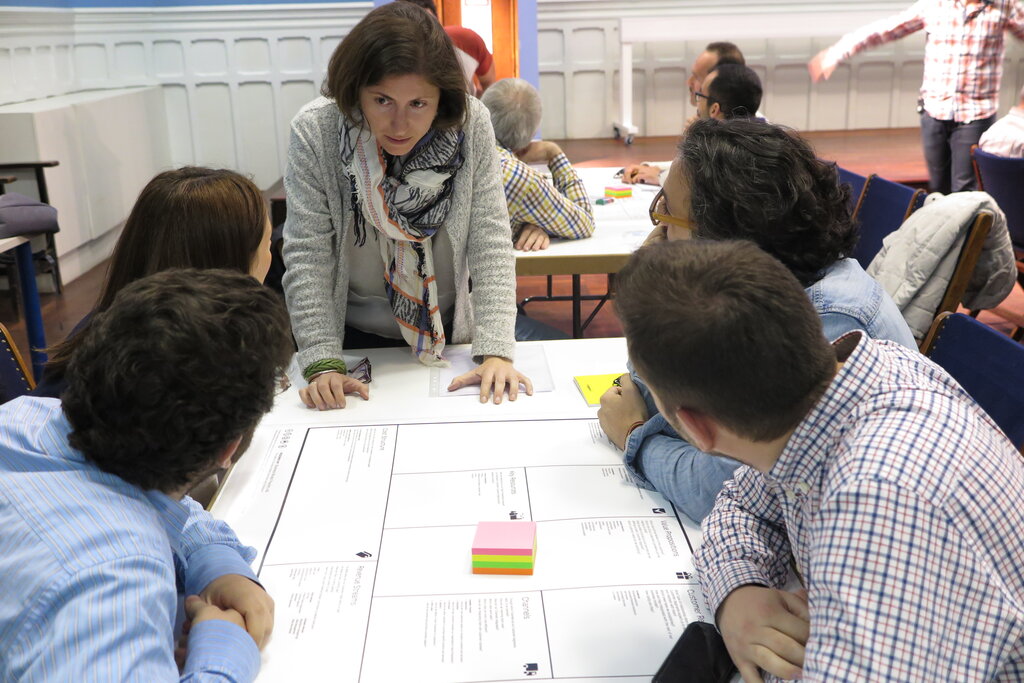
In the workplace, NVC provides a powerful tool for giving feedback, managing teams, and negotiating. It helps create a more open and psychologically safe environment where people feel comfortable expressing themselves honestly. Beyond individual interactions, NVC is also used in social change movements, restorative justice, and international diplomacy to bridge divides and find common ground between conflicting groups.
The key benefit is a shift in focus. Instead of getting stuck on who is right or wrong, we focus on connection and finding strategies that work for everyone.
Ready to check your understanding of these core concepts?
What is the primary goal of Nonviolent Communication (NVC)?
Which of the following statements is a pure observation, according to NVC principles?
This framework is a starting point. Learning NVC is like learning a new language—one that helps you build the quality of connection you've always wanted.