Mastering Node and React Testing
Introduction to Testing
What Is Software Testing?
Think of building software like building a house. You wouldn't wait until the entire house is finished to check if the plumbing works. You’d test it as it’s installed. You'd check the electrical wiring before putting up the walls. Software development is no different.
Software testing is the process of checking an application to find any gaps, errors, or missing requirements. Its main purpose is to catch bugs and verify that the software does what it's designed to do, from the smallest button to the most complex feature.
Software testing is not just a phase in development; it's a critical process that ensures quality, reliability, and user satisfaction.
Testing isn't a single action you perform at the very end. It's a series of checks that happen throughout the development process. This ensures that new features don't break existing ones and that the final product is stable, reliable, and ready for users.
The Layers of Testing
Not all tests are created equal. Just as you might inspect a single brick, then a wall, then the whole building, software tests operate at different levels of scope. The three main types are unit tests, integration tests, and end-to-end tests.
Unit Test
noun
A test that verifies the smallest piece of testable code, usually a single function or method, works as expected in isolation.
Unit tests are the foundation of a solid testing strategy. They are small, fast, and focus on one specific job. Because they test code in isolation, they can pinpoint exactly where a problem is when they fail. For example, a unit test might check if a function that adds two numbers together always returns the correct sum.
// A simple function to test
function calculateDiscount(price, percentage) {
  return price * (percentage / 100);
}

// A unit test for that function
test('calculates the discount correctly', () => {
  const result = calculateDiscount(100, 20);
  // We expect the result to be 20
  expect(result).toBe(20);
});
Integration Test
noun
A test that verifies that different modules or services used by your application work together correctly.
Once we know the individual units work, we need to check if they work together. Integration tests do just that. They test the interactions between different parts of the application. For instance, an integration test could verify that when a user signs up through the user interface, their information is correctly saved to the database.
End-to-End Test
noun
A test that simulates a real user's workflow from start to finish within the application.
End-to-end (E2E) tests are the highest level of testing. They replicate a full user journey through the application to ensure the entire system works as a whole. An E2E test for an e-commerce site might involve navigating to the site, searching for a product, adding it to the cart, and completing the purchase. These tests are the most complex and slowest to run, but they provide the most confidence that the application is working correctly from a user's perspective.
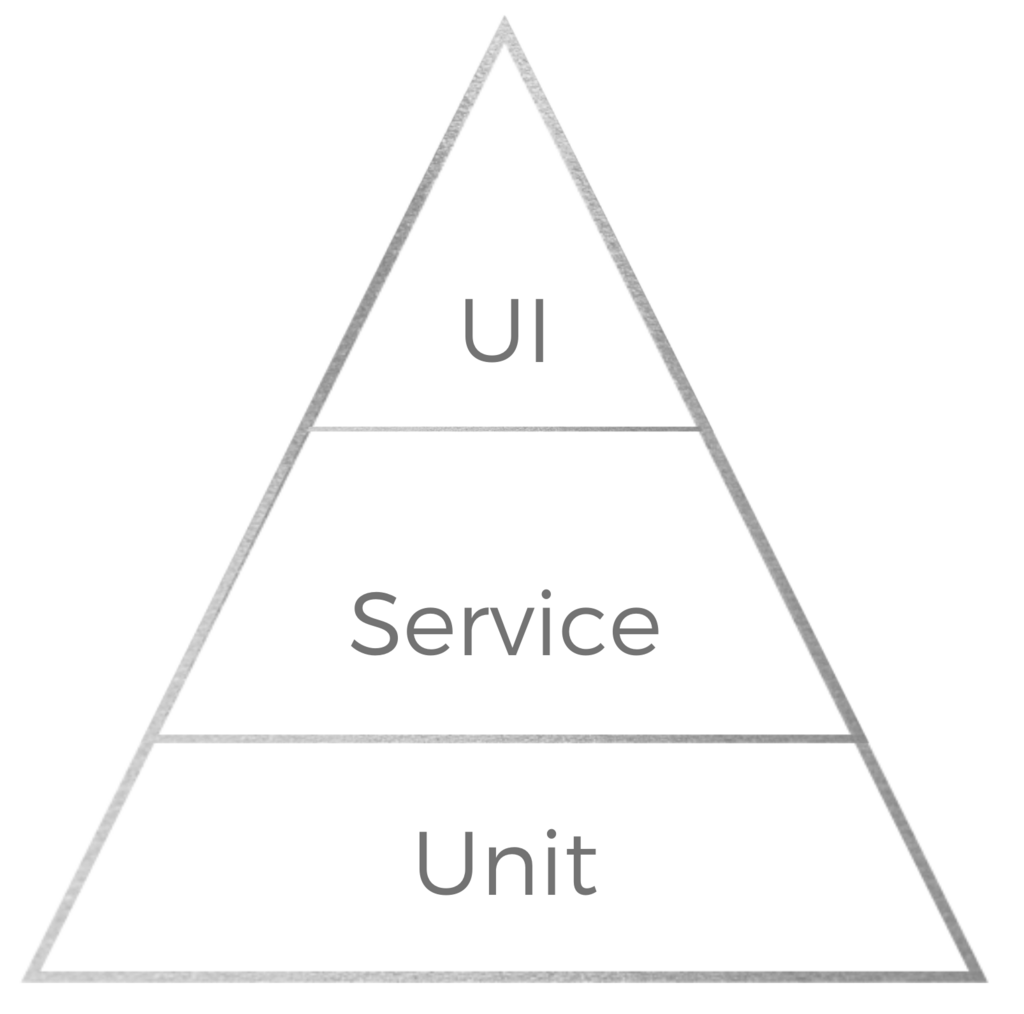
This diagram, known as the Testing Pyramid, illustrates a healthy balance. You should have a large base of fast unit tests, a smaller number of integration tests, and very few slow end-to-end tests.
Why Bother Testing?
Implementing a good testing strategy takes time and effort, but the benefits are huge. Good tests act as a safety net, allowing developers to make changes and add new features with confidence, knowing that if they break something, a test will fail and alert them immediately. This leads to more reliable and maintainable code.
A robust test suite also serves as a form of documentation. By reading the tests for a piece of code, a developer can understand what it's supposed to do and how it should be used.
Ultimately, testing saves time and money. Catching a bug early in the development process is far cheaper and easier to fix than finding it after the software has been released to users.
Key Benefits of Testing:
- Improves Quality: Catches bugs before they reach users.
- Increases Confidence: Allows developers to refactor and add features without fear.
- Acts as Documentation: Tests describe how the code is intended to work.
- Saves Money: Finding and fixing bugs early is much cheaper than fixing them in production.
Ready to check your understanding of these core testing concepts?
What is the primary purpose of software testing?
A developer writes a test to check if a function that calculates sales tax returns the correct value for a given price. What level of testing is this?
By understanding these fundamental types of tests and their purpose, you can better appreciate how software is built to be reliable and robust.