Mastering Next.js for Modern Web Development
Introduction to Next.js
Beyond React: What Is Next.js?
Imagine you've ordered a complex LEGO set. A standard web application built with just React is like getting the box delivered with all the pieces and a set of instructions. Your web browser has to open the box, read the instructions, and assemble everything before you can see the final model. This takes time, and while it's building, you're just looking at a blank page.
This process is called Client-Side Rendering (CSR), because the "client" (your browser) does all the work of building the page. It's powerful, but that initial wait can be slow for users and tricky for search engines, which might see an empty page before everything loads.
Next.js is a framework that gives your React app superpowers. It doesn't replace React; it builds on top of it, offering a structure and new features to solve problems like slow initial load times and poor SEO.
Think of Next.js as a specialized workshop that pre-assembles parts of your LEGO model before shipping it. The result is a better, faster experience for the end user.
Rendering on the Server
The core magic of Next.js is its ability to handle rendering on the server, before the page ever gets to your browser. It does this in two main ways.
Server-Side Rendering (SSR)
noun
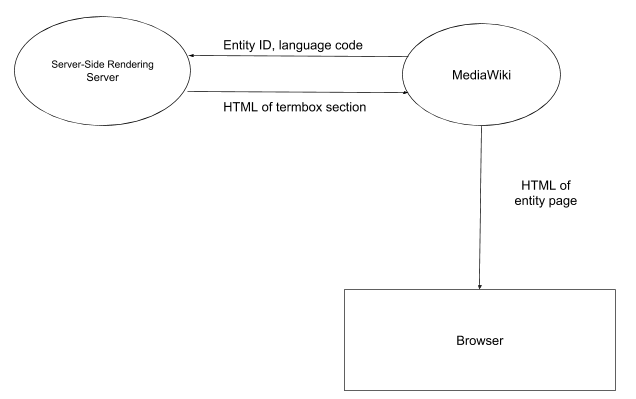
With SSR, when you request a page, the server builds the HTML for that specific page on the fly and sends a ready-to-display page to your browser. This is like having the LEGO model built for you the moment you order it. It arrives fully assembled, so you see the content instantly. This is fantastic for SEO, as search engines can immediately read the page's content.
Static Site Generation (SSG)
noun
SSG takes it a step further. It pre-builds every page of your site into a static HTML file when you build your application. When a user requests a page, the server just sends the already-made file. This is like having a warehouse full of pre-built LEGO models, ready to ship instantly. It's incredibly fast and secure, making it perfect for websites where the content doesn't change often, like blogs, marketing pages, and documentation.
Next.js lets you choose which method to use on a page-by-page basis, giving you the flexibility to optimize your application's performance.
React vs. Next.js at a Glance
So, when would you use plain React versus Next.js? While React is a powerful library for building user interfaces, Next.js provides the framework around it to build complete, production-ready applications. Here’s a quick comparison:
| Feature | Standard React (CSR) | Next.js (SSR/SSG) |
|---|---|---|
| Initial Load | Slower, browser builds the page | Faster, page is pre-built on the server |
| SEO | Can be challenging for search engines | Excellent, content is ready for crawlers |
| Routing | Requires extra libraries (e.g., React Router) | Built-in, based on the file system |
| Best For | Highly interactive dashboards, apps behind a login | Content-focused sites, e-commerce, blogs |
By handling common challenges like routing, data fetching, and performance optimization out of the box, Next.js lets you focus more on building the features that make your application unique.
Next.js is a powerful React framework for building fast, scalable, and SEO-friendly web applications.
In the context of web development, what is Client-Side Rendering (CSR)?
Using the provided analogy of a LEGO set, a standard React application that uses Client-Side Rendering is like...
Now you have a solid grasp of what Next.js is and why it's such a popular choice for web developers. It extends the capabilities of React to create faster and more efficient websites.