Mastering Nervous System Regulation
Autonomic Nervous System
The Body's Autopilot
Much of what your body does happens without you thinking about it. Your heart beats, you breathe, and your lunch digests, all while you focus on other things. This automatic control center is the autonomic nervous system, or ANS. It's a crucial part of the peripheral nervous system, managing the involuntary functions that keep you alive.
The autonomic nervous system (ANS) is the branch of your peripheral nervous system (PNS) that controls subconscious functions.
Think of it as the body's background operating system. It works through two main branches that act like a gas pedal and a brake, constantly adjusting to meet the demands of your environment. These are the sympathetic and parasympathetic nervous systems.
Gas Pedal and Brake
The sympathetic nervous system is your body's accelerator. It prepares you for action, triggering the famous "fight-or-flight" response. When you perceive a threat or a challenge — whether it’s a car swerving into your lane or the pressure of a big presentation — this system kicks into high gear.
It mobilizes your energy reserves for immediate use. Your heart rate and blood pressure increase, pushing more oxygen-rich blood to your muscles. Your airways open up to take in more air. Your pupils dilate to let in more light, sharpening your vision. Meanwhile, non-essential functions like digestion and salvation slow down to conserve resources.
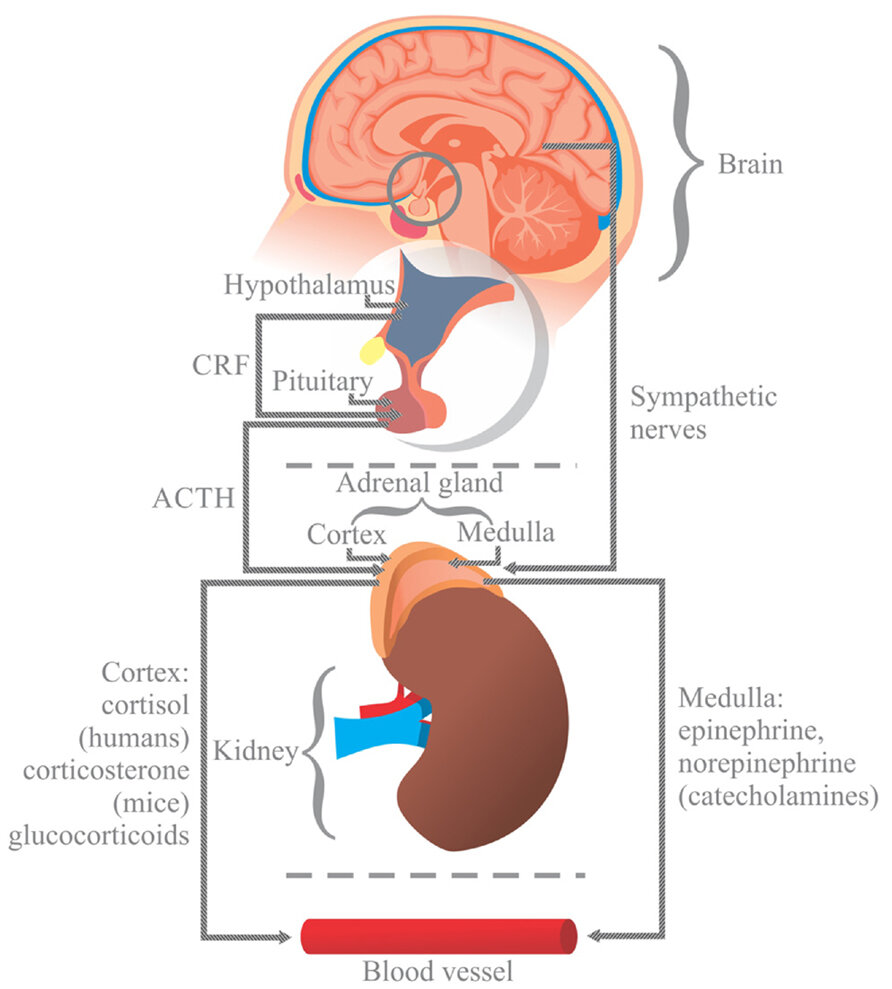
The parasympathetic nervous system is the brake. Its job is to calm things down and conserve energy, often summarized as the "rest-and-digest" response. When you're relaxing, this system takes the lead.
It slows your heart rate, decreases your blood pressure, and stimulates digestion and other metabolic processes. This allows your body to recover, repair tissues, and store energy for the future. It's the state you're in when you feel calm, safe, and content.
| Organ/Function | Sympathetic Effect (Fight-or-Flight) | Parasympathetic Effect (Rest-and-Digest) |
|---|---|---|
| Heart Rate | Increases | Decreases |
| Lungs (Bronchi) | Dilates (opens up) | Constricts (narrows) |
| Pupils | Dilates | Constricts |
| Digestion | Inhibits | Stimulates |
| Salivary Glands | Reduces salivation | Increases salivation |
| Adrenal Gland | Stimulates adrenaline release | No significant effect |
Achieving Balance
Neither system is "good" or "bad"; both are essential for survival. A healthy nervous system is not one that is always calm, but one that can flexibly shift between these states as needed. It can rev up to meet a challenge and then efficiently return to a state of rest afterward.
This dynamic balance is called homeostasis. When your body gets too hot, the ANS triggers sweating to cool you down. When your blood pressure drops, it signals your blood vessels to constrict. The constant push and pull between the sympathetic and parasympathetic branches allows your body to adapt and maintain a stable internal environment, no matter what's happening on the outside.
Effective nervous system regulation isn't about eliminating stress; it's about smoothly transitioning between activation and relaxation.
Understanding how this internal push-and-pull works is the first step toward influencing it. While the system is autonomic, certain conscious actions can help guide your body back to a state of balance. Now, let's check your understanding of these concepts.
What are the two primary branches of the autonomic nervous system?
If you are relaxing after a large meal, which part of your nervous system is most likely dominant?