Mastering NDI for Professional Video
NDI Protocol Architecture
How NDI Works Under the Hood
The core design principle behind NDI is to treat video as just another data source on a standard computer network. Instead of requiring specialized, expensive cables and routers, NDI is built to run on the same Ethernet infrastructure that offices and homes already use for internet access and file sharing.
The goal is simple: high-quality, low-latency video, anywhere on your network.
At its heart, the NDI ecosystem consists of sources and destinations. An NDI source is any device that can put video and audio onto the network. This could be a camera, a laptop running presentation software, or a video mixing console. A destination is any device that can receive and display that video. The clever part is that most NDI-enabled devices can be both a source and a destination simultaneously, creating a flexible, bi-directional flow of video.
Discovery and Connection
One of NDI's most powerful features is its plug-and-play discoverability. When you connect an NDI-enabled device to a network, it automatically announces its presence and discovers all other NDI sources available. There's no need to manually configure IP addresses or manage complex settings.
This magic is handled by mDNS, which stands for Multicast Domain Name System. It's the same technology that lets your computer automatically find printers on your local network. Each NDI source multicasts a small message containing its name and network address. Any NDI receiver on the same network can see this message and add the source to its list of available inputs.
For larger, more complex environments with multiple subnets, NDI offers tools like the Access Manager and NDI Discovery Server. These allow for manual configuration to bridge different network segments, ensuring sources can be discovered even in enterprise-level setups.
Transmitting High-Quality Video
Once a source is selected, NDI establishes a direct, unicast connection between the source and the destination using TCP. This ensures reliable delivery of every frame. The protocol uses a custom, high-performance video codec called SpeedHQ. This codec is designed for two things: extremely low latency (often just a single frame) and high visual quality.
It's not designed for maximum compression like codecs used for streaming to the web (such as H.264). Instead, SpeedHQ is visually lossless, meaning the compressed image is nearly indistinguishable from the original. It achieves this with a relatively light compression ratio, which keeps CPU usage low but requires more network bandwidth—typically around 100-200 Mbps for a 1080p60 signal.
This design makes NDI highly scalable on standard gigabit Ethernet networks. A single 1 Gbps link can comfortably carry multiple HD video streams. And because the encoding and decoding processes are so efficient, a modern multi-core CPU can handle several NDI streams at once without needing a specialized video card.
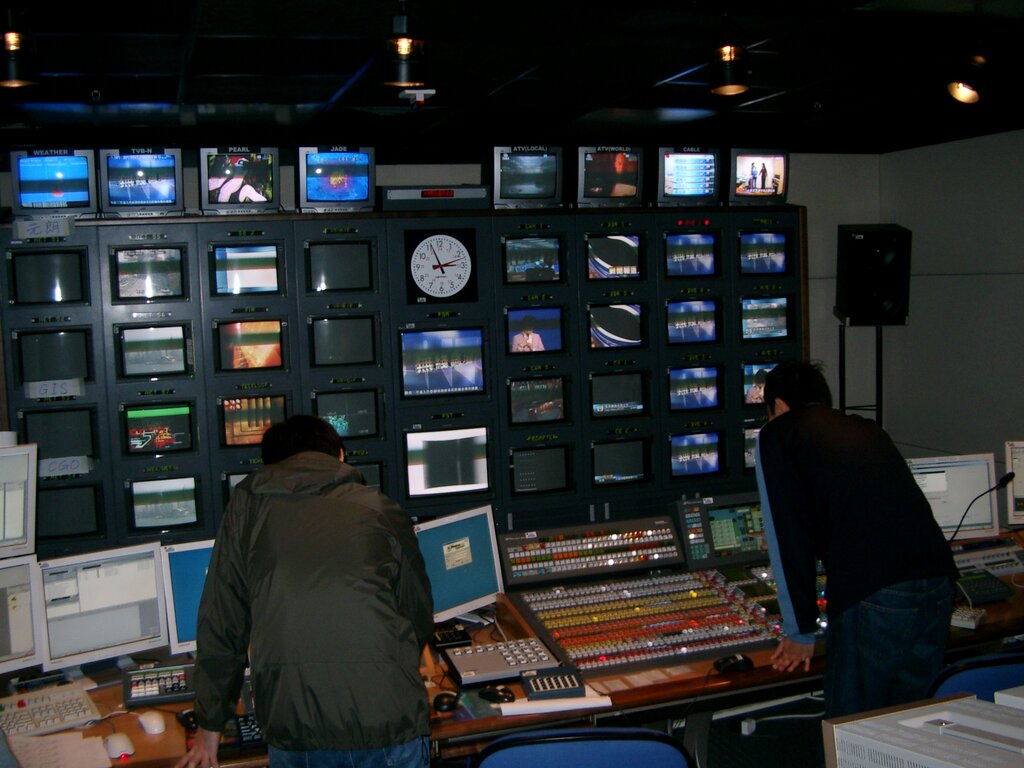
Beyond video and audio, NDI can also carry additional data. The protocol has built-in support for metadata, tally information (the red light that tells you a camera is live), and even remote camera control (pan, tilt, and zoom). This data is bundled into the same stream, simplifying workflows and reducing cable clutter. This all-in-one approach is a key reason for its rapid adoption in live broadcast and video production environments.