Mastering Native English
English Phonetics Basics
The Science of Speech Sounds
Have you ever noticed how the letter 'a' sounds different in the words cat, father, and able? English spelling is notoriously inconsistent. This is where phonetics comes in. Phonetics is the science of speech sounds. It's not about letters, but about the actual sounds we make when we talk.
Think of it this way: phonetics studies the individual ingredients of a language, like flour, sugar, and eggs. Phonology, a related field, studies the recipe—how those ingredients combine to make a cake. We're going to focus on the ingredients: the basic sounds of English.
phoneme
noun
The smallest unit of sound in a language that can distinguish one word from another.
A Universal Alphabet for Sound
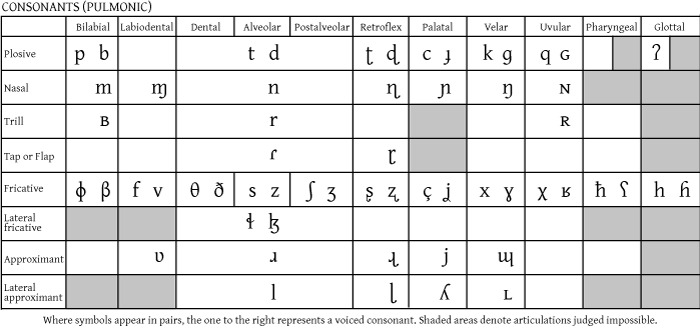
Because spelling is so unreliable, linguists created the International Phonetic Alphabet, or IPA. The goal of the IPA is simple: one symbol for every sound. This allows us to write down pronunciation precisely, no matter the language.
Those symbols are the International Phonetic Alphabet (IPA), and learning to read them is one of the best ways to improve your English pronunciation.
Learning the IPA is like getting a cheat sheet for pronunciation. Instead of guessing how a word sounds, you can look up its phonetic transcription and know for sure. It might look intimidating at first, but we'll break it down into manageable parts.
How We Make Sounds
To understand the IPA, we first need to understand how we produce speech sounds. This is the field of articulatory phonetics. It all starts with air from our lungs. As this air travels up through the windpipe and out our mouth or nose, we use our vocal tract—our lips, teeth, tongue, and other parts—to shape it into different sounds.
Think about the sounds /p/ and /b/. Say the words pat and bat slowly. For both sounds, you press your lips together and then release a puff of air. The only difference is that for /b/, your vocal cords vibrate. For /p/, they don't. This vibration is called voicing.
English Consonants and Vowels
Speech sounds are broadly divided into two categories: consonants and vowels. The difference is all about airflow.
For consonants, the airflow is obstructed in some way. For vowels, the airflow is unobstructed.
To classify a consonant, we ask three questions:
- Is it voiced? Do the vocal cords vibrate? (e.g., /b/ is voiced, /p/ is voiceless).
- Where is the air blocked? This is the place of articulation. (e.g., for /p/ and /b/, it's the lips).
- How is the air blocked? This is the manner of articulation. (e.g., for /p/ and /b/, the air is stopped completely then released. This is called a 'plosive').
| Place of Articulation | Example Sounds |
|---|---|
| Lips (Bilabial) | /p/, /b/, /m/ |
| Teeth & Lip (Labiodental) | /f/, /v/ |
| Tongue & Teeth (Dental) | /θ/ (thigh), /ð/ (thy) |
| Tongue & Alveolar Ridge | /t/, /d/, /n/, /s/, /z/, /l/ |
| Tongue & Hard Palate (Palatal) | /ʃ/ (shoe), /ʒ/ (vision), /tʃ/ (church) |
| Back of Tongue & Velum | /k/, /g/, /ŋ/ (sing) |
Vowels are a bit different. Since the airflow isn't blocked, we classify them based on the position of the tongue in the mouth. We ask two main questions:
- How high is the tongue? Is it high in the mouth (like for the /i/ in see) or low (like for the /æ/ in cat)?
- How far forward is the tongue? Is it at the front of the mouth (see) or the back (who)?
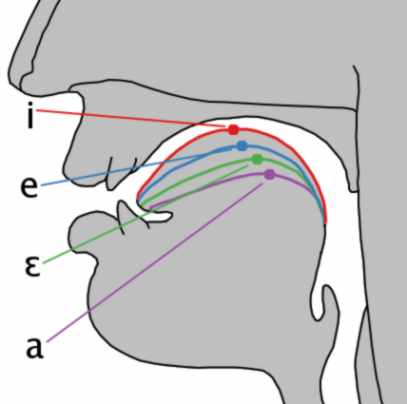
Putting all this together gives us a systematic way to describe and produce any sound in the English language. It turns the messy art of pronunciation into a science.
What is the primary focus of phonetics?
What is the main goal of the International Phonetic Alphabet (IPA)?