Mastering MVC with C# .NET Core and React
Introduction to MVC
Organizing Your Code
When you build an application, the code can get messy fast. You have logic for handling user input, code for fetching data from a database, and code for displaying that data on a screen. Without a system, these different parts get tangled together, making the application hard to update and debug. It's like a kitchen where all the utensils, ingredients, and appliances are thrown into one big pile.
To solve this, developers use architectural patterns. These are proven, reusable solutions to common problems within a given context. They're like blueprints for organizing your code.
One of the most fundamental and widely used patterns is the Model-View-Controller, or MVC. It provides a simple but powerful way to separate the different responsibilities within your application.
The Three Components
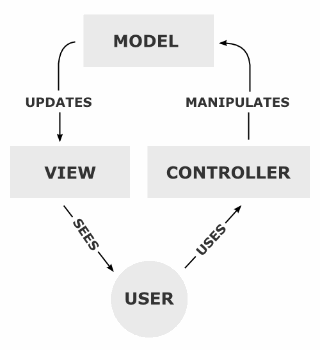
MVC divides an application into three interconnected parts. Think of it like ordering food at a restaurant.
The Model: This is the application's data and business logic. In our restaurant, the Model is the kitchen. It manages all the ingredients (the data) and knows how to combine them to cook a dish (the business logic). The kitchen doesn't care who ordered the food or how it will be presented; it just focuses on preparing it correctly.
The View: This is the user interface (UI). It’s what the user sees and interacts with. In the restaurant, the View is the plate of food delivered to your table. It’s the presentation layer. The plate simply displays the food; it doesn't know how the food was made or what ingredients were used. Its job is to look appealing.
The Controller: This component acts as an intermediary between the Model and the View. It handles user input and tells the Model what to do. The Controller is your waiter. You (the user) give your order to the waiter. The waiter takes your request to the kitchen (the Model) and tells it what to prepare. Once the food is ready, the waiter brings it to your table (updating the View).
The Model-View-Controller (MVC) framework is an architectural/design pattern that separates an application into three main logical components Model, View, and Controller.
Why Use MVC?
The primary benefit of MVC is separation of concerns. By dividing the application into these three roles, each part can be developed and modified independently. A front-end developer can change the look of the View without touching the business logic in the Model. A back-end developer can update how data is processed in the Model without affecting the user interface.
This separation makes code easier to maintain, test, and reuse. It also allows for parallel development, where different teams can work on the Model, View, and Controller simultaneously.
Many popular web frameworks are built around the MVC pattern. Ruby on Rails, Django, and ASP.NET Core all use MVC as their core architecture. While some modern front-end libraries like React don't strictly follow MVC, the underlying principle of separating data management from the UI is still a central idea. Understanding MVC gives you a solid foundation for building well-structured applications in almost any environment.
Time to review what you've learned about MVC.
Let's check your understanding with a few questions.
What is the primary benefit of using the Model-View-Controller (MVC) pattern?
In the restaurant analogy, which component corresponds to the 'waiter' who takes orders from the user and communicates with the kitchen?
Now you have a clear picture of what the MVC pattern is and why it's so important in software development. It’s a blueprint for keeping your projects organized and scalable.