Mastering Musical Notation and Sight Reading
Ledger Lines and Ranges
Beyond the Staff Lines
The five lines of the musical staff are a great starting point, but music often ventures into pitches much higher or lower. To write these notes, we extend the staff using short, temporary lines called ledger lines.
Think of them as extra rungs on a ladder, added only when needed. They follow the same pattern as the main staff: the musical alphabet continues in sequence, alternating between lines and spaces.
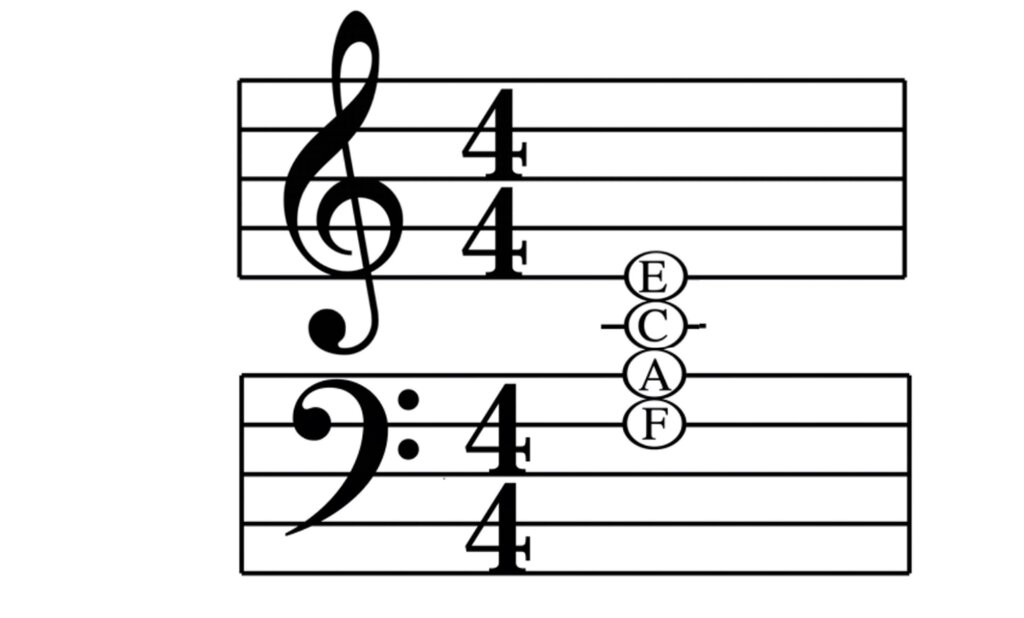
The most important ledger line is the one for Middle C. This note acts as the bridge between the treble and bass clefs. It can be written one ledger line below the treble staff or one ledger line above the bass staff. It's the same exact pitch, just notated differently depending on which hand is meant to play it on an instrument like the piano. This single line physically and visually connects the two staves into the grand staff.
Reading by Shape
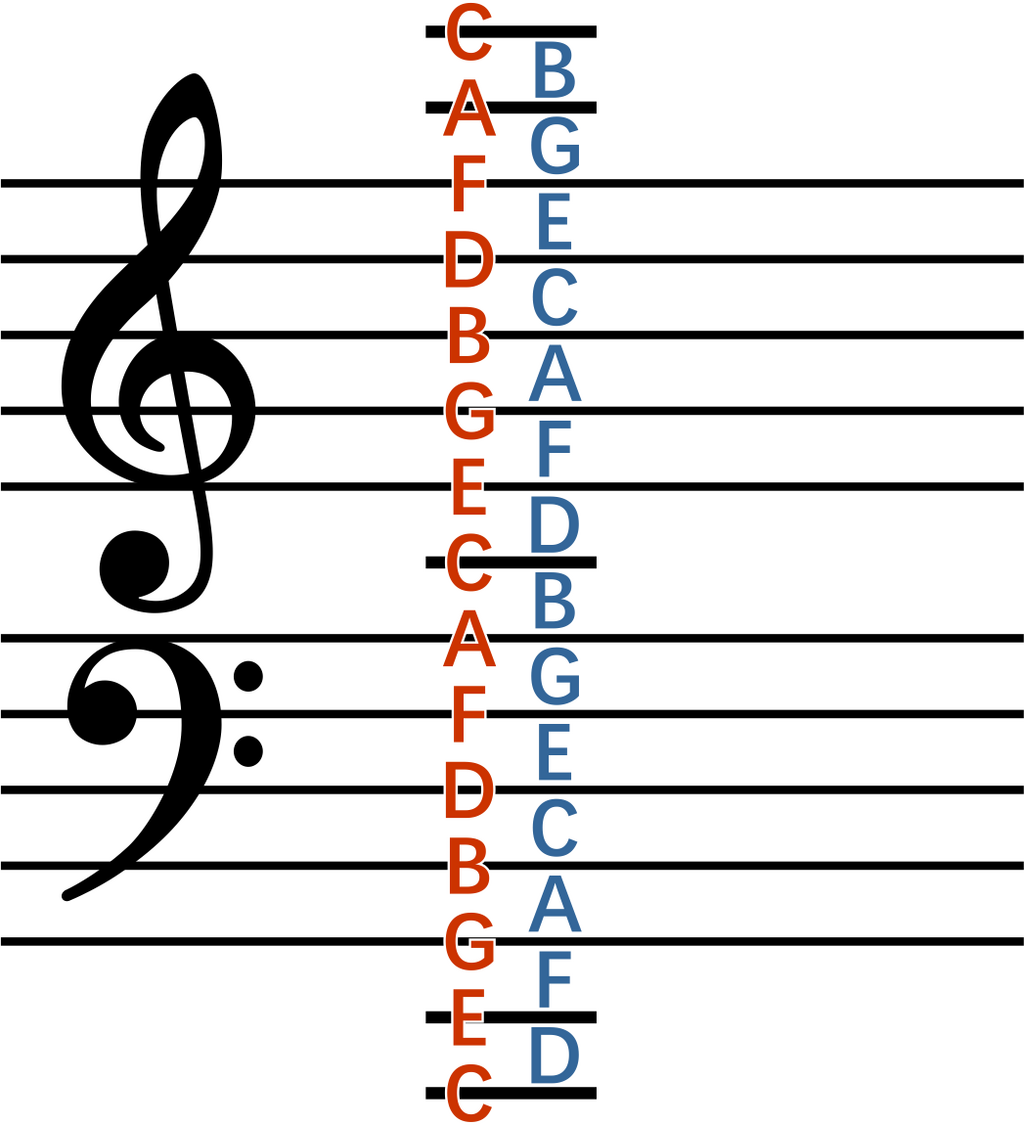
When you see notes on ledger lines, your first instinct might be to count up or down from the main staff. This works, but it's slow. A faster way to read is by recognizing the shape of intervals.
Just like on the main staff, an interval of a third always moves from a line to the next line, or a space to the next space. A fifth moves from a line to the line after the next one (skipping a line). This visual pattern holds true even when you're far above or below the staff.
Instead of counting six lines up from the treble staff to find a high A, you can find an anchor note you know—like the A in the top space—and recognize the new note is simply an octave higher. Spotting these patterns is the key to reading fluidly across the entire range of an instrument.
This technique allows you to read music in extreme registers without getting lost counting lines. You see the contour and the intervals, not just a series of individual note names.
Extreme Registers and Octave Marks
Sometimes, a passage goes so high or low that even ledger lines become impractical. Imagine a pianist playing a flurry of notes at the very top of the keyboard. The music would be a dense forest of ledger lines.
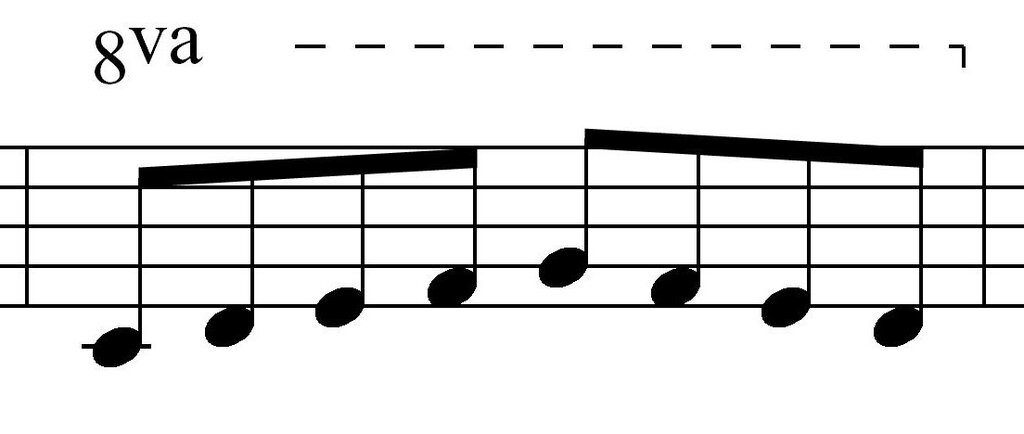
To solve this, composers use octave marks. The symbol 8va (short for the Italian ottava alta) written above a passage means to play everything one octave higher than written. Similarly, 8vb (ottava bassa) below a passage means to play it one octave lower.
This keeps the notes on the staff, making them much easier to read, while still communicating the correct pitch.
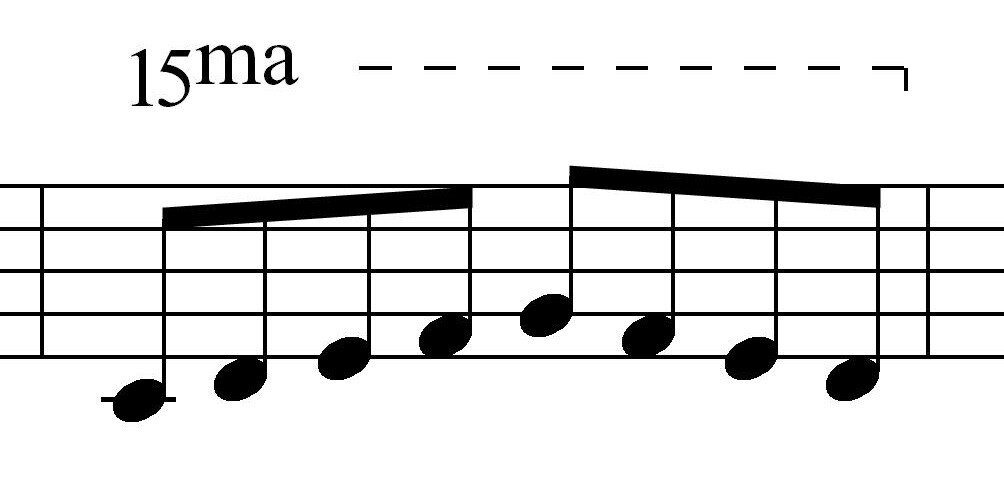
For even more extreme shifts, you might see 15ma or 15mb. These symbols instruct the player to move the notes by two octaves (a fifteenth interval). This is common in piano and harp music, which have enormous ranges.
Recognizing ledger lines and octave marks unlocks the full range of written music. By focusing on intervals and anchor notes rather than just counting, you can learn to read these extended pitches as quickly as those on the staff itself.
What is the primary purpose of a ledger line?
The note Middle C is significant because it can be written as:
By mastering ledger lines, you've connected the staves and opened up the entire landscape of musical pitch.