Mastering Muscle Hypertrophy
Muscle Structure
From Muscle to Myofibril
Skeletal muscles, the ones that allow you to move, are intricate structures built like a thick rope. A rope isn't one single strand; it's made of smaller ropes, which are themselves made of even smaller cords, all twisted together for strength. Muscles follow a similar pattern of bundles within bundles.
The entire muscle is wrapped in a protective sheath of connective tissue. Inside, it's divided into smaller bundles called fascicles. Each fascicle, in turn, is a bundle of individual muscle cells, which are more commonly known as muscle fibers.
Muscle fibers are long, cylindrical cells, and they're unique because they contain multiple nuclei. What's truly important for movement, however, lies inside these fibers.
The Contractile Engine
Packed within each muscle fiber are thousands of smaller rod-like structures called myofibrils. These are the engines of the muscle cell, responsible for generating the force that causes contraction.
Myofibrils run the entire length of the muscle fiber and have a distinct, repeating pattern of light and dark bands. This stripped appearance is why skeletal muscle is also known as striated muscle. These bands aren't just for show; they are the visual result of the muscle's fundamental contractile unit.
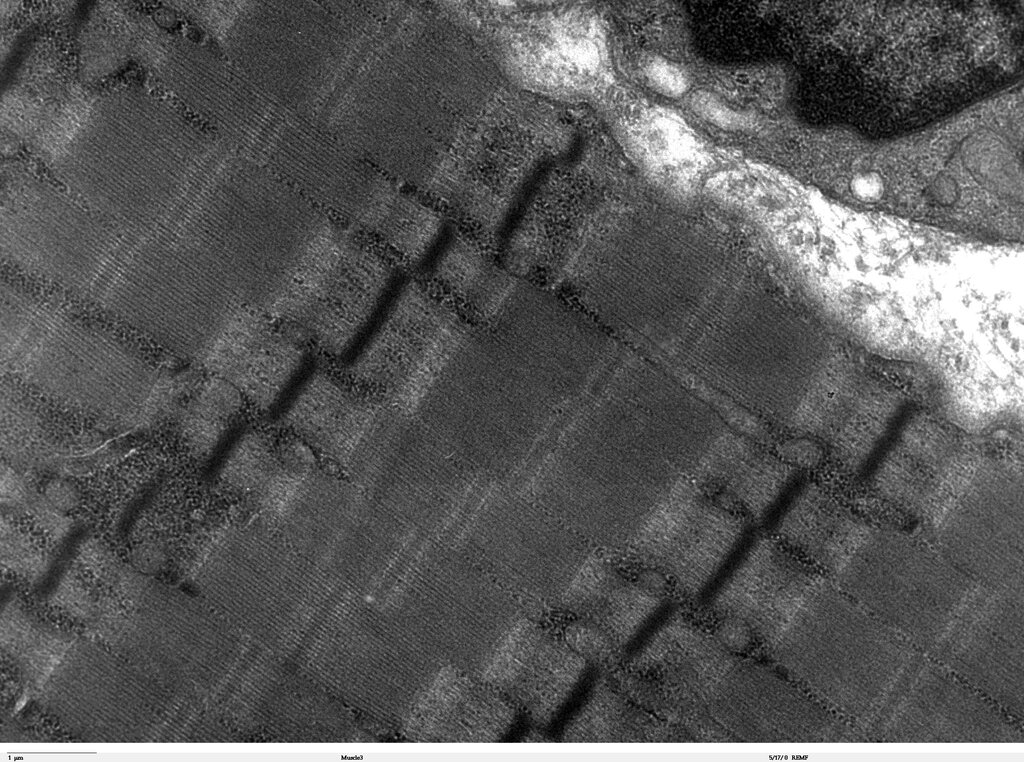
Sarcomere
noun
The basic functional and contractile unit of a muscle fiber, composed of overlapping protein filaments.
The sarcomere is where the magic happens. Each myofibril is essentially a long chain of sarcomeres linked end-to-end. The boundaries of a sarcomere are marked by structures called Z-lines.
Inside the sarcomere are two main types of protein filaments:
- Actin: Thinner filaments anchored to the Z-lines.
- Myosin: Thicker filaments that sit in the center of the sarcomere.
These filaments overlap. When a signal from your nervous system arrives, the myosin filaments pull the actin filaments toward the center. This sliding action shortens the sarcomere. When millions of sarcomeres across the entire muscle shorten at once, the muscle contracts, pulling on your bones and creating movement.
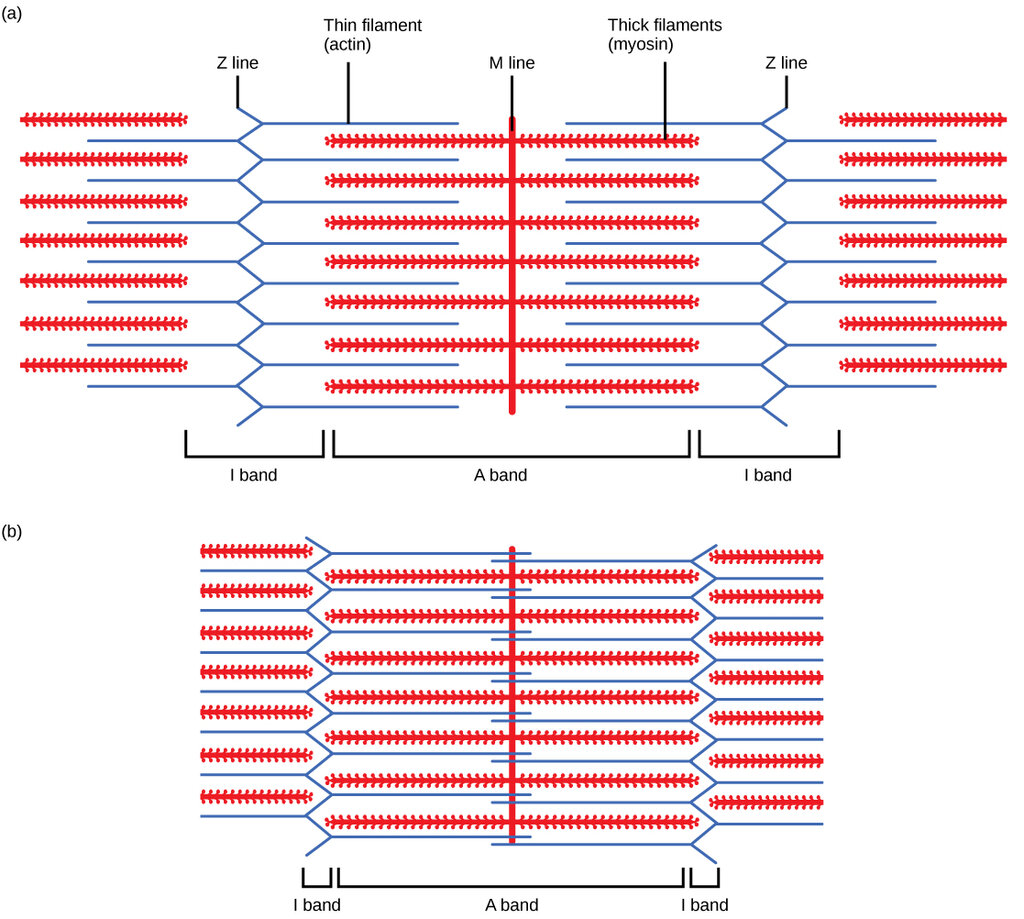
The entire structure is a beautiful hierarchy of force generation: muscles are bundles of fascicles, fascicles are bundles of fibers, fibers are bundles of myofibrils, and myofibrils are chains of sarcomeres.
Now that you understand the basic components of a muscle, let's test your knowledge.
What is the correct hierarchical order of muscle structure, from the largest component to the smallest?
The striped or 'striated' appearance of skeletal muscle is a result of...
This foundational knowledge of muscle anatomy is the key to understanding how muscles grow and adapt. Every lift, every sprint, and every stretch initiates a process that starts right inside the sarcomere.